My Turn: The truth about child abuse in rural Alaska villages
Published 8:00 am Thursday, August 25, 2016
You recently published an editorial titled “It takes a village to abuse a child.” As a victim of child abuse in an Alaskan village, I can attest to the truth of this editorial, as well as to the theory that it does take a village to abuse a child.
However, in the editorial, a very large aspect of this theory was left unspoken for: the village. Apart from the abuser supporters and the immoral lawmakers, there are alway the bystanders: teachers, nurses, doctors, police, family members, friends, tribal figures, community leaders and the many other townsfolk who often turn a blind eye.
I myself was an abused child for many years. You would think that growing up in Wrangell would have given me a support network that recognized the abuse and broke me away from it. My life in Wrangell was the exact opposite.
For nine years as a Wrangell student, it was a regularity that I would show up to school without lunch, that I would rarely have a snack, that my clothes would smell like urine and smoke, that my skin was always dirty and my hair always unbrushed. That never seemed to phase a teacher, or a friend, or a nurse, or other parents. Neither did the bruises that often covered my legs and arms, the burn marks I would have on my feet, or the general fear I had about the world.
At school, it was a regular thing for me to have to go to the office because the pain from my various bruises and burns would be so much that I would start crying during activities at recess or during P.E. In the office, our local secretary would look at my arms and legs, give me icepacks, talk with me, make sure I relaxed until the pain would subside and I could go back to class. She worked incredibly hard to always make sure I felt generally better. However, she never asked how I got the bruises and the burns, or why I never wanted her to call my parents (which she only did on rare occasions). The same things went for my teachers: they would see my foodlessness, my injuries, my isolation, and, at a young age, my outright fear for my father (who I would sometimes run away from when he came to pick me up from school) — but they never asked me why I was the way I was, and, as far as I know, they never reported these things to the Office of Children’s Services (formerly Child Protective Services) or the police.
Even my family members, those who worked so hard to keep me alive and in school, rarely put forward any attempts to help me. I lived in a Native family, where my dozens of cousins and aunties and grandmothers served as my closest of family. Over years and years of abuse, only one family member, my white grandmother, ever reported my abuse or neglect. She may have been the only family member who honestly recognized it as that. Nothing ever came of her report: no investigations, no questions, no help. Over the next 10 years, she would report my parents, including her daughter, two more times but to no avail.
Eventually my parents divorced. My far more active, and far more abusive, father quickly gained custody of myself and my three siblings from my neglectful mother. He moved us to Hawaii, where he kept us in isolated homes, dangerous neighborhoods and rotting houses. His abuse and neglect grew by each day.
None of the residents in my town, none of my friends or family members, seemed to be phased by my sudden radio silence. I soon stopped calling any Wrangellites, and my appearance on Facebook was rare. The same went for my brothers. After two years of severe abuse in Hawaii, I finally realized that my life was not right, that I did not want myself to live through this and that I, particularly, did not want my younger sister to have this as her life. I spent months trying to break away from my father, and on April 8, 2014, I was finally free of him. My abuse was finally at an end. I was 15 years old.
I came back to Wrangell and told the police, my friends, my family members, my Wrangellites of what my life had been. Nearly the entire town was supportive of me: former colleagues of my father volunteered to be a character witness against him, people regularly brought me food, teachers worked incredibly hard with me to bring me back up to speed in my academics.
My entire town worked hard to make sure that my siblings and I were okay and that we could recuperate. During the time of what I now refer to as my “great reveal,” one of the most common phrases I heard from people was: “I had no idea.”
I had spent years being abused. I spent most of my childhood covered in bruises and burns, I rarely gained a pound of weight despite getting taller, I openly feared my parents, I was never at community events and was absent from school nearly as much as I was present. Every citizen in town knew I was the “dirty child,” the child who was never given baths and who wore clothes soaked in cat urine — and they “didn’t know?”
What did they mean they didn’t know?
Did they mean they didn’t think these things were abuse? Or did they mean they hadn’t seen these things? They hadn’t seen any of the signs? Because if they hadn’t seen the signs, then they hadn’t seen me. Only on rare occasions did I wear clean clothes. Only on rare occasions was I injury free. Only on rare occasions was I a normal, bubbly, happy-to-be-alive child. Had my entire town honestly been unknowledgeable of what abuse is, or had they just been ignoring myself and my brothers for some nearly two decades?
I still don’t know the answer to those questions, and I may never know.
For some time, I thought I was the only one who had those questions in my head. I soon realized, however, that there were several other children from my childhood who were like me: kids who always had dirty clothes, who always had injuries, who avoided other kids. I went and spoke with them, and quickly realized that this was a norm for Wrangell. That this probably still is a norm for Wrangell. That it is still a norm for many, if not all, of Alaska’s rural villages.
Of my knowledge, during 2015 in Wrangell High School, there were over 11 teens who had been physically and mentally abused during their childhood. That’s nearly 13 percent of the high school population. Most of them were not saved by teachers or family or OCS, but rather had to save themselves, often at a young age. Those are just the teens that I, as a student, knew of. I know that there are more students who have never told of their buse, and more students that don’t know how to tell, and more still that are currently being abused.
So yes, it truly does take a village to abuse a child. It takes a village full of people who are blind, who are afraid to tell, who think, maybe even hope, that they are wrong, who find ignorance to be bliss. For 15 years, I was a walking, talking case of child abuse, covered in the most obvious signs and symptoms, and it was only when I had to gamble with my life in order to be free that anyone in my life realized it.
I thank Wrangell for helping me to become a functioning, capable and resilient adult after 15 years of faux-slavery, but I also know that it is because of Wrangell that I was able to stay in that place for so long.
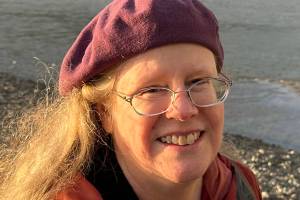
• Maleah Wenzel is a recent graduate of Wrangell High School. She will soon leave to attend Dartmouth College where she is considering majoring in pre-medicine and biology and going on to study pediatrics.