
Once upon a time, Alaska’s capital had a well-run municipal hospital, but times change. In the complex world of healthcare facilities, for a few years now, Juneau has not had a stable management team or enjoyed the same level of profitability. Besides COVID-19, what changed?
Bartlett Regional Hospital’s financial crisis presents the Assembly with important public programs that need money to survive. Damage control amid this emerging financial environment was clearly explained by BRH’s current corner office team, but what got us to this point?
Trying to fix the problem, not the blame, requires fact-based thinking. So far I have more questions than answers, but one suspect in this complicated equation appears to be another local healthcare organization, the Southeast Alaska Regional Health Corporation (SEAHRC). According to a June 5 article in the Juneau Empire, “the hospital is increasingly facing competition for services also provided by SEARHC.” Normally, competition is good, but our local healthcare playing field is not level due to large federal subsidies provided to an organization that originally provided service just to Natives.
Apparently, from some provider testimony, backed up by a statement from the BRH board chair in that same article, Juneau is “very much in danger of having a monopoly” in healthcare. That does not sound like healthy competition.
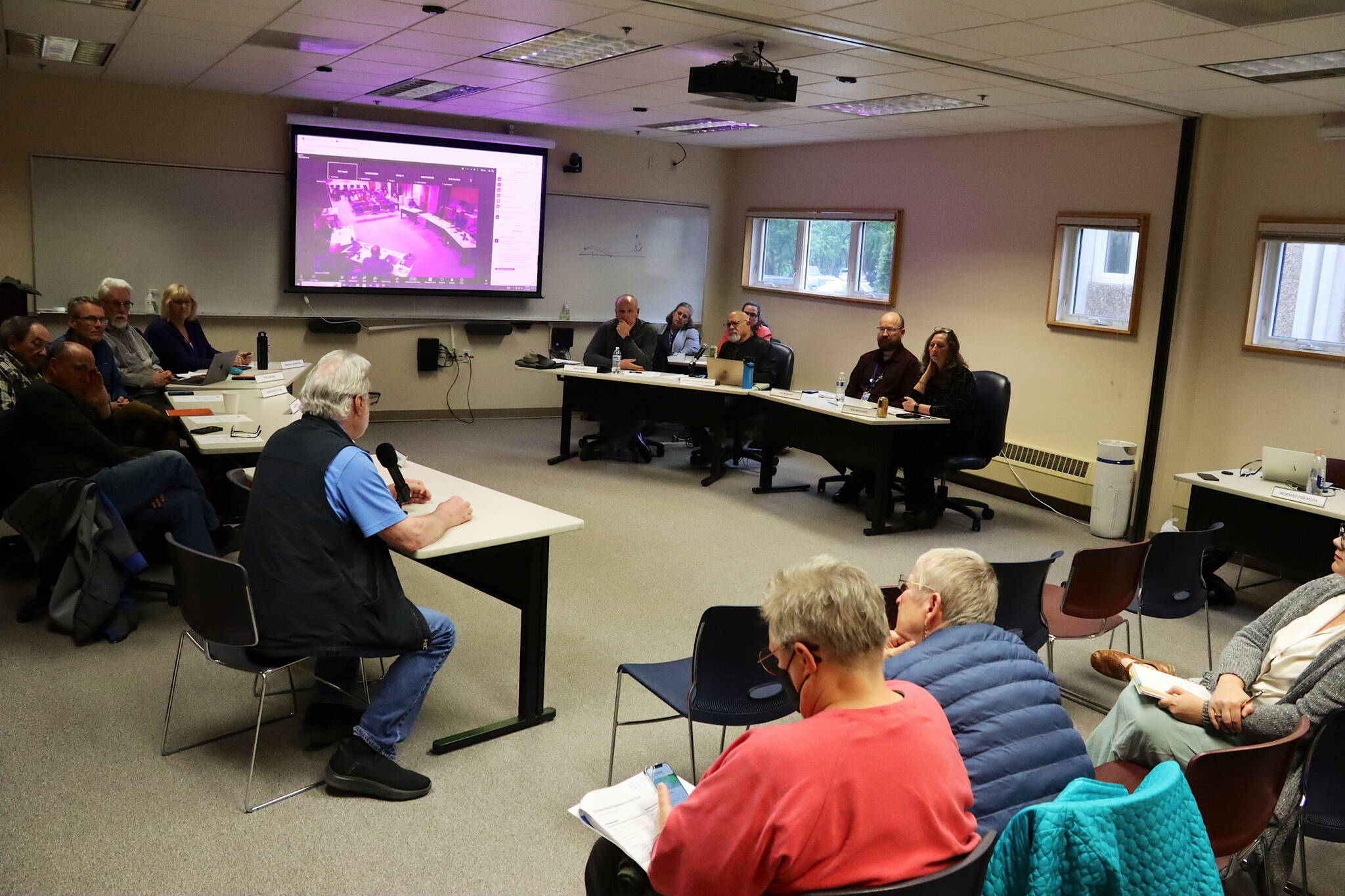
At the second public meeting held for local input on Monday night, June 10, I asked questions about SEARHC’s emerging financial dominance. What did the board know, when did it know it and how did it find out? I got a general answer, but want specifics. Juneau’s taxpayers also deserve to know. For varied reasons, important healthcare programs supported both by practitioners and the public are now on the chopping block. Why has BRH become less profitable so that, like the school district, it needs a bailout?
Hospital officials at the earlier sustainability meeting said SEARHC does get higher reimbursement rates; they didn’t provide specific numbers or formulas. Maybe that’s why SEARHC has been building and buying to expand its services?
Federal forms 990 are supposed to be public, according the 2013 SEARHC online version prepared by a prominent local CPA firm, but figuring out all that is beyond me. Maybe someone capable will volunteer to do the homework?
Many adults know that life is not fair, but should local taxpayers face a higher mill rate because of federal subsidies provided to SEARHC, but not Juneau’s city-run hospital? BRH has apparently reached out to Alaska’s two senators, “to make sure they understand some of the issues.” Has Washington, D.C., indirectly raised local taxes?
Recently the BRH board bought the Family Practice Physicians building on Glacier Highway, a proposal I criticized earlier. It had been on the market for some time, was owned by former doctors, and is partly occupied by some doctors connected to the board. When BRH was profitable, it would not have mattered as much if the board wanted to reward some of Juneau’s pioneer healthcare providers, but potential conflicts of interest make me wonder about board judgment.
Further, when SEARHC eventually puts local providers out of business, a real possibility, who will occupy the facility now owned by BRH which is apparently bleeding money “about $1 million a month”? Once the current crop of family practice doctors retires who will pay BRH rent in a town soon to be dominated by SEARHC?
What I think I know cannot be currently backed up with documentation which is complicated, but SEARHC’s statement in the above Empire article appears to be predictably self-serving. Regardless, I have asked both SEARHC and part of our congressional delegation for help in researching facts so I can be surer of what I’m talking about.
However, just as people are entitled to Fifth Amendment protection against self-incrimination, most large organizations do not willingly admit that their strategies might adversely impact others, including the public. Even in congressional testimony, sometimes under oath, tobacco companies and oil companies denied matters later confirmed to be true.
Meanwhile, my property taxes are probably going up to support important healthcare programs. Just as Juneau’s public schools need more money, so does BRH and I would like to know why.
• Mike Clemens was a statewide budget analyst from 1973-1976 and has been a Juneau resident since 1970. Columns, My Turns and Letters to the Editor represent the view of the author, not the view of the Juneau Empire. Have something to say? Here’s how to submit a My Turn or letter.
