
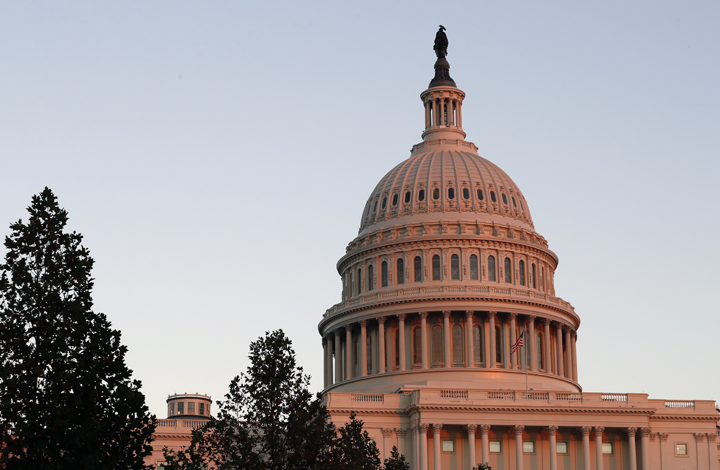
It is indeed ironic that after eight years of partisan squabbling, amid the turmoil surrounding the presidential election, U.S. House and Senate members united on one controversial issue to deliver the first and only veto override during President Obama’s administration.
Fifteen years after the 9/11 attacks, and seven years since the Justice Against Sponsors of Terrorism Act (JASTA) was first presented, Congress finally enacted a bill allowing 9/11 families and survivors the right to sue in U.S. court for any role the government of Saudi Arabia may have played in the attacks.
Initially passed with little fanfare, a two-thirds majority in both the Senate and House was needed to override President Obama’s veto. Both the House and Senate voted overwhelmingly in favor of the override less than a week after the President vetoed JASTA on Sept. 23.
The House vote was 348-77 and the Senate vote was 97-1 (with retiring Senate Minority Leader Harry Reid casting the lone dissenting vote in the Senate). Notably, neither vice presidential nominee Tim Kaine nor former presidential hopeful Bernie Sanders were present for the vote. Alaska’s delegation was split with Sens. Dan Sullivan and Lisa Murkowski voting in favor of the veto override, and Rep. Don Young voting against.
The governments of foreign countries generally can’t be sued in U.S. courts under the 1976 Foreign Sovereign Immunities Act (FSIA). While FSIA contains a 2008 exception for terrorist attacks supported by countries on the State Department’s list of state sponsors of terrorism, the list doesn’t include Saudi Arabia.
JASTA is highly controversial because President Obama and some U.S. security officials warned the law could have severe unintended consequences. By their account, allowing private U.S. citizens to sue a foreign government in federal court could gut the 500-year-old principle of sovereign immunity that protects our own embassy personnel and soldiers abroad. Opponents further argued the U.S. could suffer retaliatory actions by affected governments and expose the U.S. and its allies to an avalanche of litigation.
JASTA backers argued that up to now citizens have been allowed to sue foreign governments in U.S. courts under a variety of sovereign immunity exceptions but that prior law fell short. JASTA carved out additional narrow exceptions correcting this.
Under JASTA, lawsuits are permissible that concern death, injury or property damage caused by an act of international terrorism in the U.S. and by the actions of any foreign state (whether on the terrorism list or not) or by its representatives acting in their official capacity.
Congressional leaders backing the bill also pointed to a troubling loophole JASTA corrected. Under prior law, if an intelligence agency of a foreign government provided funds in New York City to a terrorist supporting an attack on U.S. soil, that foreign government was liable under the FSIA tort exception. However, if that terrorist was given money in Paris, the foreign state wouldn’t have been subject to liability in U.S. courts.
Although Saudi Arabia is not specifically mentioned in the act, it has the most to lose as the 9/11 families move forward with lawsuits in U.S. courts. Fifteen of the 19 hijackers on 9/11 hailed from Saudi Arabia. Critics have long suspected the kingdom’s government may have either directly or indirectly supported the attacks, something the Saudis vehemently deny.
Saudi Arabia mounted an impressive but unsuccessful effort to defeat the bill — spending $1.3 million per month with 10 lobbying firms in the months leading up to the veto override vote in September.
It should be noted that safeguards in the bill only allow narrowly defined lawsuits to qualify. Acts of war are excluded.
Contrary to opponent’s claims, multiple U.S. allies will not be subject to litigation in U.S. courts. The exemption to sovereign immunity is limited only to terrorist acts committed on U.S. soil — it does not change the principle of sovereign immunity in other types of cases.
The Justice Department would be allowed to intervene and be granted a 180-day stay in any case if the State Department certifies the U.S. is engaged in good faith talks to resolve the pending claims outside of court.
The concern by many that foreign governments would be asked to reveal sensitive intelligence information seems unfounded. As a general matter, FSIA relies on common law doctrines to protect sensitive information from discovery. That has been the law for decades, and JASTA does not alter it.
While the bill may not be perfect, it finally allows U.S. citizens an opportunity for their day in court to seek justice and compensation from any nation or its officials complicit in an act of terrorism within the U.S. Fine-tuning changes may be necessary but JASTA should provide an additional deterrent to any government or its officials contemplating such acts in the future.
• Win Gruening retired as the senior vice president in charge of business banking for Key Bank in 2012. He was born and raised in Juneau and is active in community affairs as a 30-plus year member of Juneau Downtown Rotary Club and has been involved in various local and statewide organizations.
