
The recent proposal by a small group of mining advocates to largely eliminate Juneau’s existing mine review ordinance is premature and needlessly divisive. The City and Borough of Juneau Assembly should back-burner this proposal.
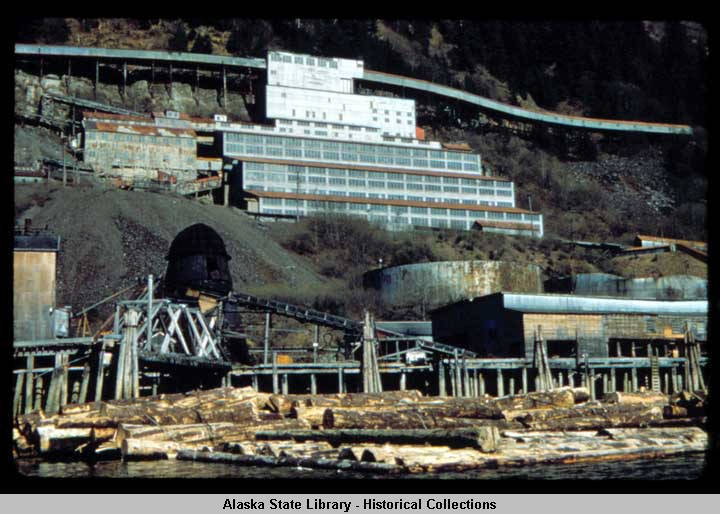
Juneau has become what it is today in part based on its mining history. The bedrock of Juneau’s formation was built on mining. Juneau was and remains a mining community. The recent centennial celebration of the Treadwell Mine on Douglas Island within our community underscores the rich tradition this industry plays in our community. It’s conceivable to us that former mines within the borough, possibly even the long-closed AJ Mine, could become productive again.
As majority landowner of the AJ Mine, the CBJ has an ongoing duty to evaluate the mine’s viability as an asset to generate revenue. Residents of Juneau have an ownership interest in the potential wealth that might be generated from reopening the AJ Mine. In addition to the potential direct benefits that flow to CBJ coffers, our community could indirectly benefit from the creation of jobs and associated economic activity if the mine is reopened.
At the same time, our community has an equally valid need to protect the water quality, clean air and other environmental and social values that make Juneau a beautiful place to reside. Protecting these values is why the CBJ Assembly enacted the current mine review ordinance and why the call to dispose of the current local review procedures is curious, if not concerning.
The challenge for the AJ Mine is its location. The low-grade orebody inside Mount Roberts is directly connected to the municipal drinking water supply and surrounded by residential neighborhoods. The mine is closely linked to the lively downtown tourism business district, wedged between an avalanche zone and ocean waterways. It’s no surprise this proposal to chop the existing review process has caused concern and skepticism among a wide swath of local residents. Lurching forward with the ordinance, as proposed, is premature at best and likely to deflect focus on more immediate problems.
The mining ordinance as it exists now gives local residents the ability to have a voice when balancing the considerations and interests that would follow from any proposal to open a mine adjacent to downtown Juneau.
The current ordinance was formulated in 1989 after months of work by a large committee chaired by Ethel Lund and enacted after significant work by the public and CBJ staff. The Assembly hired a lawyer specializing in mining law to help with the drafting of the ordinance. After diligent work and numerous public hearings, the much-revised mining review ordinance was approved unanimously by the CBJ Assembly, a vote that included affirmation by Assembly members with a pro-mining orientation.
More recently in 2011, a group of citizens that included Assembly mining advocate David Stone, looking at and ultimately making recommendations on the question “Under what circumstances, if any, should the CBJ promote development of the AJ Mine?”
This group of citizens concluded: “Reopening the AJ will have unique health, safety and socioeconomic impacts on the community of Juneau and existing federal and state requirements may not be sufficient to protect the local environment. CBJ should not concede technical superiority to mining interests. The intent of the current ordinance is to regulate such local concerns and define the conditions which CBJ allow anyone to operate AJ mine.”
Now, seemingly out of nowhere, advocates of reopening the AJ Mine have urged the CBJ Assembly to essentially gut the CBJ mining ordinance in a way that would delete anything that supposedly duplicates state or federal mining review requirements. The proposal advanced by this small group of mining advocates would remove the city’s ability to balance the many considerations and interests that would be at issue with a mine adjacent to downtown Juneau.
One obvious thread in the current composition of our nation’s current congressional and presidential leadership is a continuing call to diminish, dilute or eliminate environmental and other public health and safety standards. The call to eliminate local review standards and instead rely on state and federal standards related to mining has potential for mischief.
The existing CBJ mine review ordinance provides an opportunity for local residents to shape the reopening of the AJ Mine. Now, more than ever, local control and the ability for local residents and businesses to identify particular problems that may be associated with reopening the AJ Mine are critical to the success of any large scale industrial venture located downtown.
The current proposal to eliminate local review of new mines in our community has not been adequately vetted, appears to be ill-conceived and not likely to promote genuine economic activity. What the measure will do is needlessly drive a wedge among members of our community with no apparent goal other than to allow a few promoters to run around calling for more speculative investment.
It is our recommendation that the current CBJ mine ordinance be left as is until compelling evidence for modification is produced.
Correction: An earlier version of this opinion piece incorrectly stated that Randy Wanamaker was a member of the 2011 mining review committee. He was not. The Empire regrets the error.
• Empire Readers’ Council editorials are written by members Joe Geldhof, Abby Lowell, Tom Rutecki, and Alex Wertheimer.
