
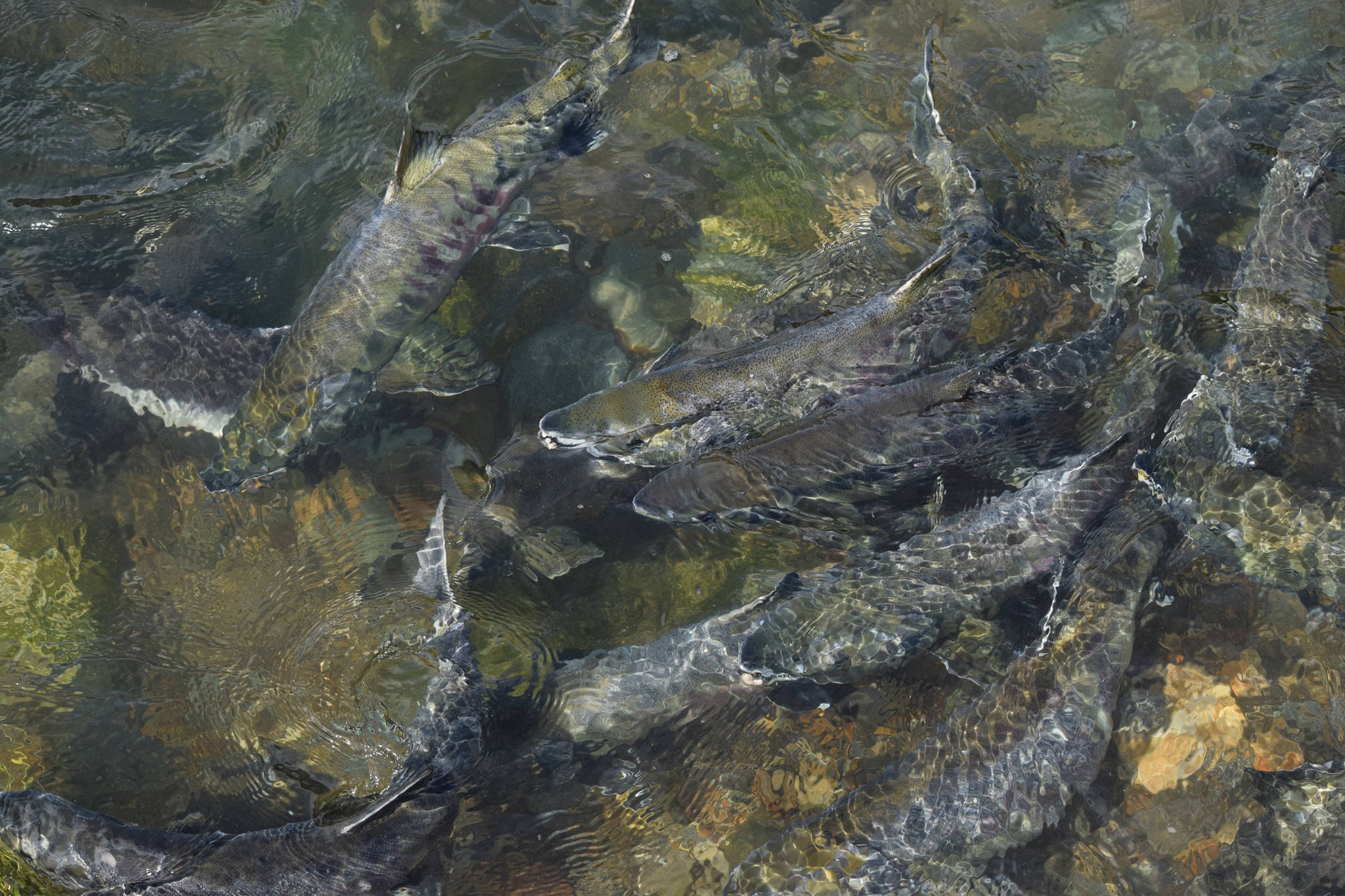
This July, I spent a week volunteering on the Stikine River, conducting water quality and aquatic habitat surveys with a team of dedicated scientists. It was pretty magical. I watched the mist rise from the water in the morning, listened for moose browsing in the brush, and saw fishermen set and pick their nets of salmon. It was also an important time: the data I was helping collect is data Alaska will need to prove harm if the Stikine suffers a disaster like Mount Polley.
We have heard this story before — and we must continue to tell it, really hear it, and feel it. On August 4, 2014, the Mount Polley Mine tailings dam in British Columbia collapsed, releasing more than 6 billion gallons of mining waste into the Fraser River watershed just as the sockeye were returning.
Four years later, those tailings are at the bottom of the once-pristine Quesnel Lake. Area residents, many of them members of the Xatsull First Nation, are grieving, waiting to see what will become of the territory’s once famed wild sockeye salmon run. And although Imperial Metals, the company that owns Mount Polley, has paid for some of the clean-up, B.C. taxpayers are still on the hook for $40 million.
That’s not good news for the Stikine River, where the B.C. government authorized Imperial Metals to begin operations at Red Chris Mine — which has the same tailings dam design as Mount Polley, though much larger — just months after the disaster. Considering the aforementioned, I am left wondering: if adequate financial assurance policies were required by the B.C. government and enforced within an international framework, certainly the province could better utilize 40 million taxpayer dollars, no? Would Imperial Metals have to file for bankruptcy if a “polluter pays” principle were actually enforced?
The bankruptcy of a mining company operating in B.C. isn’t a problem just for British Columbians. Perhaps nothing illustrates that more clearly than the Tulsequah Chief Mine in B.C., which has been leaching acid mine drainage into the Taku River and downstream into Alaska since it was abandoned in 1957, more than 60 years ago.
Even if Imperial Metals doesn’t go bankrupt, what happens when Red Chris closes? All of the more than a dozen proposed or operating mines in B.C.’s transboundary watersheds require water treatment forever after their closure. Forever.
Until recently, Alaska officials were scheduled to meet, this August, with B.C. officials to discuss financial assurances for transboundary rivers. Now, like so many things B.C. has promised, that meeting has been postponed. And Gov. Bill Walker’s administration continues to delay demanding immediate action on the cleanup of the Tulsequah Chief Mine. Instead, Walker is letting Canada set the schedule and the agenda — not to mention, to pollute Alaskan waters.
It’s four years since Mount Polley. It’s 61 years since the abandonment of Tulsequah Chief. It’s three years since former Minister of Energy and Mines Bill Bennett visited Southeast Alaska and promised solutions to tribal leaders, municipal leaders, fishing leaders and business owners.
B.C. officials come here, listen, smile — and do nothing. Until Alaska and B.C. residents see our local governments working with our indigenous and federal governments to secure binding protections for transboundary rivers and action to address the problems that already exist, B.C. officials’ promises mean nothing.
Alaskans cannot afford to wait for a Mount Polley on the Stikine, the Taku or the Unuk. These rivers produce 80 percent of our wild king salmon. The Walker administration must lead negotiations instead of letting the B.C. government dictate the future of Alaska’s wild salmon.
I’ll end with this: while on the river, I met a Tahltan elder at fish camp who laid it out straight for me: “If you don’t have the Stikine, you don’t have nothin’.”
• Jill Weitz is the Salmon Beyond Borders campaign director. My Turns and Letters to the Editor represent the view of the author, not the view of the Juneau Empire.
