
Halloween 2017 marked the 500th anniversary of the day Martin Luther nailed his theses to the Catholic Church door, demanding an end to the Church’s practice of selling indulgent certificates to forgive one’s sins.
Luther’s demands sparked the reformation, the rise of the Lutheran church, and several Protestant Christian faiths.
For one gold florin and a confession, your sins were forgiven, and Heaven’s doors opened. For 20,000 florins, you could become an Archbishop and sell indulgent certificates yourself.
But Luther’s demands didn’t stop the selling of indulgences; the practice was expunged from the Church and moved to Washington.
Banks crash our economy and, for a few million campaign dollars, Washington bails them out. Need a billion dollar favor for your drug company? Arrange a few fundraisers and your prayers are answered. The majority of those in Congress, your Legislature, your Assembly and your School Board, finance their campaigns by selling favors.
However, there’s hope. The same Supreme Court that gave us Citizens United and narrowed the definition of prosecutable corruption when they overturned the conviction of Virginia Gov. Bob McDonnell, also gave us clarity on how to draft legislation to end pay-to-play and the flood of corporate campaign spending.
While Citizens United guaranteed corporations the right to exercise political speech through political spending, Citizens United did not guarantee corporations the right to receive political favors in return.
In a 9-0 decision, the court guaranteed every state the right to make it a crime for elected officials to reward contributors by voting to give them money from the State Treasury or a leg up on their competitors.
To take advantage of this 9-0 decision, states must first pass legislation that complies with the court’s definition of public corruption and makes it a crime to repay one’s contributors with appropriations.
The Supreme Court upheld a Nevada ethics statute requiring elected officials to recuse themselves from voting if they have a conflict. (Nevada Commission on Ethics v. Carrigan) Many court watchers thought the Supreme Court would overturn the Nevada statute for being vague and too broad because it doesn’t define conflict; it leaves it to the jury to judge whether a conflict exists.
A Nevada jury determined that an elected official had violated Nevada’s ethics statute when he proposed and voted for legislation that provided his contributor with a gaming license.
The jury agreed that the elected official would not have done the same for someone who had done him no favors. The conviction was upheld unanimously by the U.S. Supreme Court.
The Supreme Court also upheld a federal statute known as the Honest Services Act when an Alaska legislator, appealed his conviction of violating it. The Honest Services Act simply says that you are entitled to honest services from all of your elected officials, including your U.S. Senator, and it leaves it to a jury to judge what honest services are.
Bottom line, the Supreme Court signaled that they will uphold legislation enacted to prevent state and federal elected officials from repaying contributors with financial favors.
Voters in 23 states can enact legislation by initiative. Large population states like California require several million dollars to collect enough signatures to put an issue on their ballot. In small population states such as Alaska, Montana, Idaho, Wyoming, North Dakota and South Dakota, it costs between one and two hundred thousand dollars. If enough of our elected officials are forced by their home states to end their practice of repaying contributors from state and federal treasuries, they will soon demand their colleagues end the practice as well.
It is my objective to raise $1 million to put the legislation proposed below on the ballot in six western states. As proposed, it meets the Supreme Court’s narrowed definition of corruption, penalizes the elected, and those who bribe them; the severity of punishment if caught makes it self-enforcing, and it’s 10-year statute of limitations insures that would be perpetrators would have to consider that the prosecutors they bribe to look the other way may not be there to protect them 10 years later.
The proposed legislation reads:
(a) It is a class C felony (one to five years prison) for public officials to legislate or engage in the formal exercise of governmental power to regulate or otherwise create competitive advantages for, or direct appropriations to themselves, their business partners, their clients, their immediate family, persons who have given them gifts, their past, present, or sought-after employers, or their contributors, including contributors to independent expenditure campaigns intended to increase the probability of their election.
(b) The penalty is increased to a class A felony (five to 20 years prison) if the Trial Court also finds that a public official who has violated (a) of this section, also engaged in an “official act,” resulting in, or attempting to result in, a quid pro quo intended to convey something of monetary value, for something of monetary value in return. In return includes past or future campaign contributions.
(c) It is a class A felony to receive an appropriation or secure a competitive advantage over competition for profit through regulation or statute by inducing public officials to violate (a) of this section.
(d) Prohibited conflicts and official acts by public officials shall be narrowly construed. It is not applicable to contributions effecting votes on public policy unless that public policy also has a narrowly focused and substantial monetary impact on a select few. It is applicable to transactions with narrowly focused monetary consequences. Actions affecting legislation and/or regulations which similarly impact a broad spectrum of the population, and have relatively minor fiscal impacts incidental only to implementation, are exempt. Members of deliberative bodies may absolve themselves of potential conflict by entering their conflict into the record and refraining from voting.
(e) For purposes of governing limitations of actions, in a prosecution under this act, the statute of limitations begins to run with the last act associated with the violation and continues for ten years.
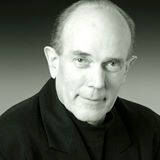
• Ray Metcalfe is a two-term Alaska state legislator, Alaska’s 2016 Democratic Party nominee for U.S. Senate, and a whistle-blower who consulted with the FBI for two years as they investigated, prosecuted, and convicted six Alaska Legislators for taking bribes. His tip also resulted in the indictment of U.S. Senator Ted Stevens. My Turns and Letters to the Editor represent the view of the author, not the view of the Juneau Empire.
