
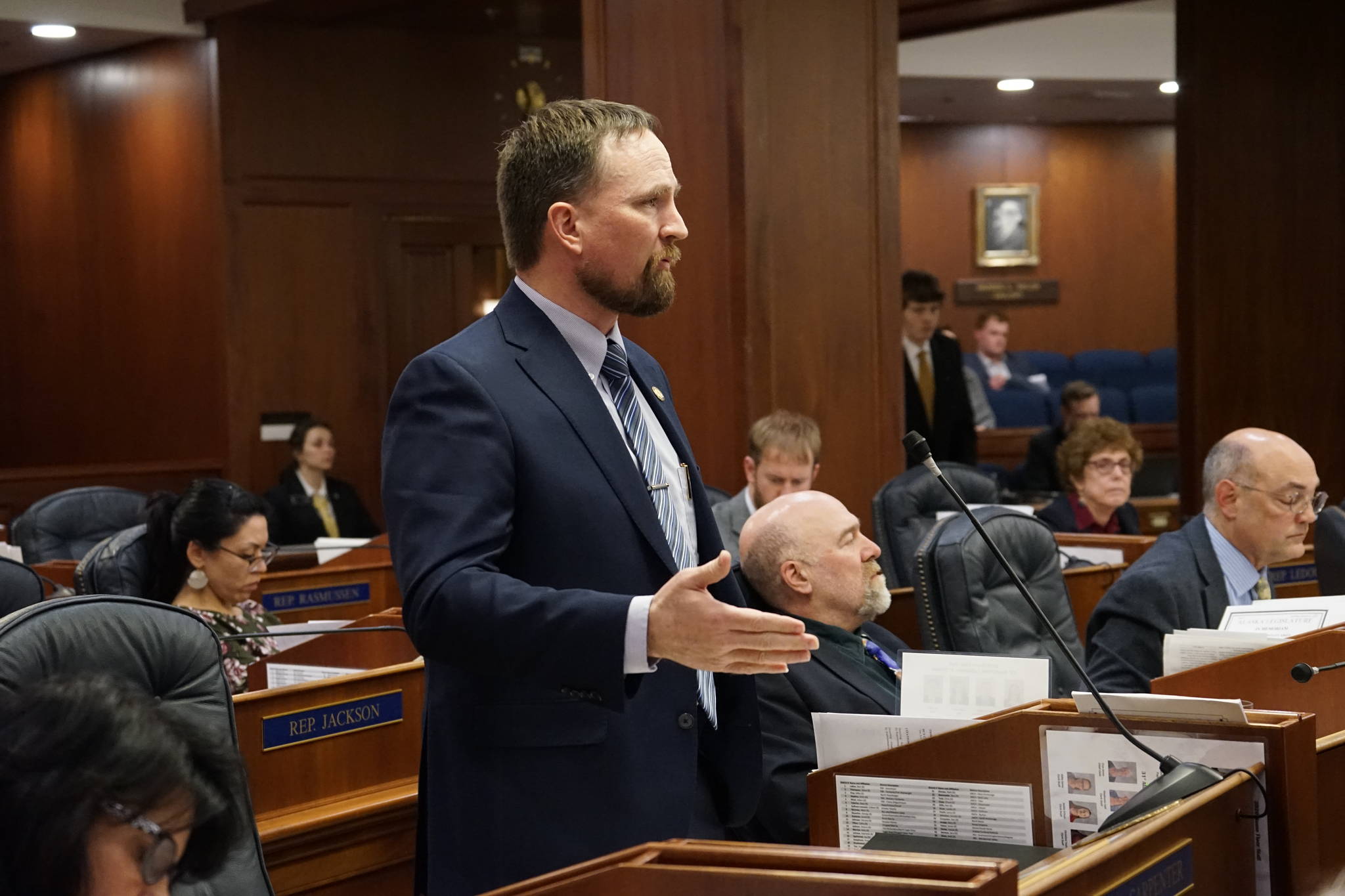
The House failed to pass a supplemental budget bill containing emergency funding for the COVID-19 outbreak by just two votes Wednesday evening. The bill also contained funding for Medicaid services and payments for firefighting efforts.
The House could choose to rescind the vote and try again, but without substantial changes to the bill, there’s no guarantee they’ll get the 30 votes needed to draw from the state’s Constitutional Budget Reserve.
Lawmakers who voted against the bill argued it was too bloated and contained a number of appropriations they couldn’t agree with.
“The House passed a supplemental bill, that was a clean bill,” said Rep. Mark Neuman, R-Big Lake, referring to the bill passed by the House in February. Neuman voted against that bill as well.
[Senate passes supplemental budget, House works into the evening]
“(The Senate) added sections that would have put in the reverse sweep and the CBR, that’s not a clean bill,” he said.
The bill that came from the Senate Wednesday included language for the “reverse sweep,” an accounting procedure the state typically goes through at the end of the fiscal year in June. In addition to the sweep, there were additional costs in the bill some House members said they hadn’t had time to review and couldn’t support.
Ten members of the Republican House minority caucus voted against the bill, saying it included appropriations not typically found in a supplemental budget.
“We’re already above $600 million dollars total spend, $360 or so state spend,” said Rep. David Eastman, R-Wasilla. “Frankly you have a lot of things in there that shouldn’t be in there.”
When the House voted for supplemental bill in February, it appropriated roughly $265 million and passed the House with almost unanimous support, with only Eastman and Neuman voting against.
But the bill which came back from the Senate appropriated $360 million in state funds, and nearly $612 million when combined with federal funds. More than $30 million of those funds were for responding to COVID-19, but there were other items in the bill Eastman said he hadn’t had time to review.
“You saw two different union contracts get thrown into the supplemental which, as predicted, we really have no idea what’s in it, we’re just being told to pass it and that’s not good policy,” Eastman said.
The funding for COVID-19, Eastman said, was probably not enough. But with the other items in the supplemental budget, passing the bill just for the sake of that money was not something those members were willing to do.
“Let’s do the supplemental bill that the governor submitted and let’s do an emergency bill,” Neuman said, saying the funding should be separate. “Putting all that into the supplemental bill and saying it’s all or nothing, how do you call this negotiating?”
House Finance Committee Co-Chair Jennifer Johnston, R-Anchorage, said the House may choose to bring the vote back to the floor, “once the sense of urgency is felt throughout the body.”
During his introduction of the bill on the floor of the Senate Wednesday, Sen. Bert Stedman, R-Sitka, apologized to that body for such a large supplemental but added, “I don’t have a choice.”
But part of the problem was that minority members hadn’t been consulted about their concerns, according to House Minority Leader Lance Pruitt, R-Anchorage.
“I think their main concern was that they were being asked during this challenge and this crisis that some people’s priorities remain without taking into consideration their priorities,” Pruitt said.
Pruitt voted for the bill, saying he felt that was what needed to happen, But his caucus is non-binding and members are free to vote as they choose, he said.
“Probably the most frustrating thing for me was a month and a half ago I told the leadership of both bodies that this was going to happen,” Pruitt said. “Unless they would listen to people’s priorities they wouldn’t have motivation to spend more money, and that’s essentially what it is.”
The House Majority Caucus hadn’t reached out to the members of the minority, Pruitt said, and he didn’t expect them to.
“They haven’t done it for months I don’t know why they’d do it now,” he said. “There are different views on how to deal with the crisis and you have to consider all of those different views at the same level.”
The House did vote unanimously on a bill Thursday which would give expedited access to unemployment insurance to people who have been laid off because of the business closures.
That bill would allow people who are unable to work, or who are underemployed because of public health measures, to become eligible for unemployment benefits and help prevent the spread of COVID-19; waive the one-week waiting requirement to begin receiving unemployment insurance benefits; and increase the weekly per-dependent benefit from $25 to $75.
That bill will now go to the Senate.
• Contact reporter Peter Segall at 523-2228 or psegall@juneauempire.com.
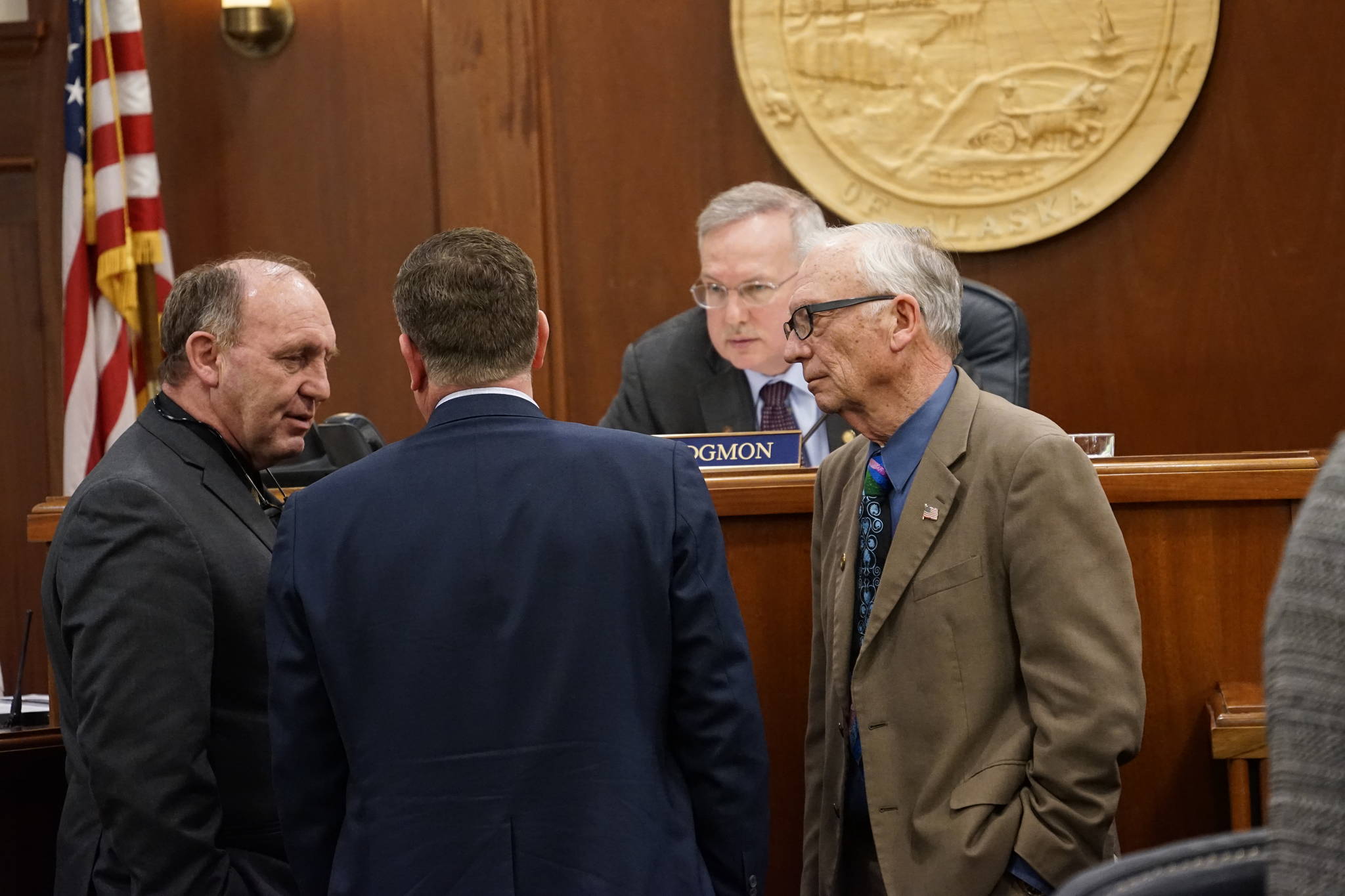
Courtesy photos | Brian Hild, House Majority Digital Media Specialist Lawmakers on the floor of the House talk during a vote on the supplemental budget on Wednesday.
