
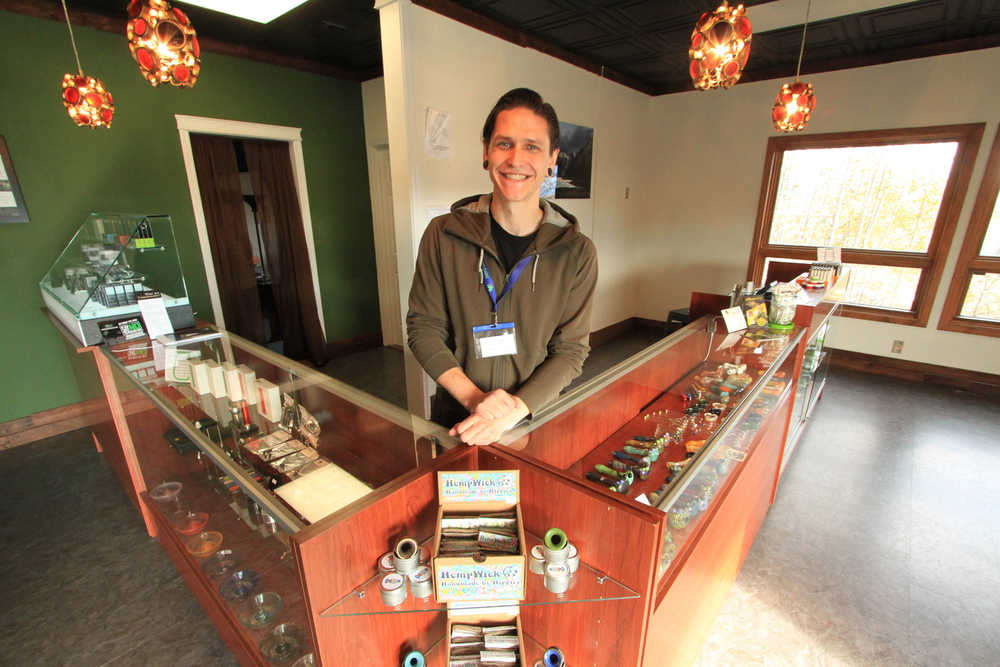
A hip new industry is attracting excited workers, but ongoing regulations might block some from working in the new field.
To work in a licensed cannabis business in the state of Alaska, employees have to pass a training course for a marijuana handler’s permit. Proposed permit requirements, though, are causing some friction for marijuana industry hopefuls who say the potential rules are “unreasonably impracticable.”
If a new draft is accepted, Alaska marijuana handler card requirements would be the strictest in the country and be inconsistent with similar Alaska alcohol employee permits.
“I believe the current regulations being proposed for occupational licensing in the cannabis industry are incongruent with the voice of the people and unfair,” said Steven Cehula, who plans on working in the industry. “This is limiting opportunities for employment without any tangible benefit for the state or city. Disqualifying potential cannabis workers for something that would not preclude them from working in the alcohol or tobacco industry simply doesn’t make sense.”
According to draft regulations, Alaskans will not be able to obtain a marijuana handler’s card if they have a felony conviction in the last five years, been convicted of selling alcohol without a license in the last five years, or convicted of a misdemeanor crime involving violence, weapons, dishonesty, or a controlled substance other than a Schedule VI controlled substance. Marijuana is a Schedule I controlled substance, the most restricted rating in the U.S. Controlled Substances Act.
These restrcitions mirror exactly those placed on the actual license applicants for marijuana businesses.
The proposed regulations have drawn criticism from industry organizations including the Anchorage Cannabis Business Association, as well as individual applicants.The Marijuana Control Board hasn’t adopted the regulations just yet, however.
“It’s still in draft form,” said Peter Mlynarik, the board’s chairman. “We’ll have to see how it plays out at the end.”
Mlynarik said the board’s intent is not to stifle the marijuana industry from making new hires, but to ensure new entrants have some kind of background check.
The board’s next meeting will take place Oct. 27 in Nome and Oct. 28 in Anchorage, where it will review the handler card matter. The Alcohol and Marijuana Control Office will be accepting public comment on the draft until Oct. 24.
State by state, product to product
States with legal adult use marijuana have different occupational licensing practices.
Colorado has an occupational license requirement for any employee of a licensed business. The application says the state will deny any applicant with any conviction for a controlled substance-related felony over the last 10 years or any felony over the last five years.
The application also asks for criminal convictions of any type in the last 10 years, but does not automatically exclude those with convictions from holding an occupational license. In contrast, the Alaska draft will explicitly exclude an applicant if there are certain misdemeanors.
The Oregon Liquor Control Commission is more lenient. It may refuse to grant a marijuana worker permit if the applicant has been convicted of a felony involving controlled substances, felony marijuana offences, violence, theft, fraud or forgery in the last three years. Oregon only tracks one misdemeanor for marijuana workers, with unlawful delivery of marijuana in the last three years, which is a class A misdemeanor.
The state of Washington is most lenient of them all. The Washington Liquor and Cannabis Board doesn’t require workers in the marijuana industry to have any occupational licensing whatsoever.
Alaska’s occupational licensing for marijuana differs from alcohol regulations.To work in an alcohol business in Alaska, employees must complete training for Alcohol Professionals, or TAP, card.
Unlike the marijuana draft, an applicant for TAP card has no criminal restrictions at all, according to Kirsten Myles, vice president of operations for the Cabaret, Hotel, Restaurant, and Retail Association, or CHARR, a lobbying organization representing alcohol and hospitality business interests in Alaska.
The only possible restriction on a TAP card is a red stripe on a driver’s license. The state uses the red stripe to ban certain criminal offenders from buying alcohol or entering an alcohol establishment, but doesn’t necessarily prevent an alcohol licensee from hiring a red-striped person as an employee, according to Myles.
From Myles’ perspective, narrowing the marijuana employment pool is a bad idea.
“It doesn’t make any sense,” said Myles. “It’s hard enough to find good employees for any business.”
With over 300 marijuana licenses statewide, the marijuana industry will provide some employment opportunity, but economists so far haven’t made any solid projections for workforce size.
A recent report from the Department of Labor states: “With the recent legalization of commercial marijuana in Alaska, farm workers and laborers (crop, nursery, and greenhouses), and inspectors (testers, sorters, samplers, and weighers) are expected to increase, but projecting marijuana-related jobs is especially uncertain. The industry is new and we don’t yet know how many of its workers will be self-employed, among a variety of other unknowns.”
Other states can give some guidance to employment numbers. By the end of 2015, Colorado issued nearly 27,000 occupational licenses. These numbers only include businesses that deal directly with the product. Support Industry numbers aren’t counted.
According to estimates from Marijuana Business Daily, the numbers of employees in the industry nationwide is between 100,000 and 150,000.
• DJ Summers can be reached at daniel.summers@alaskajournal.com.
