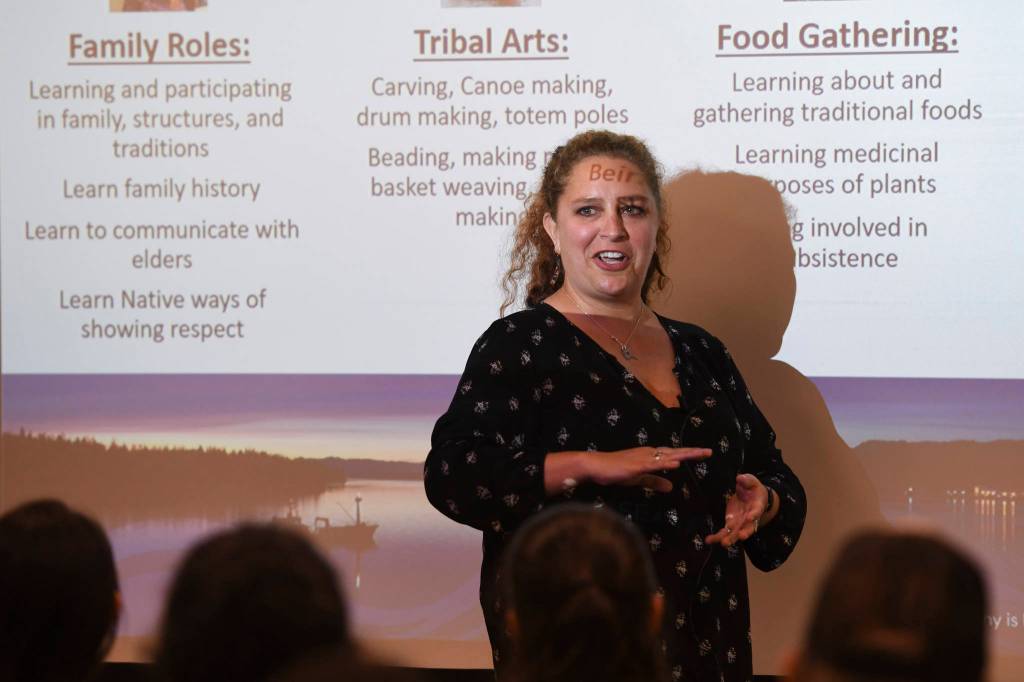
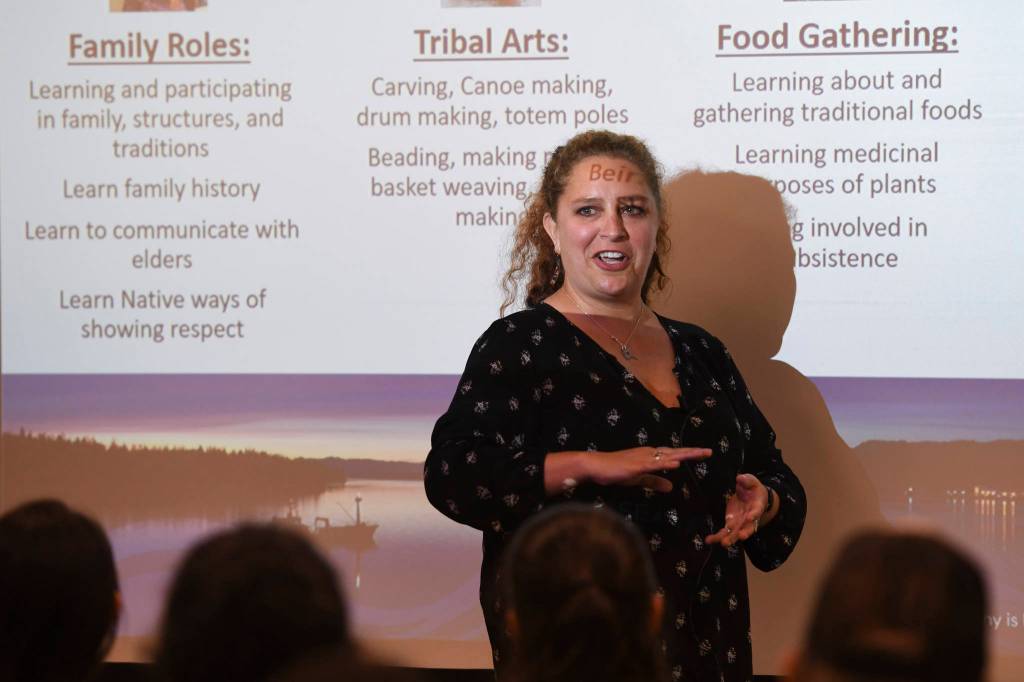
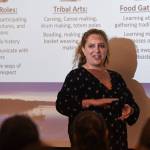
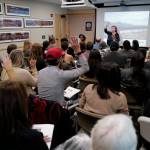
Brenda Thayer, a mental health counselor for SEARHC, speaks of trauma in Native communities during a speech at the Walter Soboleff Center on Tuesday, July 23, 2019. (Michael Penn | Juneau Empire)

Brenda Thayer, a mental health counselor for SEARHC, speaks of trauma in Native communities during a speech at the Walter Soboleff Center on Tuesday, July 23, 2019. (Michael Penn | Juneau Empire)

‘We are not defined by our wounds’: Speakers talk about trauma’s effects on Alaska Native people

Breaking the chain and national efforts also addressed

Trauma suffered by families and communities has a lingering and negative impact, said a pair of guest speakers Tuesday at the Walter Soboleff building.

Brenda Thayer, program manager for Southeast Alaska Regional Health Consortium in Sitka, and Dan Press, who provides legal representation to Native tribes, organizations and businesses, spoke about the lasting effects of multi-generational trauma. They also spoke about things being done to address those effects.

The talk was a companion piece to an ongoing study SHI is involved with that is examining whether historic trauma’s impact can be seen in Alaska Native genes.

[Study looks at the possible genetic impact of colonialism and trauma]

“We are not defined by our wounds,” Thayer said of Alaska Native people. “We have a lot, but we are not defined by our wounds.”

Brenda Thayer, a mental health counselor for SEARHC, speaks of trauma in Native communities during a speech at the Walter Soboleff Center on Tuesday, July 23, 2019. (Michael Penn | Juneau Empire)

Brenda Thayer, a mental health counselor for SEARHC, speaks of trauma in Native communities during a speech at the Walter Soboleff Center on Tuesday, July 23, 2019. (Michael Penn | Juneau Empire)

Thayer, who was raised in Yakutat and is Tlingit, began her presentation by outlining the sources of some of those wounds.

Her timeline of trauma began with colonization by Russia in the 1700s, which introduced disease and alcoholism into Native communities. Later in the 18th century, missionaries arrived.

“I believe the missionaries, most of them, had really good intentions when they came here,” Thayer said.

However, she said forced assimilation, sending children away from their homes for schooling and pedophilia meant damage was done.

In the mid 1800s, Alaska was sold to the U.S., which brought about boarding schools. Boarding schools were meant to assimilate Native people, and the schools took children from their homes and Native languages, regalia and many customs were banned.

Boarding schools persisted until well into the 20th century.

“As a counselor, I am still talking to people about their trauma with the boarding schools,” Thayer said.

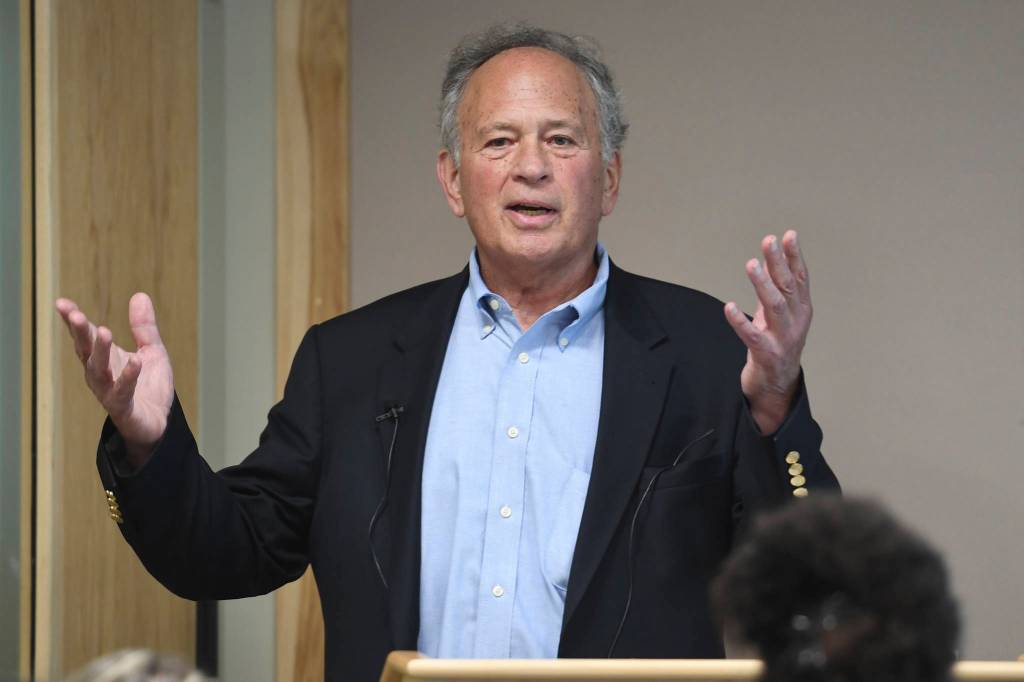
Dan Press, of Van Ness Feldman LLP in Washington, D.C., speaks of trauma in Native communities during a speech at the Walter Soboleff Center on Tuesday, July 23, 2019. (Michael Penn | Juneau Empire)

Dan Press, of Van Ness Feldman LLP in Washington, D.C., speaks of trauma in Native communities during a speech at the Walter Soboleff Center on Tuesday, July 23, 2019. (Michael Penn | Juneau Empire)

That type of historical trauma — experiences suffered over generations by people or communities — can lead toward cyclical problems, Thayer said, especially if nothing is done to address it. It can also be tied to inter-generational trauma, which is trauma that affects families.

Slavery or the persecution of the Jews are both examples. Suicide, domestic violence and substance misuse are examples of inter-generational trauma.

Thayer cited a CDC-Kaiser study to show the impact trauma and Adverse Childhood Experiences have on people.

From 1995-97, a study was conducted in Southern California that surveyed over 17,000 people, and it found childhood trauma can be linked to higher rates of lung disease, hepatitis, depression and attempted suicide.

“When I saw that, I said, ‘That wasn’t done in San Diego, that was done on the Navajo Reservation,” said Press, who also referenced the study in his talk.

He said it explained many of the problems he would observe when visiting friends at the Navajo reservation.

Thayer said a cultural renaissance, political force, Native sovereignty, pride and awareness are some of the ways to move forward as a community, and protective factors such as tribal arts, food gathering and cultural knowledge are also important.

[Cemetery caretaker helps repatriate remains of Alaska Native children]

Press talked about some actions being taken at the national level that could help address some of the problems linked to trauma.

One is a lawsuit against the Bureau of Indian Education that seeks sufficiently supportive services for trauma-suffering Native students.

Press said he’s keen to see the results of SHI’s epigenetics study because it could bolster the students’ case.

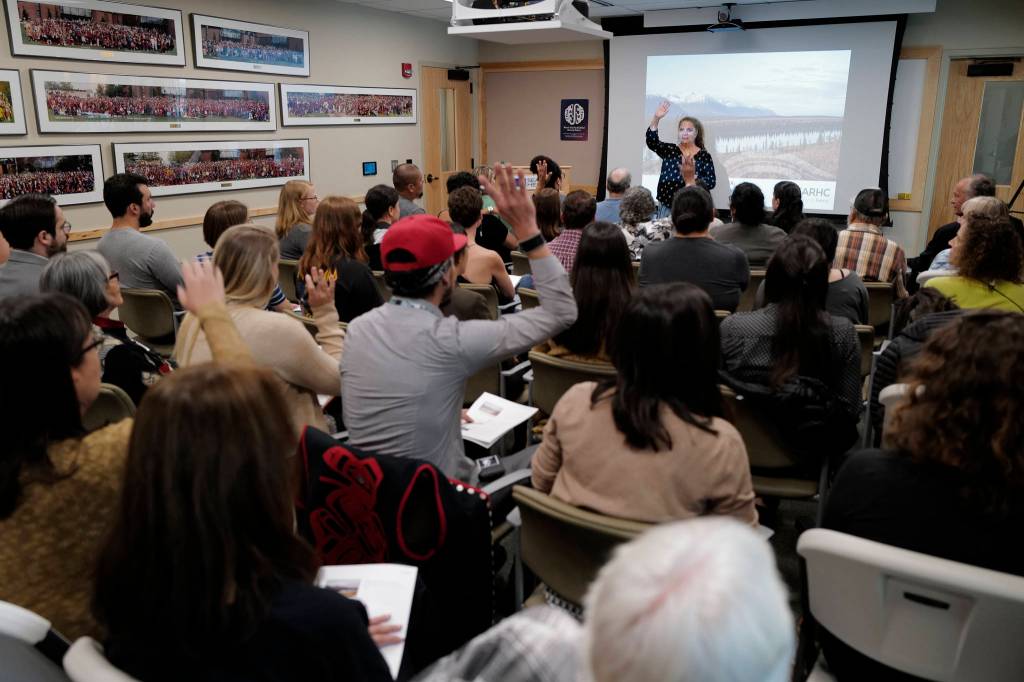
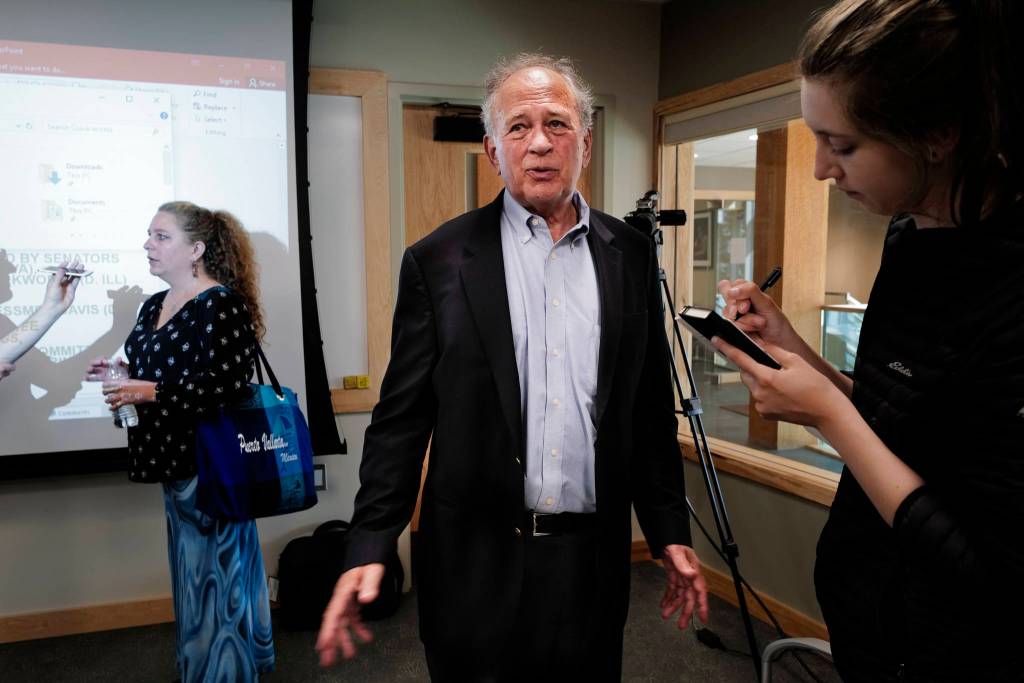
Dan Press, of Van Ness Feldman LLP in Washington, D.C., center, and Brenda Thayer, a mental health counselor for SEARHC, left, answer questions after giving speeches about trauma in Native communities at the Walter Soboleff Center on Tuesday, July 23, 2019. (Michael Penn | Juneau Empire)

Dan Press, of Van Ness Feldman LLP in Washington, D.C., center, and Brenda Thayer, a mental health counselor for SEARHC, left, answer questions after giving speeches about trauma in Native communities at the Walter Soboleff Center on Tuesday, July 23, 2019. (Michael Penn | Juneau Empire)

Another thing to watch for, Press said, is congressional action.

Lawmakers on both sides of the aisle support the Resilience, Investment, Support and Expansion from Trauma Act.

The act is the work of a bipartisan group of senators, including Sen. Lisa Murkowski, that would expand support for children who have experienced trauma.

“It’s exciting to think there may be one issue that’s not partisan in this Congress, and that’s trauma,” Press said.

He said Alaskans are lucky to have a senator who is at the forefront of the issue and encouraged those in attendance to make their support for the cause known.

“Become activists,” Press said. “March out of here.”


• Contact reporter Ben Hohenstatt at (907)523-2243 or bhohenstatt@juneauempire.com. Follow him on Twitter at @BenHohenstatt.

More in News

The northern lights are seen from the North Douglas launch ramp late Monday, Jan. 19. A magnetic storm caused unusually bright northern lights Monday evening and into Tuesday morning. (Chloe Anderson/Juneau Empire)
Rare geomagnetic storm causes powerful aurora display in Juneau

The northern lights were on full display Monday evening.

teaser
Juneau activists ask Murkowski to take action against ICE

A small group of protesters attended a rally and discussion on Wednesday.

Cars pass down Egan Drive near the Fred Meyer intersection Thursday morning. (Clarise Larson / Juneau Empire file photo)
Safety changes planned for Fred Meyer intersection

DOTPF meeting set for Feb. 18 changes to Egan Drive and Yandukin intersection.

Herbert River and Herbert Glacier are pictured on Nov. 16, 2025. (Mari Kanagy / Juneau Empire)
Forest Service drops Herbert Glacier cabin plans, proposes trail reroute and scenic overlook instead

The Tongass National Forest has proposed shelving long-discussed plans to build a… Continue reading

A tsunami is not expected after a 4.4-magnitude earthquake northwest of Anchorage Wednesday, Feb. 4, 2026. (U.S. Geological Survey)
No tsunami expected after 4.4-magnitude earthquake in Alaska

U.S. Geological Survey says 179 people reported feeling the earthquake.

ORCA Adaptive Snowsports Program staff member Izzy Barnwell shows a man how to use the bi-ski. (SAIL courtesy photo)
Adaptive snow sports demo slides to Eaglecrest

Southeast Alaska Independent Living will be hosting Learn to Adapt Day on Feb. 21.

Cars drive aboard the Alaska Marine Highway System ferry Hubbard on June 25, 2023, in Haines. (Photo by James Brooks)
Alaska’s ferry system could run out of funding this summer due to ‘federal chaos problem’

A shift in state funding could help, but a big gap likely remains unless a key federal grant is issued.

Photo by James Brooks/Alaska Beacon
U.S. Sen. Dan Sullivan stands with acting Coast Guard Commandant Adm. Kevin Lunday during the after the commissioning ceremony for the Coast Guard icebreaker Storis on Sunday, Aug. 10, 2025, in Juneau, Alaska.
Coast Guard’s new Juneau base may not be complete until 2029, commandant says

Top Coast Guard officer says he is considering whether to base four new icebreakers in Alaska.

Students from the Tlingit Culture Language and Literacy program at Harborview Elementary School dance in front of elders during a program meeting in 2023. (Clarise Larson / Juneau Empire file photo)
Sealaska adds more free Tlingit language courses

The new course is one of many Tlingit language courses offered for free throughout the community.

Most Read