
Gov. Bill Walker is expected today to announce a special session of the Alaska Legislature dealing with the long-planned trans-Alaska natural gas pipeline.
The location of that session — Anchorage or Juneau — has not been confirmed.
Walker announced his intentions during an interview Monday evening with KTVA-TV’s Emily Carlson.
“We will,” he said in response to Carlson’s question about whether he intended to call the Legislature into session.
“I met with leadership today, a number of legislative leadership, and we talked about a schedule, so we’ll be putting something out this week on a schedule for the special session,” Walker said.
When it happens
“We understand that notice will be given tomorrow,” Rep. Cathy Muñoz, R-Juneau, said Tuesday afternoon.
The date of the announcement matters because the governor is required by law to give lawmakers at least 30 days’ notice before a special session begins.
Walker said in his interview that his goal is to have a special session complete before Thanksgiving.
If a special session call is issued Wednesday, 30 days later would be Friday, Oct. 23. Under state law, a special session can last a maximum of 30 days. If lawmakers need all 30 days, the final day of the session would be Nov. 22, the Sunday before Thanksgiving.
Senate President Kevin Meyer, R-Anchorage, said the goal will be to finish the special session’s work before 30 days.
“I’m hoping it’s done sooner,” he said.
Contacted for comment, Walker’s press secretary Katie Marquette said only that details would be announced later this week.
What it covers
When the governor announces his intent to call the special session, he’ll also announce its agenda. While the final word is left to the governor, multiple lawmakers said the agenda will focus on one aspect of the pipeline project.
“I think pretty much it’s going to be pipeline,” he said, adding that he doesn’t see things like Medicaid reform making the agenda for the special session.
House Speaker Mike Chenault, R-Nikiski, Meyer, Muñoz, Sen. Dennis Egan, D-Juneau, and Rep. Sam Kito III, D-Juneau, each said they expect the agenda to consist of a request from the governor for the Legislature to authorize a buyout of TransCanada’s share of the pipeline project.
The Alaska LNG project is backed by a partnership that includes ExxonMobil, ConocoPhillips, BP, TransCanada and the state. Together, they will provide the money, planning and permitting to build an 800-mile pipeline from the North Slope to a liquefaction plant in Nikiski. The cost to build the system has typically been estimated between $45 billion and $65 billion.
Under existing agreements, TransCanada holds the state’s 25 percent share of the project. TransCanada is providing expertise with large projects and several billion dollars in up-front funding in exchange for a guaranteed return. If the pipeline is built, TransCanada will receive a share of the revenue from its operation. If the pipeline doesn’t get built, the state has guaranteed it will repay the Canadian firm.
“They’re guaranteed to stay whole,” Kito said.
In June, Walker said he was considering ending the state’s relationship with TransCanada. With ExxonMobil having joined the Alaska LNG project, TransCanada’s expertise in large pipelines is no longer necessary.
Furthermore, ending the relationship would ensure the state receives more revenue in the long term.
“If it brings more money to the state in the long run … then we’ll probably approve it,” Meyer said. “I think the bigger question is ‘Where do we get the $100 million to buy out TransCanada?’”
In June, the Legislature was told that TransCanada had spent $108 million on Alaska LNG to date, money the state would have to repay if Alaska bought out the Canadians.
That figure is an up-front cost atop the presumed billions the state would need to borrow to finance its share of the pipeline.
“We’ll have to see what (Walker) has in mind to pay for it,” Meyer said.
“We need to know what the risks are, we need to know what the rewards are,” Chenault said. “We need to know before we go to Juneau or where the special session is.”
Chenault stressed that lawmakers expect the governor’s office to provide adequate time to read and analyze contracts and other documents.
Where it takes place
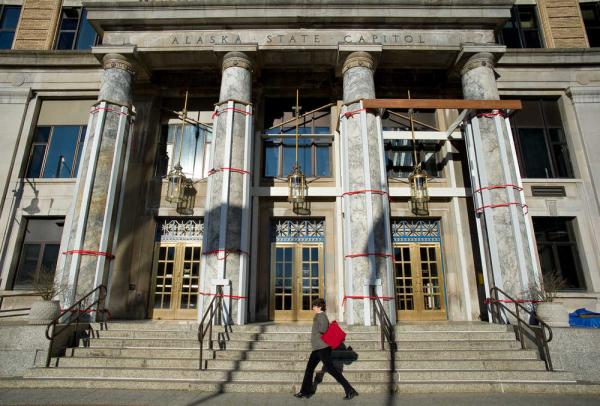
For many, the biggest question of all is where the special session will take place. Construction at the state capitol moved a special session earlier this year to Anchorage.
“We have been told by the governor that the special session that he calls will be in Juneau,” Kito said.
Other lawmakers were less firm.
“I don’t think we really care either way,” Meyer said. “The only concern we have with Juneau is that the capitol is still under construction.”
Pam Varni, executive director of the nonpartisan Legislative Affairs Agency, is the person keeping track of the project.
Construction will still be taking place at the end of October, but “there will be fewer legislators having to share offices in Juneau than there were in Anchorage,” she said.
By the end of next month, the Senate chambers will be fully functional, but the House Chambers will be lacking their voting boards as masons work on the building’s external sections.
“The House could also meet in the Senate chambers, but that’s totally up to (legislative) leadership,” Varni said.
Two Senate offices would be displaced by work, but Varni said the governor’s office has donated space for them. A handful of House members would have to share office space or use cubicles that have been set up in the Terry Miller Building’s gymnasium.
“One thing we don’t want to do is stop the construction, because that would be costly,” Meyer said.
The final call on the location of the special session will be made by the person convening it — Gov. Walker.
