
Image via labor.alaska.gov.

Image via labor.alaska.gov.

Wages up from a decade ago

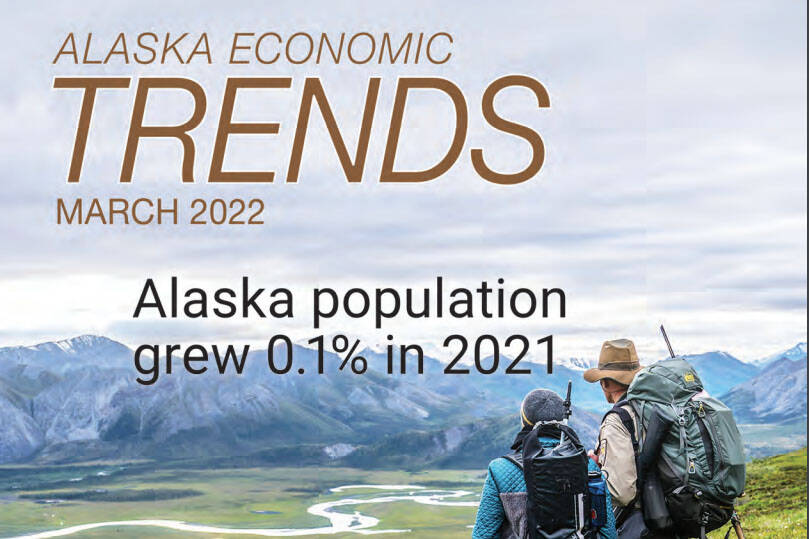
Yearly wages rose 11% when adjusted for inflation — or approximately $5,809 annually — from 2010 to 2020

On average, wages increased statewide from 2010 to 2020.

That’s according to the latest Alaska economic trends report released by the state Department of Labor and Workforce Development.

Yearly wages rose 11% when adjusted for inflation — or approximately $5,809 annually — in the 10-year period.

Neal Fried, an economist for the labor department, wrote in the report that from 2010 to 2019 wages only increased by 3%, and that the beginning of the COVID-19 pandemic actually helped stimulate salary growth.

“Although it might seem counter-intuitive for a year of massive job loss, the pandemic boosted the average wage notably between 2019 and 2020 because of the types of jobs Alaska lost and the way the average annual wage is calculated,” Fried reported.

These types of occupations lost in the pandemic were lower-wage, part-time positions in the service industries, the report states. Because of this deficit, wages for jobs in other industries increased.

Some regions in the state saw greater wage growth than others. Salaries in the Aleutians East Borough increased by 48% from 2010 to 2020 — the largest jump in the state. In contrast, the Lake and Peninsula Borough lost 6% on its wages that decade. The Kenai Peninsula Borough saw a slightly above-average wage increase — 14%.

Different industries affected the change in wages over time, according to the report.

For example, the seafood processing sector had the highest percent change across all industries in Alaska during the decade with a 35% increase. Wages in the Aleutians East Borough mostly come from seafood processing, the report states.

Among other industries with a large wage increase were oil and gas, manufacturing, transportation and warehousing, and education and health services.

Some caveats to the data include the change in minimum wage and inflation, the report states.

Alaska’s minimum wage in 2010 was just $7.75 per hour, but had risen to $10.19 per hour by 2020.

In addition, the average yearly rate of inflation from 2010 to 2020 was just 1.5%, which “wasn’t a big influence on wages over the decade,” according to the report. However, in 2021 inflation rose to approximately 4.9%.

“For the first three quarters of 2020, unadjusted wages averaged $59,903 for the year, and for the same period in 2021 it was $60,457,” Fried states in the report. “That was a (1%) increase in wages, but inflation was (4.9%) in 2021, effectively wiping out the minor gain and then some.”

Access the full Alaska economic trends report at https://labor.alaska.gov/trends/mar22.pdf.

Reach reporter Camille Botello at camille.botello@peninsulaclarion.com.

More in News

The northern lights are seen from the North Douglas launch ramp late Monday, Jan. 19. A magnetic storm caused unusually bright northern lights Monday evening and into Tuesday morning. (Chloe Anderson/Juneau Empire)
Rare geomagnetic storm causes powerful aurora display in Juneau

The northern lights were on full display Monday evening.

teaser
Juneau activists ask Murkowski to take action against ICE

A small group of protesters attended a rally and discussion on Wednesday.

A female brown bear and her cub are pictured near Pack Creek on Admiralty Island on July 19, 2024. (Chloe Anderson for the Juneau Empire)
Pack Creek permits for bear viewing area available now

Visitors are welcome from April 1 to Sept. 30.

Cars pass down Egan Drive near the Fred Meyer intersection Thursday morning. (Clarise Larson / Juneau Empire file photo)
Safety changes planned for Fred Meyer intersection

DOTPF meeting set for Feb. 18 changes to Egan Drive and Yandukin intersection.

Herbert River and Herbert Glacier are pictured on Nov. 16, 2025. (Mari Kanagy / Juneau Empire)
Forest Service drops Herbert Glacier cabin plans, proposes trail reroute and scenic overlook instead

The Tongass National Forest has proposed shelving long-discussed plans to build a… Continue reading

A tsunami is not expected after a 4.4-magnitude earthquake northwest of Anchorage Wednesday, Feb. 4, 2026. (U.S. Geological Survey)
No tsunami expected after 4.4-magnitude earthquake in Alaska

U.S. Geological Survey says 179 people reported feeling the earthquake.

ORCA Adaptive Snowsports Program staff member Izzy Barnwell shows a man how to use the bi-ski. (SAIL courtesy photo)
Adaptive snow sports demo slides to Eaglecrest

Southeast Alaska Independent Living will be hosting Learn to Adapt Day on Feb. 21.

Cars drive aboard the Alaska Marine Highway System ferry Hubbard on June 25, 2023, in Haines. (Photo by James Brooks)
Alaska’s ferry system could run out of funding this summer due to ‘federal chaos problem’

A shift in state funding could help, but a big gap likely remains unless a key federal grant is issued.

Photo by James Brooks/Alaska Beacon
U.S. Sen. Dan Sullivan stands with acting Coast Guard Commandant Adm. Kevin Lunday during the after the commissioning ceremony for the Coast Guard icebreaker Storis on Sunday, Aug. 10, 2025, in Juneau, Alaska.
Coast Guard’s new Juneau base may not be complete until 2029, commandant says

Top Coast Guard officer says he is considering whether to base four new icebreakers in Alaska.

Most Read