
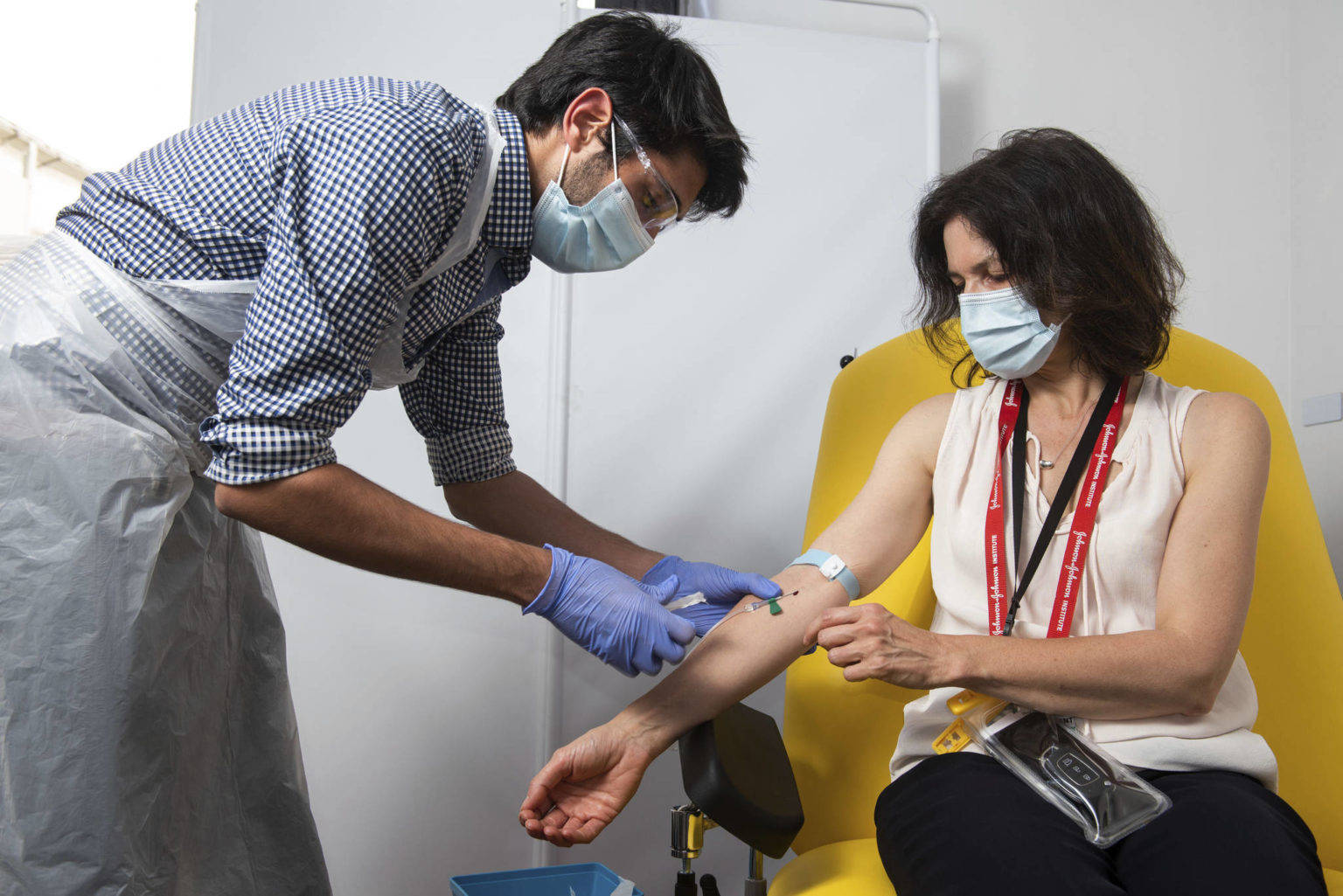
Alaska could receive and begin distributing COVID-19 vaccinations to health care workers and vulnerable populations as soon as next week, Department of Health and Social Services officials said during an Alaska Senate committee meeting.
Speaking to the Senate Health and Social Services Committee, Tess Walker Linderman of DHSS’ COVID-19 Task Force, told lawmakers federal health authorities are still finalizing their guidance on vaccine distribution but plans were mostly in place. The Food and Drug Administration is meeting Thursday to approve an Emergency Use Authorization for a vaccine developed by the pharmaceutical company Pfizer. Once that happens, Alaska is set to receive 35,100 doses of the vaccine, she said.
“We’re very, very close to being in Phase 1A,” Walker Linderman said, referring to the state’s phased distribution plan. “We could be one week out.”
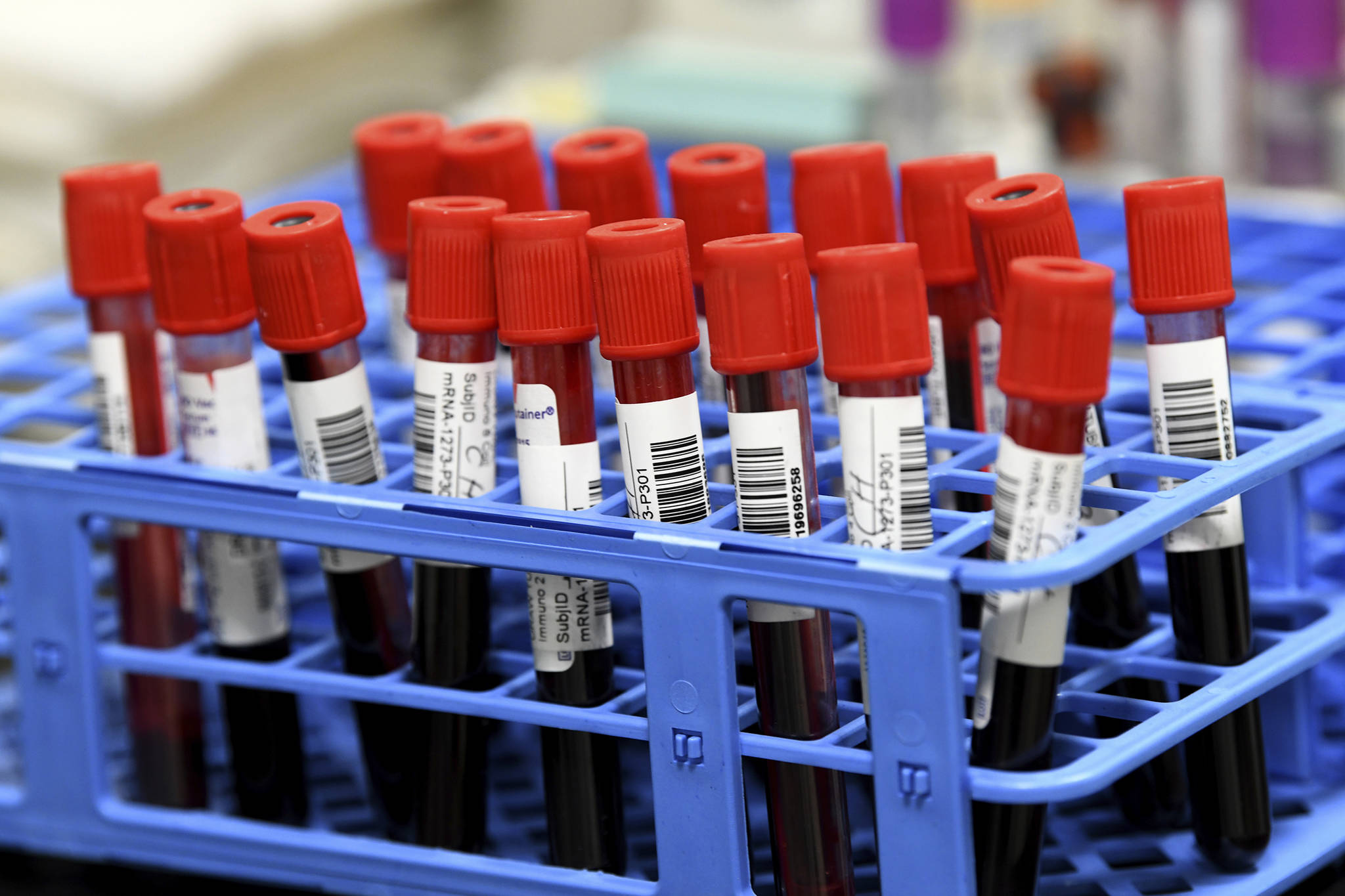
This photo shows blood samples from volunteers participating in the last-stage testing of the COVID-19 vaccine by Moderna and the National Institutes wait to be processed in a lab at the University of Miami Miller School of Medicine in Miami. Creating vaccines and properly testing them less than a year after the world discovered a never-before-seen disease is incredible. But the two U.S. frontrunners are made in a way that promises speedier development may become the norm — especially if they prove to work long-term as well as they have in early testing. (AP Photo/Taimy Alvarez, File)
Alaska’s distribution plan is largely based on recommendations from the federal Centers for Disease Control and Prevention’s Advisory Committee on Immunization Practices released on Dec. 3, Walker Linderman said. Alaska’s own allocation committee created a three-phase distribution plan based on those recommendations that will give the vaccine first to frontline health care workers and vulnerable people.
The first phase of the plan is broken into two phases and there are additional tiers within those phases, said. Dr. Anne Zink, Alaska’s chief medical officer.
According to DHSS, the first to receive COVID-19 vaccines under Phase 1A are hospital-based front-line health care workers at highest risk for COVID-19 infection, long-term care facility residents and staff, EMS/fire personnel, community health aides and individuals who are required to perform vaccinations.
Alaska will receive more doses than expected, Walker Linderman said, but the 35,100 of the Pfizer vaccine and 17,900 of Moderna’s vaccine, which is expected to receive approval a week after Pfizer. The combined 43,000 vaccines represent only a fraction of the state’s population of about 731,000.
Furthermore, the medicine Alaska will receive following the EUA is only the first dose of a two-dose vaccination. Without the second dose the vaccine isn’t likely to be fully effective, Zink said. The second dose will be sent by the federal government after the first shipment, she said.
The second dose of Pfizer’s vaccine must be received exactly 21 days after the first. It’s 28 days after for Moderna. It is extremely important to receive the second dose on the appropriate day, said Dr. Elizabeth Ohlsen with the Division of Public Health and people and communities will need to take steps to ensure that can happen.
[Health officials want Alaskans ready for vaccine]
Because of the logistical challenges involved with transporting the vaccine to Alaska’s most remote communities, the state opted to receive its entire monthly allotment upfront, rather than the weekly shipments being sent to most states, Walker Linderman said. The vaccine does need to be stored at ultra-cold temperatures, she said, but there are a several cold-storage freezers in the state that can store the vaccine. Pfizer is also providing its own cold-storage container which can keep the vaccine at the correct temperature for up to 21 days with replenishments of dry ice every five days, Walker Linderman said.
The vaccine won’t be available to the general public for several more months, but once it is, the state will use its existing vaccine distribution program to get the vaccine to hospitals, clinics and pharmacies, said Matt Bobo, immunization program manager for the Division of Public Health. The federal government is providing the vaccine at no cost, but medical providers like doctor’s offices and pharmacies may charge an administration fee, he said. As of Dec. 4, 265 health organizations were fully enrolled in the state’s program, according to DHSS.
The state has no intention of mandating the vaccine, Zink said, responding to Sen. Mike Shower’s, R-Wasilla, question about people who may be asked to take the vaccine in order to work. No mandates can be issued while the vaccine is under emergency authorization, she said, and it will likely be two years before that designation is removed. Sen. Tom Begich, D-Anchorage, added that President-elect Joe Biden recently said the vaccine would not be mandatory. The World Health Organization does not expect to see vaccines being mandatory around the world, according to Reuters.
As the vaccine becomes available, the state has designated special technical assistance advisers to act as liaisons between the state and local health authorities both public and private. Health care facilities will send requests to DHSS based on their need, Zink said, and the state will distribute based on its guidelines.
Though COVID-19 vaccines were developed exceptionally fast, Zink and other health officials have said the medicine is based on pre-existing research and has been tested and vetted as any other drug would be.
Sen. David Wilson, R-Wasilla, who chairs the committee, relayed a series of questions to Dr. Zink sent to his office by the public which included concerns about the vaccine changing one’s DNA and the implantation of tracking microchips. Vaccines are unable to do either of those things, Zink said.
Concerns about allergic reactions, fertility issues and if fetal tissue was used in the vaccine’s production were also listed.
No fetal material was used in the production of the Pfizer or Moderna vaccines, Zink said, and there was little data yet available on adverse reactions or long-term effects on fertility.
DHSS officials have emphasized that health officials are waiting on further guidance from the CDC and the distribution plan will likely change. Alaska’s vaccine distribution group will also meet Dec. 10, to re-examine the state’s plan and make any necessary alterations, Walker Linderman said. Once the EUA is approved the vaccine can be shipped but it can’t be administered, she said, until ACIP releases their recommendations. How soon that meeting takes place after the FDA issues its authorization is unknown, Walker Linderman said.
“Potentially there could be vaccinations by the end of next week,” she said. “But there’s a lot of unknowns.”
• Contact reporter Peter Segall at psegall@juneauempire.com. Follow him on Twitter at @SegallJnuEmpire.
