
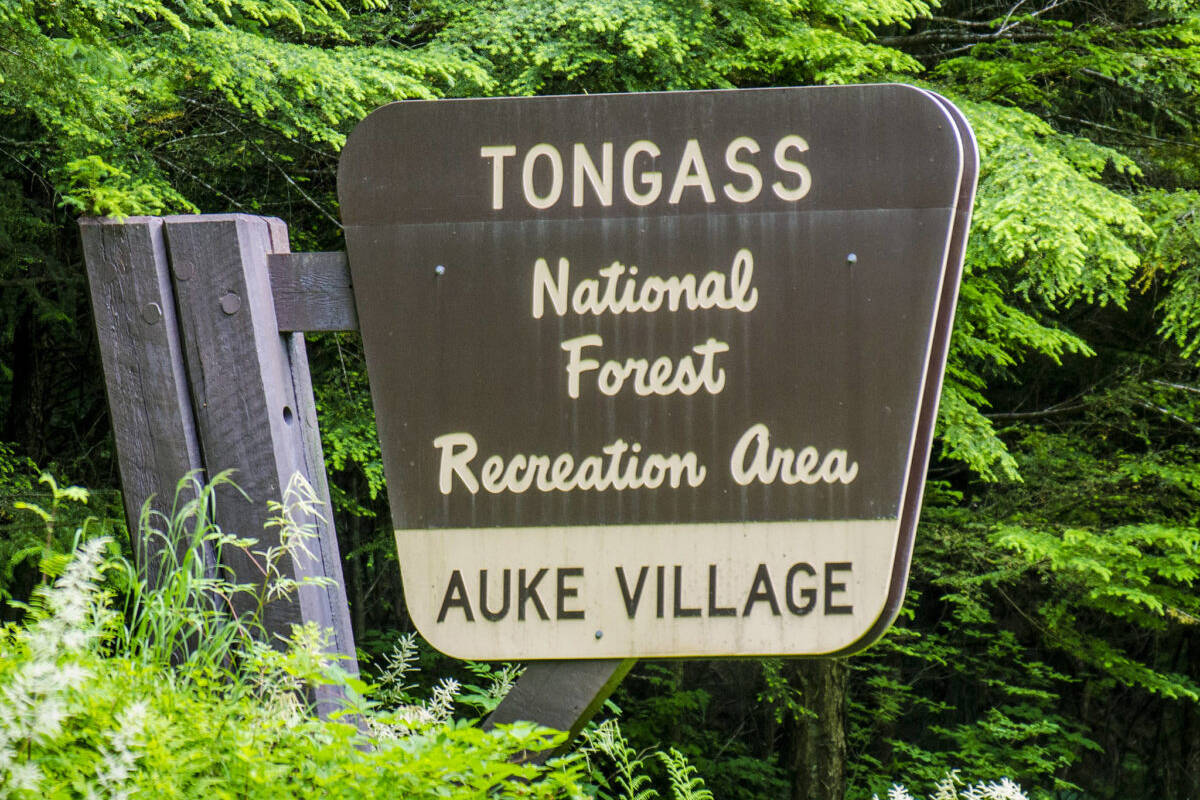
On Wednesday, the Trump Administration announced it will once again attempt to eliminate Roadless Rule protections for national forests, including in the Tongass National Forest. The 2001 Roadless Area Conservation Rule protects 58.5 million acres of national forest land, including 14.7 million acres in Alaska.
The Clinton-era policy prohibits the construction of new roads or commercial logging in the Tongass, which serves as critical habitat for salmon and wildlife, provides hunting and fishing opportunities for residents and tribal members, and supports the recreation and tourism industries.
Melissa Lewis with Southeast Alaska Conservation Council said in an Aug. 27 press release that the Tongass is home to 20% of the carbon within U.S. national forests and that rescission of the Roadless Rule would add almost 190,000 acres of the Tongass to an inventory of lands “suitable” for timber production.
Linda Behnken, director of the Alaska Longline Fishermen’s Association, said in an Aug. 27 press release that more than 240 miles of salmon streams are still blocked by failed culverts from past road building, costing salmon fishermen $2.5 million annually in forgone harvest.
USDA Secretary Brooke Rollins initially announced plans to rescind forest protections on June 23 at the Western Governors’ Association Meeting. To begin the official process, the agency will post a “Notice of Intent” to the Federal Register on Friday, Aug. 29, at which point a 21-day public comment period will commence. Public comments must be received by Sept. 19.
Gloria Burns, president of Ketchikan Indian Community, said in an Aug. 27 press release that the federal government must provide safeguards or leave their home roadless, as they are not willing to risk the destruction of their homeland when no effort has been made to ensure the future is one their ancestors envisioned for them.
“We, the people of Kichxáan, are the Tongass,” she said. “You cannot separate us from the land. Without our lungs — the Tongass — we cannot breathe life into our future generations.”
Alaska Environment Research & Policy Center State Director Dyani Chapman said in an Aug. 27 press release that the Roadless Rule is a successful conservation tool, and it should stay in place.
”Alaska’s roadless areas are essential public lands that the Forest Service should not open up to roads and development,” she said. “Our national forests still have trees older than the United States, healthy salmon populations and true backcountry. Roadless areas make up beloved hunting grounds, fly fishing areas, and hiking opportunities. It is more important to protect these areas than to get a little more wood or to build one more mine or one more road.”
Wanda Culp, Tlingit activist and Tongass Forest coordinator for the Women’s Earth and Climate Action Network, said in an Aug. 27 press release that rescinding the 2001 Roadless Rule is an act of violence against the Indigenous peoples who have called the Tongass Forest home for “eons before recorded time,” and urged
“The wild Tongass Forest is the foundation of our sovereign cultural way of life,” she said. “The Forest is a sanctuary, our economy arose from this convoluted land, not capable of big ‘agriculture’. Tlingit, Haida, and Tsimshian tribes thrive here. As the original stewards of this region, we say ‘no to more taking’ by big business from public coffers.”
When the previous Trump administration tried to roll back Roadless protections on the Tongass, the public submitted 1.6 million public comments, with 96% in favor of keeping Roadless protections in place.
Earthjustice Attorney Kate Glover said in an Aug. 27 press release that they’re disappointed to see the Trump administration moving forward with the rescission, especially with such a short comment period.
“We know the vast majority of the public recognizes the value of intact forests for protecting indigenous ways of life, healthy watersheds, and salmon streams, and defending against climate change — and we hope the administration will be able to hear those voices and collect the best available scientific information,” she said. “The Roadless Rule has been working well for the Tongass and remains one of the best tools to ensure the forest remains standing for everyone’s benefit.”
