US House delegation visits Alaska this week, with focus on mining, timber and drilling
Published 10:30 pm Tuesday, August 26, 2025
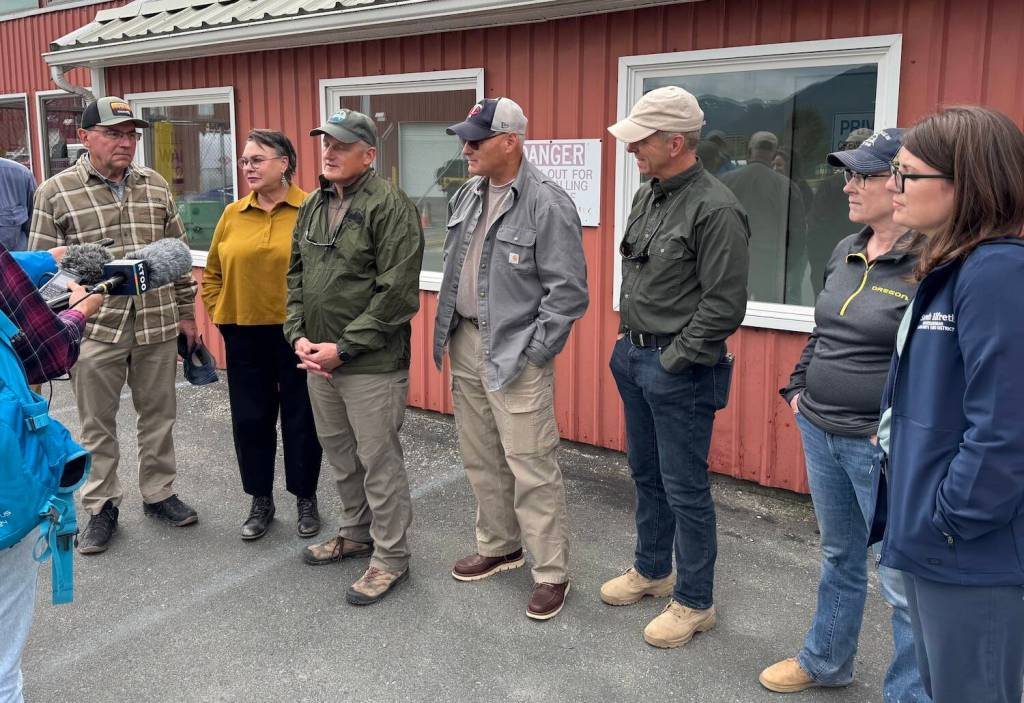


Ten members of the U.S. House of Representatives’ Committee on Natural Resources are making an unusual visit to Alaska this week during a break from business on Capitol Hill.
The 45-person committee deals with a variety of issues pertaining to public lands in the United States, and the visit is giving eight Republicans and two Democrats a chance to put their literal hands on the topics they cover.
On Monday, the lawmakers visited Hecla Greens Creek Mine, which produces silver, gold, zinc and lead from a site west of Juneau. They overflew parts of the Tongass National Forest, the nation’s largest, and observed Suicide Basin in the Mendenhall Glacier, the origin point for glacial floods that have inundated parts of Alaska’s capital city in recent summers.
Outside the hangars of Ward Air in Juneau, several House representatives talked with reporters.
“Obviously, Alaska is a big natural resources state, so we’re here seeing things on the ground, so that when we’re talking about (them) in Washington, D.C., it’s not just an academic exercise for us,” said Rep. Celeste Maloy, R-Utah and a member of the committee.
Among the group was the committee’s chairman, Rep. Bruce Westerman, R-Arkansas, as well as the home-state Republican Rep. Nick Begich.
Begich called the visit “historic for Alaska,” citing the number of visiting Representatives.
Also attending were Reps. Harriet Hageman, R-Wyoming; Tom Tiffany, R-Wisconsin; Pete Stauber, R-Minnesota; Rob Wittman, R-Virginia; Val Hoyle, D-Oregon; Paul Gosar, R-Arizona; and Sarah Elfreth, D-Maryland.
“It is imperative that we visit these places, so that we have a better understanding when they come before us and ask for relief, whether it is in permitting reform or in ways to better manage the resources that we have,” Hageman said.
The legislators are expected to spend several days in Southcentral Alaska, where they will address the annual meeting of the Alaska Oil and Gas Association in Anchorage on Wednesday.
Members are planning to meet with Gov. Mike Dunleavy and expecting to hold a news conference with reporters in Anchorage as well.
For many of the national lawmakers, fresh from a mine tour, minerals were on their minds. President Donald Trump and his administration have been talking at length about the need to increase American production of so-called “critical minerals” used in electronics and high-tech equipment.
Stauber, of Minnesota, said he saw Alaska’s potential to contribute to that effort.
“Alaska can drive that. They can lead the nation into both oil and gas and mineral exploration, if we’d allow them to do that. What we saw at that mine was spectacular,” he said, referring to the Greens Creek mine.
Westerman said he believes additional mining and refining are needed in the United States and Alaska.
“With the big demand on critical minerals and rare earth (minerals) that we have in the country right now, the dependence we have on China for that, I think it’s imperative that Congress work with everyone who’s in the business to help figure out how to get more mining done here in the U.S. — and not just mining, but also the refining of the metals, which is a huge issue,” he said.
Neither of the two Democrats on the trip spoke publicly during their stop in Juneau.
Several of the Republican lawmakers said they believe there is room to increase logging in the Tongass in order to meet the demand for lumber to build housing, particularly locally.
“You ought to at least be able to cut enough timber to sustain your needs here at home, and that will make the forest healthier,” Westerman said.
Speaking nationally, Gosar of Arizona said he believes that selectively thinning national forests could reduce wildfire danger as well.
“You can’t let a lightning fire start where the undergrowth hasn’t been taken care of,” he said. “That’s how we lost the 19 firefighters in Yarnell. … I think there needs to be common sense in that aspect. Get people out on the timber, get the timber, use it for something like building homes. This place needs a lot of homes.”
• James Brooks is a longtime Alaska reporter, having previously worked at the Anchorage Daily News, Juneau Empire, Kodiak Mirror and Fairbanks Daily News-Miner. This article originally appeared online at alaskabeacon.com. Alaska Beacon, an affiliate of States Newsroom, is an independent, nonpartisan news organization focused on connecting Alaskans to their state government.