Updated results show no change to primary ranking
Published 10:30 pm Tuesday, June 14, 2022

This is a developing story and will be updated.
The top vote-getters in Alaska’s special primary election remained the same following update results from the Division of Elections, with former Gov. Sarah Palin with a strong lead over Republican Nick Begich, followed by independent Al Gross and Democrat Mary Peltola.
Each candidate strengthened their lead over competitors, according to the updated results, but none of the top four candidates were able to surpass one another.
Palin was able to increase her lead from more than 32,000 votes reported Saturday to just over 36,000 votes mid-week. Begich saw a similar increase, going from nearly 2,100 to 24,696 on Wednesday, as did Gross, who rose from roughly 13-16,000. Peltola’s vote count rose from just over 8,000 votes to nearly 1,100, according to DOE. Wednesday,
The Associated Press called the race, which will see its top for finishers advance to a special August election, for both Palin, Begich and Gross. That leaves only one spot on the ballot up for grabs.
As of Wednesday’s update, Palin has the largest share of the state’s votes with 28.44% — lower than the 29.7% reported over the weekend — followed by Begich with 19.4%; Gross with 12.7% and Peltola with 8.6%.
Republican Tara Sweeney has the next highest share of votes with 5.4%, followed by independent Santa Claus with 4.4%. Only the top four vote-getters will advance to the ranked-choice special election.
[Juneau goes for Gross and Peltola in special primary; Palin, Begich lead the race statewide]
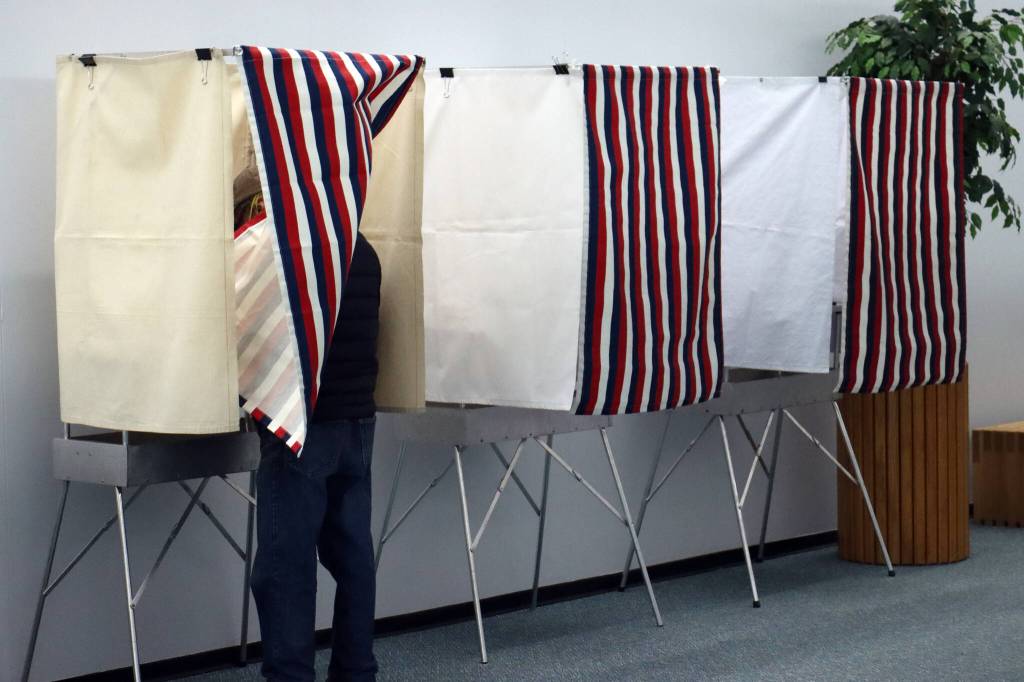
This is the first election to use the state’s new voting system, and because of the timing of Don Young’s death and the previously scheduled general election in November, DOE chose to conduct the special primary almost entirely by mail. Division of officials cited the compressed timeline and lack of poll workers in their decision to conduct the vote mostly by mail. The move led to a lawsuit from the Alaska Human Rights Commission who argued an entirely vote-by-mail election violated the rights of the visually impaired, but an Anchorage judge ordered the election be kept on schedule.
But results from the elections show certain districts in Alaska were seeing large numbers of rejected ballots, some with over 10% of total ballots cast. Bethel’s District 38 cast a total of 1,693 ballots, according to DOE data, but 356 of those were rejected.
Alaska State Senate Democrats sent a letter to the Division of Elections Wednesday, seeking an explanation for the high number of rejected ballots. In an email Wednesday afternoon, DOE spokesperson Tiffany Montemayor said the division had not yet read the letter and has no comment at this time.
“The 12-17% rejection rates reported for the multiple areas in rural Alaska appear to demonstrate a breakdown of our election system and the democratic process for those citizens whose votes were not counted,” Senators stated. “The division must strive to implement mail-in ballot procedures that provide Alaskans the reasonable means and a fair opportunity to vote.”
The letter was signed by all six members of the Democratic Senate Minority, including Juneau’s Sen. Jesse Kiehl.
In an interview with the Empire, Kiehl said whatever was causing the rejections needed to be fixed before the next elections in August.
“We have to figure out what happened,” Kiehl said. “If the answer is DOE, if the answer is voter education, we have to make sure we don’t have regions of Alaska whose ballots don’t count.”
Additional results will be released on June 17 and 21, and the Division of Elections hopes to have the vote count certified by June 25. The special election and the regular primary are both scheduled for Aug. 16.
• Contact reporter Peter Segall at psegall@juneauempire.com. Follow him on Twitter at @SegallJnuEmpire.