
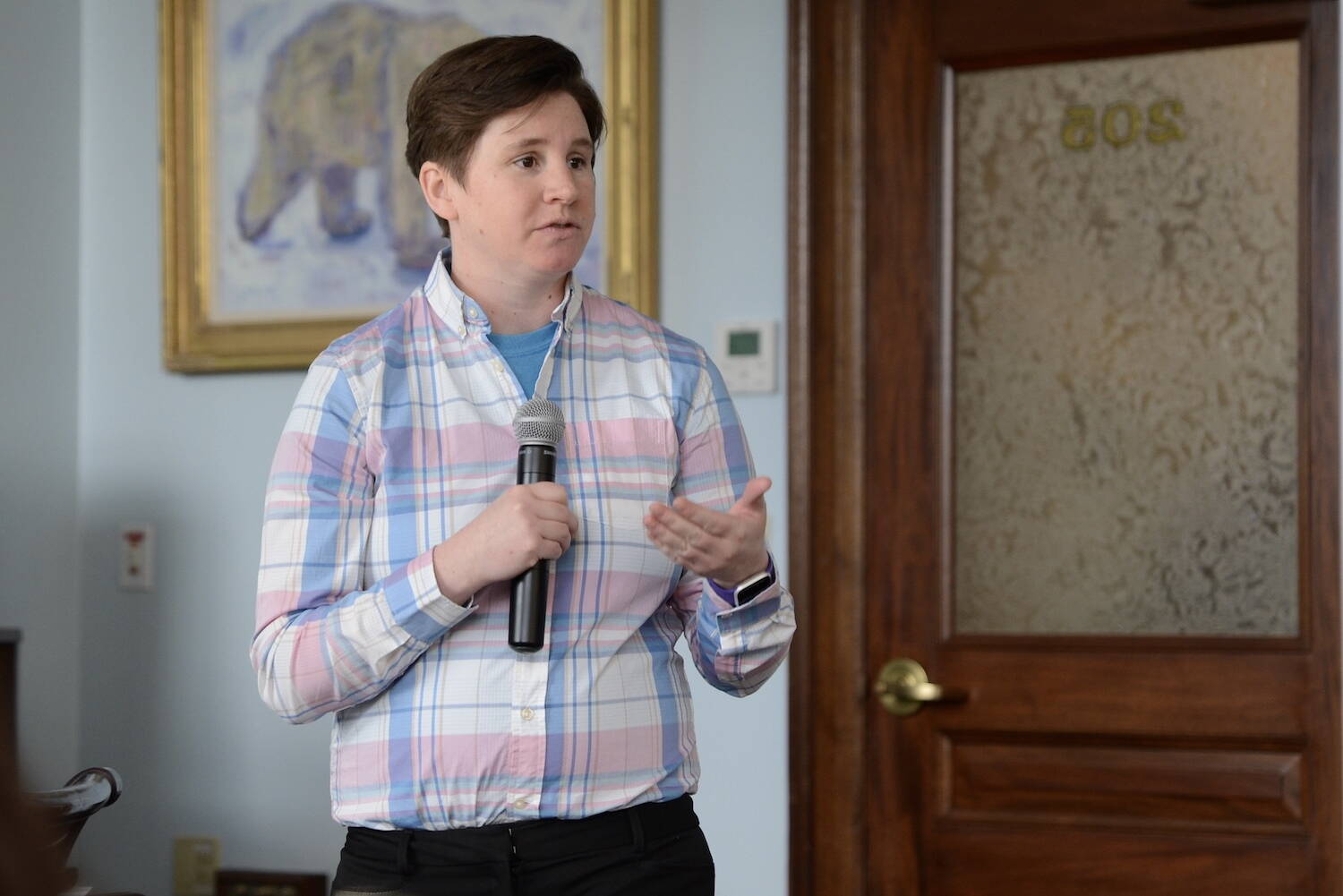
In the two years since Russia invaded Ukraine, the conflict has significantly changed the way Alaska deals with refugees, one of the state’s leading experts told the Alaska Legislature in a presentation on Monday.
“The state of Alaska has dramatically changed in the last two years in refugee services, hitting a peak of resettlement that we have never seen before — most definitely,” said Issa Spatrisano, Alaska state refugee resettlement coordinator for Catholic Social Services.
Catholic Social Services is the lone resettlement agency in Alaska.
“Two years ago, the average number of resettlement in the state of Alaska was about 100 people. Now we’re serving around 500 people (per year) in here,” she said.
“Catholic Social Services estimates there are just over 1,000 Ukrainians who have arrived in Alaska since the war broke out in Ukraine,” said Molly Cornish Cordy, the nonprofit’s chief communications officer.
Of the 904 people receiving help from the organization’s Refugee Assistance and Immigration Services program on March 1, about 70% are from Ukraine.
Alaska is also welcoming significant numbers of arrivals from Afghanistan and the Democratic Republic of Congo.
The Ukraine war has also changed where new arrivals are settling, Spatrisano said. Before, it was almost entirely in Anchorage. Now, there are willing and able sponsors across the state.
The area around Delta Junction has welcomed dozens. Juneau, which used to have only one or two new arrivals, now has 30. The Matanuska-Susitna Borough has more than 200 people in the CCS refugee program.
“I’ve been in refugee services for over a decade. … that’s totally different than the way it used to be,” Spatrisano said.
Because of that trend, her visit to Juneau wasn’t just about speaking to the Legislature — it was also about working with locals to deal with the influx.
“That’s part of the reason that I’m here. Once you hit kind of a tipping point of 30-40 people, we have to think about service provision in that community,” she said.
“We want people to come to Alaska and get all the services they need, so they don’t think about moving out of the state and they become new Alaskans,” she said.
Many of the new arrivals from Ukraine have come under what’s known as “humanitarian parole,” a two-year permission that doesn’t put them on the path to citizenship.
Those close to the issue had been concerned that the parole period would soon end for some of the first Ukrainian arrivals. That changed last week, when the federal government announced that it will allow Ukranians to reapply for another two years.
“In Alaska, around 20 individuals will lose status in April 2024 – so this announcement comes at the perfect time,” Cornish Cordy said.
Adam Weinert, special assistant to Department of Labor Commissioner-designee Cathy Munoz, said that agency is supporting efforts to spread the word about the new parole status.
Speaking to the Legislature, Spatrisano said it’s impossible to know what the future holds — she couldn’t have predicted the Russian invasion of Ukraine, after all — but CCS is near its limit when it comes to assistance. That means the state shouldn’t expect the same kind of surge that the past two years has brought.
“In the traditional refugee resettlement program, we are allocated 150 refugees for this federal fiscal year. I would imagine next year in the traditional refugee program, you’re going to see 150 to 175,” she said.
Because CCS is focused on quality, not quantity, it wants to make sure that it can handle the people that it has and ensure that people have jobs and housing.
“I think if you started to talk about 400-500 people, we’re not prepared to do that,” she said.
If Alaskans do want to help, she said, one of the easiest things to do is to offer kindness.
“If you want to be a sponsor, you want to bring somebody here, great! Do it. At the minimum, when you’re at the grocery store, and it’s their first time using their SNAP benefit card, and there’s confusion, and it’s taking an extra five minutes, can you be calm, kind and collected?” Spatrisano said.
“It’s important. When I talk in schools, I tell kids the same thing. When somebody comes in on that first day, ask them if they want to eat lunch with you. Really small acts like that mean a lot to people.”
• James Brooks is a longtime Alaska reporter, having previously worked at the Anchorage Daily News, Juneau Empire, Kodiak Mirror and Fairbanks Daily News-Miner. This article originally appeared online at alaskabeacon.com. Alaska Beacon, an affiliate of States Newsroom, is an independent, nonpartisan news organization focused on connecting Alaskans to their state government.
