
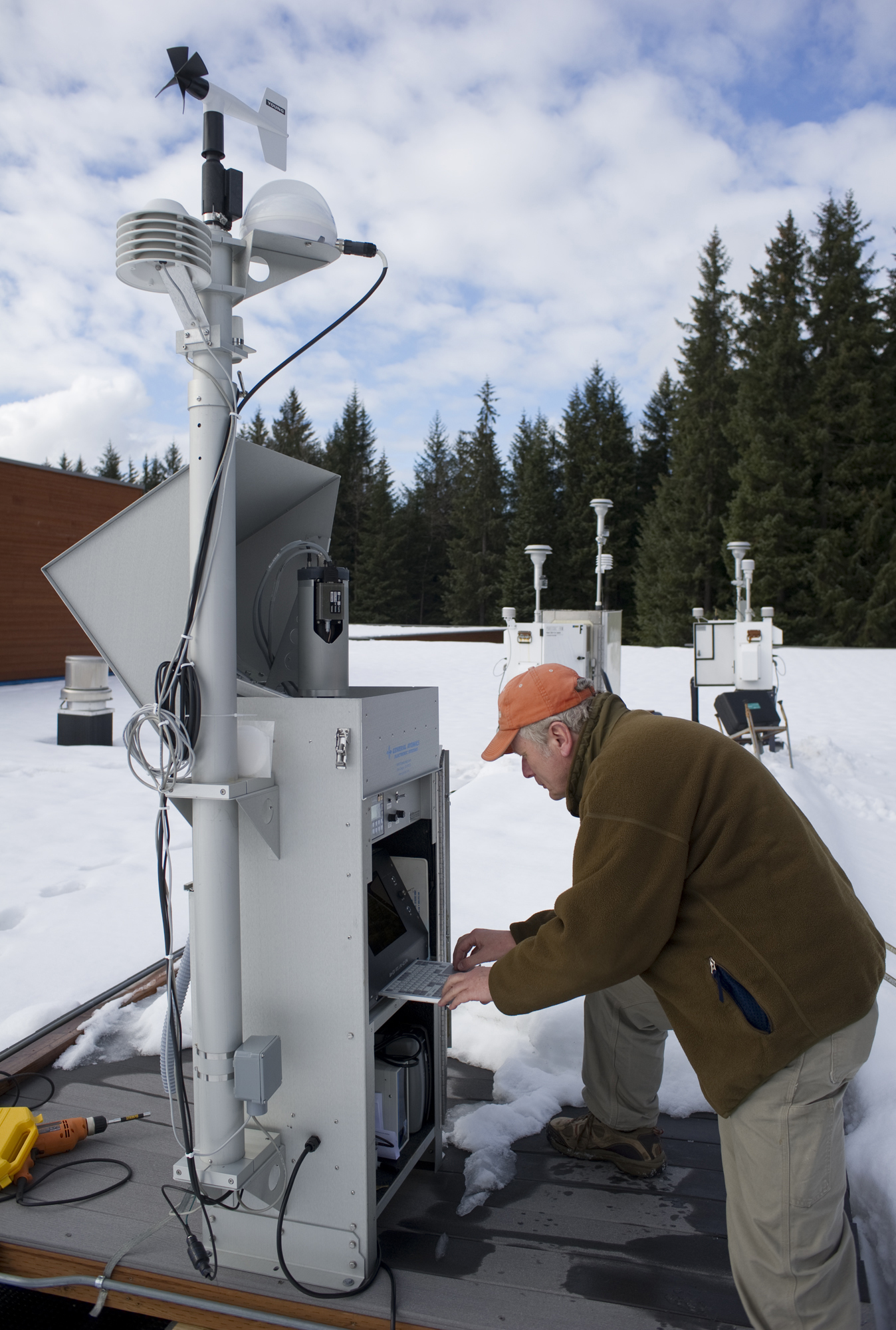
President Donald Trump’s move to freeze grants from the Environmental Protection Agency could cost the state of Alaska tens of millions of dollars and endanger programs that provide clean drinking water in rural Alaska, budget experts and the Alaska Department of Environmental Conservation said Tuesday.
“Currently, approximately 25 percent of DEC’s operating budget is funded by grants from EPA. Almost every program at DEC relies on some grant from EPA for resources, but some programs would be impacted more than others if there was a long-term suspension or significant cut in EPA funding,” DEC spokeswoman Candice Bressler said by email Tuesday.
It remains unclear how extensive the freeze is, or how long it will last.
The freeze was first reported by ProPublica late Monday, and it was confirmed by the Washington Post, Associated Press and other agencies Tuesday.
After learning of the freeze, the Empire contacted a spokesman for the EPA region covering Alaska, but he was unable to answer inquiries.
According to a leaked memo published by the political newspaper The Hill, staffers at the EPA have been ordered by the Trump administration to stop issuing press releases, blog updates and social media posts.
According to the Associated Press, staffers in EPA’s public affairs office have been instructed to forward all inquiries from reporters to the Office of Administration and Resources Management.
“Incoming media requests will be carefully screened,” one directive said. “Only send out critical messages, as messages can be shared broadly and end up in the press.”
In Alaska, EPA grants pay for tens of millions of dollars worth of programs, said Samantha Gatton, a budget analyst for the state Office of Management and Budget.
“There’s so many projects that touch DEC, especially in air quality,” Gatton said by phone.
She added that there are many “what-ifs” pertaining to the freeze, particularly since the federal government has said almost nothing about it.
DEC’s Bressler offered similar words.
“We don’t have enough information at this time to evaluate potential impacts on DEC programs and grants we make to communities involving EPA funds. Our primary question is whether the freeze applies to future grants and contracts or funding that is obligated but not yet spent by EPA under existing grants and contracts,” she wrote. “It is too early to speculate.”
Gov. Bill Walker’s proposed fiscal year 2018 budget contains several programs funded entirely or partially with EPA funding.
In the spill-response division of DEC alone, the governor’s proposed budget contains $1.5 million in EPA-provided grants. Those pay for projects like the cleanup of leaking underground storage tanks, site cleanup and inspection.
In the DEC division devoted to the protection of drinking water, the budget includes $4.2 million in “grants from various federal agencies including the Environmental Protection Agency to support activities related to ensuring Alaskans have safe drinking water.”
Bressler said by email that the state’s Village Safe Drinking Water program, which supports drinking water and sewage service in rural communities, is 75 percent funded with federal money, and only 25 percent with state money.
A spokesman for the Alaska Department of Fish and Game said Tuesday that it was too early to consider the effects of a freeze. A spokeswoman for the Alaska Department of Natural Resources said that department would be unaffected.
