
A program that has subsidized commercial aviation rural routes and that is particularly significant in Alaska is a target for a more than 50% reduction in funding under President Donald Trump’s budget proposal.
On May 2, White House Office of Management and Budget Director Russell Vought released Trump’s recommendations for 2026 federal funding levels. One target for significant reduction was the nearly 50-year-old Essential Air Service program. In its rationale for the cut, the Trump administration wrote that EAS “funnels taxpayer dollars to airlines to subsidize half-empty flights from airports that are within easy commuting distance from each other.”
It proposed slashing EAS current funding by about 52%, or $308 million. The administration offered no suggestion on what might replace EAS in airports that lose the service.
Congress established EAS in 1978 after the deregulation of the country’s airlines, in response to concerns that small communities would lose air service when carriers sought out more populated and profitable destinations. While the original EAS list included 184 Alaskan communities, with Anchorage, Fairbanks and Juneau initially appearing, it has been steadily reduced and, in the latest list, from October 2024, now has 65.
EAS is funded primarily through fees collected by the Federal Aviation Administration from foreign air carriers to fly through U.S. airspace, as well as the Airport and Airways Trust Fund, which collects excise taxes from domestic passenger ticket sales and other users of the country’s aviation system. In a U.S. Department of Transportation report for October 2024, there are 177 communities receiving a combined $591.7 million in EAS subsidies; Alaska received $41.7 million of that total. There are about 15 airlines flying EAS routes in the state, with Grant Aviation operating the most, 21, and several carriers flying a single route.
For Michele Greenamyre, McGrath’s interim city administrator, EAS has been “a game changer”. The Interior village of about 300 is not connected to other communities by road. Its residents fly on Alaska Air Transit for its EAS transportation. Greenamyre said for her community, EAS is about access to things like groceries, school clothes and a lot more.
“I would not be able to travel to Anchorage for medical reasons without EAS,” she explained, “The round-trip airfare would be too much.”
Connecting McGrath residents, who live 220 miles from Anchorage and almost 270 miles from Fairbanks, to the rest of the state is a significant part of what EAS offers, Greenamyre said.
“What would it do to our little town to lose this?” she asked. “EAS allows us to be part of the larger world.”
The Trump administration cited rising costs in its budget proposal assailing the program; EAS subsidies have risen over 50% since 2021. The General Accounting Office determined in a 2024 report on commercial air service trends that increased costs were due to higher airline operating costs overall, primarily for fuel, pilot wages and maintenance. The report noted that the national pilot shortage alone resulted in wage increases among smaller air carriers of more than 100%. But focusing on cost without considering benefits makes it tough to weigh EAS’s value, according to local officials in Alaska.
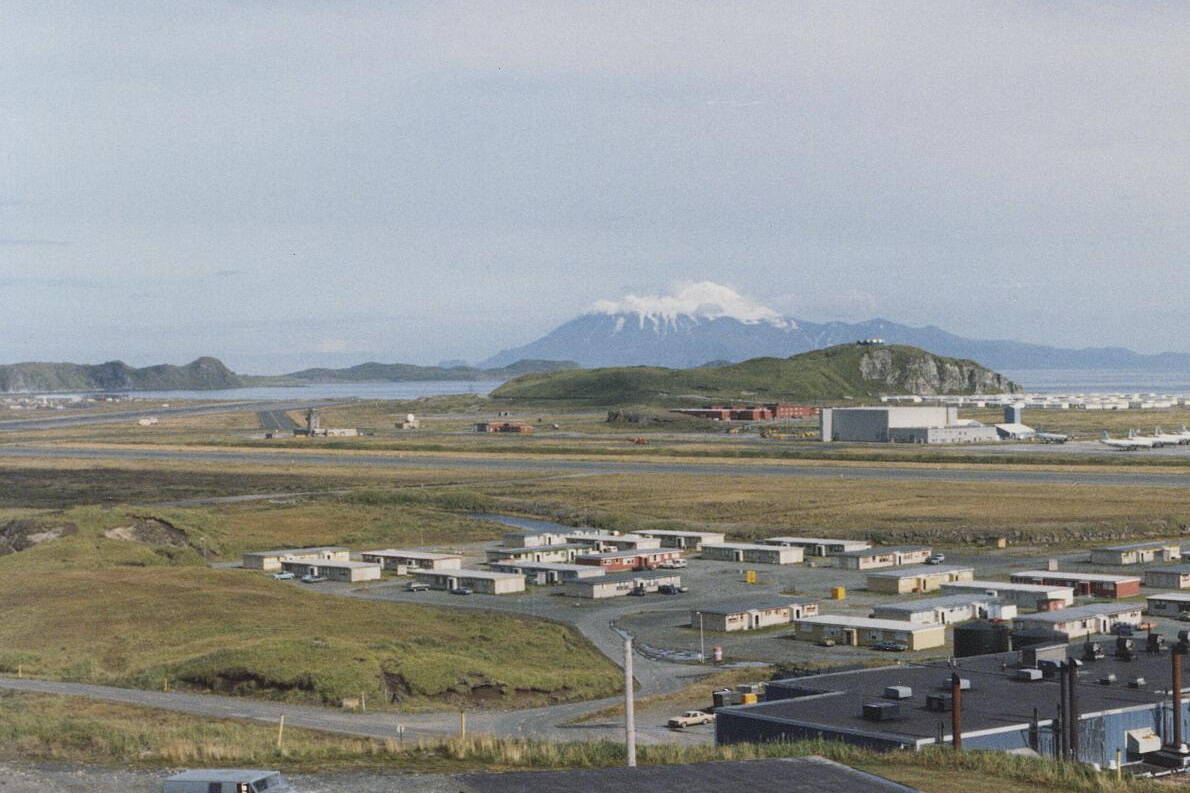
Adak, located at the end of the Aleutian Island chain, has a steady population of fewer than 200. Residents use an airport that was built for the now-closed Naval Air Facility Adak, which has runways that accommodate Alaska Airlines’ monthly cargo flight and twice-weekly passenger service, all in Boeing 737s. Alaska Air EAS service is quite popular and includes seasonal commercial fishing crews and military contractors who are currently working on a variety of projects involving the potential reopening of the military facility.
“From a national strategic perspective,” said City Manager Breck Craig, “cutting off EAS to Adak would be a monumental mistake.” The town’s geographic position and existing infrastructure has brought increased attention from the military, which plans to include Adak in a training exercise, Northern Edge, this summer.
The military past — and potential future — makes Adak unusual in the EAS group but illustrates the program’s versatility, Craig said.
“As the need for contractor transportation increases, EAS will be even more important,” stressed Craig, who noted that the current travel time on the 737 to Anchorage is three hours. “Without Alaska Airlines and EAS,” he concluded, “traveling to Adak will be very difficult.”
Essential Air Service has been targeted for cost cutting in the past. In 2007, then U.S. Sen. Ted Stevens, R-Alaska, called on fellow rural senators to “remain vigilant” in funding EAS, which he deemed a “lifeline” in their communities. In 2012, the Alaska delegation joined a bipartisan group of legislators in preserving EAS, with then Congressman Don Young noting he was “especially proud” that no Alaska communities suffered cuts in service. President Trump previously sought to eliminate EAS in 2017, uttering similar language to his recent proposal by referring to “half full aircraft” that he deemed were in close proximity to major airports. That effort was also defeated by a bipartisan group, including Sen. Dan Sullivan, R-Alaska, who signed a letter at the time urging appropriators to provide “robust funding” for the program.
• Colleen Mondor is an aviation journalist specializing in Alaska. She is the author of “The Map of My Dead Pilots: The Dangerous Game of Flying in Alaska” and covered aviation for Alaska Dispatch and the Anchorage Daily News. She has been published in various publications and sites, including Aviation International News, Skies Magazine, and Men’s Journal. This article originally appeared online at alaskabeacon.com. Alaska Beacon, an affiliate of States Newsroom, is an independent, nonpartisan news organization focused on connecting Alaskans to their state government.
