
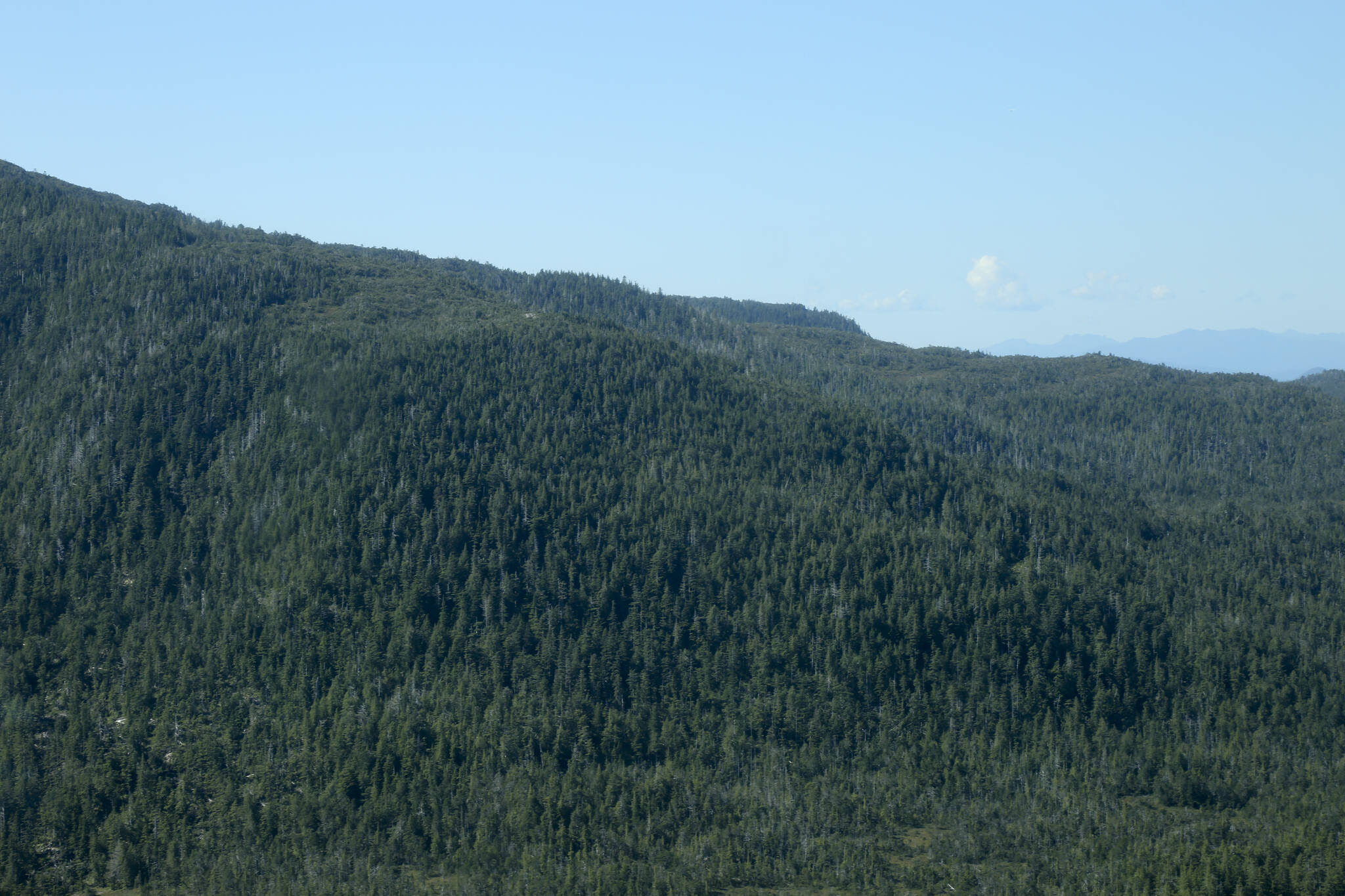
President Donald Trump has promised to “drill, baby, drill.” Now, he also wants to log.
On Saturday, Trump directed federal agencies to examine ways to bypass endangered species protections and other environmental regulations to ramp up timber production across 280 million acres of national forests and other public lands.
The move appears aimed at increasing domestic supply as the president considers tariffs on timber imports from Canada, Germany, Brazil and elsewhere. Environmental groups say increased logging would decimate U.S. forests, pollute air and water and devastate wildlife habitats.
And because trees absorb and store carbon dioxide, a greenhouse gas, cutting them down releases it back into the atmosphere, adding to global warming.
“Trump’s order will unleash the chain saws and bulldozers on our federal forests,” said Randi Spivak, the public lands policy director for the Center for Biological Diversity, an environmental group. “Clearcutting these beautiful places will increase fire risk, drive species to extinction, pollute our rivers and streams, and destroy world-class recreation sites,” she said.
As part of his executive order, Trump directed the Commerce Department to investigate whether other countries were dumping lumber into U.S. markets. The inquiry could result in tariffs on Canada, the top supplier of lumber into the United States. In 2021, the United States imported 46% of its forest products from Canada and 13% from China, according to the U.S. International Trade Commission. But the country is also a timber exporter, sending nearly $10 billion worth of forest products to Canada.
A companion directive signed by Trump said that “onerous” federal policies have prevented the United States from developing a sufficient timber supply, increasing housing and construction costs and threatening national security.
Trump called for the convening of a committee of high-level officials nicknamed the God Squad because it can override the landmark Endangered Species Act so that development or other projects can proceed even if they might result in an extinction.
The committee has rarely been convened since it was created, in 1978, through an amendment to the endangered species law to allow for action during emergencies such as hurricanes and wildfires.
Trump also directed the agriculture and interior secretaries, as well as other officials, to look for ways to streamline regulations and reduce costs for timber production and forest management.
The Endangered Species Act requires thorough assessments to ensure that activities like logging do not harm protected wildlife and their habitats. Bypassing that process has historically been reserved for small projects like trail maintenance.
But developers and the construction industry have long complained that the system is burdensome and adds to their costs, a position supported by the Trump administration.
“Our disastrous timber and lumber policies — a legacy of the previous administration — trigger wildfires and degrade our fish and wildlife habitat,” Peter Navarro, the White House senior counselor for trade and manufacturing, told reporters Friday.
“They drive up construction and housing costs and impoverish America through large trade deficits that results from exporters like Canada, Germany and Brazil dumping lumber into our markets at the expense of both our economic prosperity and national security.”
Trump’s plan follows recommendations found in Project 2025, a conservative policy blueprint published by the Heritage Foundation.
It called for increasing timber production as a way to reduce wildfire risk.
Trump has repeatedly blamed forest maintenance for wildfires in California, including the recent blazes that destroyed large parts of the Los Angeles area.
But scientists say hotter temperatures driven by climate change, combined with drought, have played a role in making wildfires bigger and more destructive. They also say that thinning can reduce the cooling shade of the forest canopy and change a forest’s microclimate in ways that can increase wildfire intensity.
Last week, Trump nominated Tom Schultz, a former lumber industry executive, to lead the Forest Service. The agency oversees about 193 million acres of national forests and public lands.
Heidi Brock, the CEO of the American Forest and Paper Association, which represents the paper and packaging industries, said the organization is reviewing Trump’s orders. “We look forward to working with the administration to provide our industry’s perspective and data on behalf of the more than 925,000 American manufacturing jobs represented by the forest products value chain,” she said in a statement.
The National Hardwood Lumber Association, a trade group, said it recognized that Trump’s order is intended to encourage U.S. manufacturing, but that its members also want forests to be managed sustainably.
“Ensuring a balance between economic growth and environmental stewardship is critical to maintaining our forests as a renewable and well-managed resource for future generations,” the organization said, adding that it was still assessing Trump’s order.
Blaine Miller-McFeeley, a senior legislative representative at Earthjustice, an environmental group, said the orders threaten to take the United States back to the 19th century, when clear-cutting stripped old-growth forests in support of industrialization.
“They’re not hiding the ball,” Miller-McFeeley said.
“It’s just about trying to cut as much as our forests as possible to line the pockets of timber industry executives.”
• This article originally appeared in The New York Times.
