
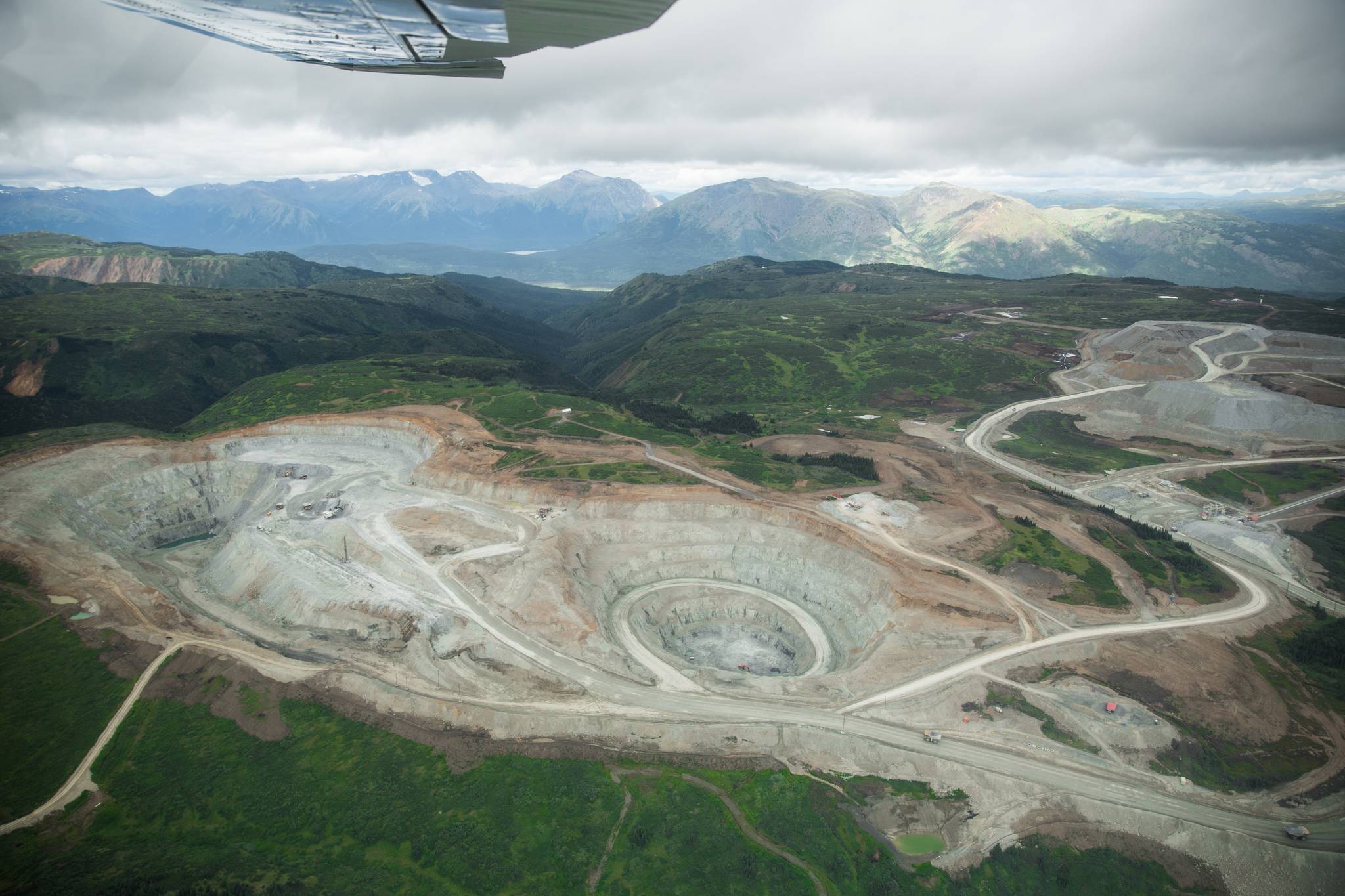
Even as leaders are focused on combating the COVID-19 pandemic and resulting economic turmoil, local conservation and tribal groups are calling on federal lawmakers to address what they see as a threat to Southeast Alaska — transboundary mining.
“I always say, when one of those tailings (ponds) goes it’s going to ruin our way of life in Southeast Alaska,” said Tis Peterman, executive director of the Southeast Alaska Indigenous Transboundary Commission.
Peterman is referring to large pits where mining companies store wastewater that comes from the mining process. What’s in the water depends on what’s being mined, but tailings are typically toxic. But the dams that hold back that water have failed before, most famously in 2014 when the Mount Polly Mine in British Columbia spilled millions of gallons of industrial waste into nearby waterways.
Transboundary mining refers to when run-off from a mine in one country, in this case Canada, pollutes waters which eventually flow into another, the United States.
Peterman and others said the same thing that happened at Mount Polly could happen to mines whose failure would affect Southeast Alaska.
“It’s going to ruin the ocean, salmon, subsistence, hunting and gathering, that will all be affected,” Peterman said. “Not just subsistence fishing, commercial fishing.”
The problem, according to Peterman and others urging action, is lax environmental regulation by the Canadian government, in particular the provincial government of British Columbia.
“B.C. does not adequately assess risk when permitting,” said Jill Weitz, director of Salmon Beyond Borders.
Weitz recently signed on to a letter published in the journal Science along with 21 other science and policy experts from the U.S. and Canada urging the federal governments of both countries to work towards resolving some of the issues surrounding transboundary mining.
“We urge our governments to honor their mutual obligation to protect our shared boundary waters,” the letter says.
The letter accuses the B.C. government of allowing mining companies to operate with little oversight and cites a permit given to Teck Resources Limited, a Canadian mining company.
“Teck’s Elk Valley permit allows up to 65 times above scientifically established protective threshold for fish,” the letter states.
Teck is committed to implementing a water quality plan in cooperation with the Canadian government and First Nations, Chris Stannell, senior communications specialist for Teck said in an email.
“We have invested $437 million to implement the Elk Valley Water Quality Plan to date, with a further $640-690 million of investment estimated over the next five years to implement water treatment, monitoring and research,” Stannell said.
The Canadian Consul’s office did not immediately respond to request for contact.
Following publication of the letter, Weitz, Peterman and Raymond Paddock, Raymond Paddock, environmental coordinator, Central Council Tlingit Haida Indian Tribes of Alaska released a statement of support, urging federal lawmakers to take action.
Alaska’s congressional delegation has pursued the issue for years, but Weitz and others feel the Canadian government is still allowing pollution to continue.
“The Canadian government has not come to the table in the same way the US has,” Weitz said.
Peterman said she hopes having a letter in Science will draw attention back to the issue even during a global pandemic.
“The mines are still going on now,” Peterman said. “We don’t want people to forget they’re still a threat to our way of life.”
