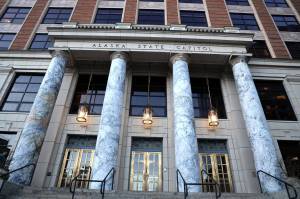
Tribal delegates call invocation objection at Capitol a sign of disrespect
Published 10:30 pm Thursday, April 20, 2023
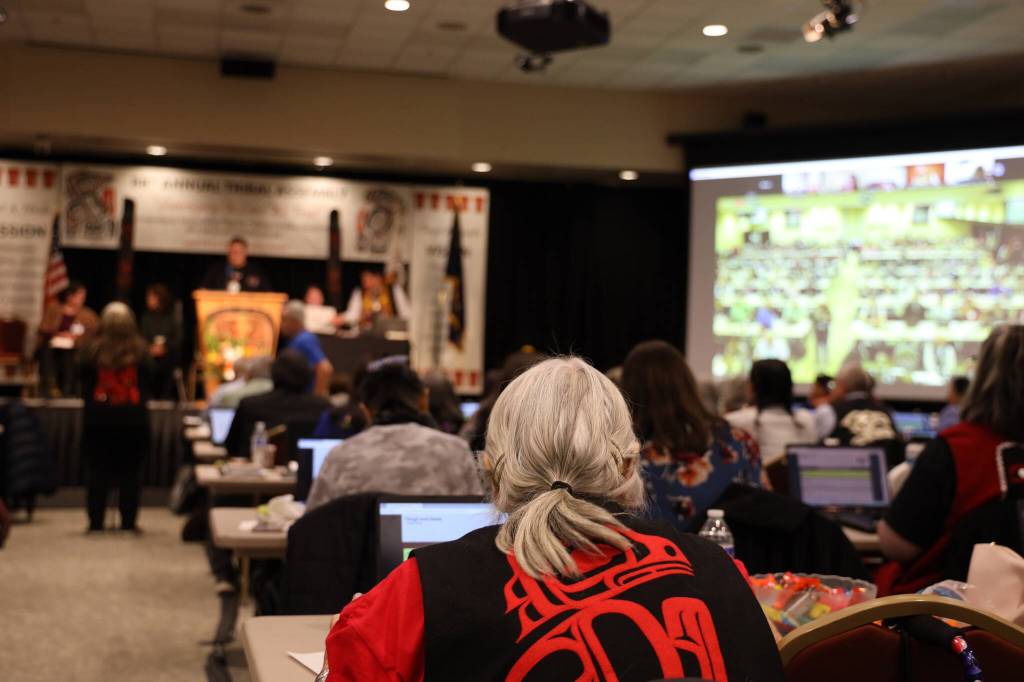


Tasha Hotch said she appreciated that some lawmakers at the Alaska State Capitol this session engaged with their tribal peers a few blocks away during their own annual governing session this week. But she said other legislators who on Thursday objected to an invocation that contained an Alaska Native land acknowledgement shows respect is still lacking.
“If you’ve been watching what’s going on up there it’s entertaining, but very frustrating,” she said.
Hotch, an Anchorage resident who’s run for twice for local government seats, was among the more than 100 delegates at the three-day 88th annual Tribal Assembly of the Central Council of the Tlingit and Haida Indian Tribes of Alaska. She addressed the delegates as the assembly was nearing its end Friday, recommending delegates go to the Capitol to engage lawmakers on their turf.
“I would challenge you to have them introduce you to them,” she said. “They should be excited to have you introduced to the people they work with…they know we are powerful people when we work together.”
The frustration emerged among numerous delegates after six of 35 House members voted against including Thursday’s invocation by Rep. Sara Hannan, a Juneau Democrat, in the official journal. Hannan began the invocation by reciting a Tlingit land acknowledgement that’s been official policy at all local government meetings (and many other gathering) since 2021.
“I acknowledge that we stand on the occupied land of the A’akw Kwáan L’Eeneidi. For more than 10,000 years, ‘Linget people have been the caretakers of this place and its people,” Hannan said, according to the official journal.
While such a land acknowledgement was seemingly unfamiliar to at least some of the objecting legislators asked about their vote afterwards, the second half of Hannan’s invocation was similar to those of most speakers this session.
“As we work together may we seek to speak to each other in truth,” Hannan said. “May we listen to each other with love and care. May we work to seek the common good and live in accord with our highest aspirations.”
The objection was made by Rep. David Eastman, a Wasilla Republican whose been censured twice since 2017 for comments that incensed Alaska Natives, who said ““I didn’t hear anything invoked. I simply heard a political statement.”
Others objecting to including the invocation in the journal were House Majority Leader Dan Saddler of Eagle River, Jamie Allard of Eagle River, DeLena Johnson of Palmer of Anchorage, Will Stapp of Fairbanks and Sarah Vance of Homer. All of the dissenters are Republicans.
Saddler, in an interview Friday, said he wasn’t familiar with the land acknowledgement provision, but when he heard the language on the floor the day before felt it didn’t fit the definition of an invocation.
“I don’t believe I cast an anti-Native vote,” he said. “I have supported Alaska Natives, I have supported Alaska Native languages and culture. I simply didn’t believe it was appropriate.”
That troubled Lax̲áakúda.oo Jessica Elopre, a Seattle delegate at the tribal assembly, who in a speech Friday said the words, timing and votes from those joining Eastman were disrespectful.
“They had a vote, on whether or not it should be included, while we are here practicing our tribal sovereignty and it just blew my mind that there’s still opposition to us being here, to us practicing our governance and what we are here for,” she said.
Elopre, like many others throughout the assembly, noted there were disagreements — sometimes strongly voiced — during the gathering, but ultimately everybody still has a sense of respect and unity at the end.
“We come together, we might not like the outcome, and we might have hurt hearts or hurt feelings, but in the end, we are still family, we are still one.”
Tlingit and Haida President Richard Chalyee Éesh Peterson, who frequently meets with state and national politicians, said he doesn’t know how many governing entities on Native lands have a land acknowledgement, but the number is increasing. He said he also didn’t consider it inappropriate as part of the legislative invocation.
“I think it’s unfortunate to use that platform and that process to take a stand on that,” he said.
Hannan, following the floor session, said she has never seen an objection to an invocation since she began serving in the House in 2019.
A search of the House and Senate journals this session shows that while nearly all are by Christian leaders and invoke that faith, a few have been entirely in Tlingit by tribal members. Another on March 6 by Tkl’ Un Yeik Paulette Moreno of the Alaska Native Sisterhood was in English, but emphasizing traditional tribal themes.
“Please continue to balance all those who enter these ancient lands that all people would have traditional and modern foods, shelter, and care; that those who have joined in a legacy of stewardship would have the strength and vision to create and build upon our good communities and villages,” she said. “As I express and utter the needs of the lowly and oppressed…In all humility and humanity I ask that the stewards of this land, Alaska, be guided, inspired and strong.”
Among the other invocations that have varied from tradition speeches was Sherry Patterson’s soulful singing of The Lord’s Prayer on the Senate floor Feb. 24.
• Contact reporter Mark Sabbatini at mark.sabbatini@juneauempire.com