
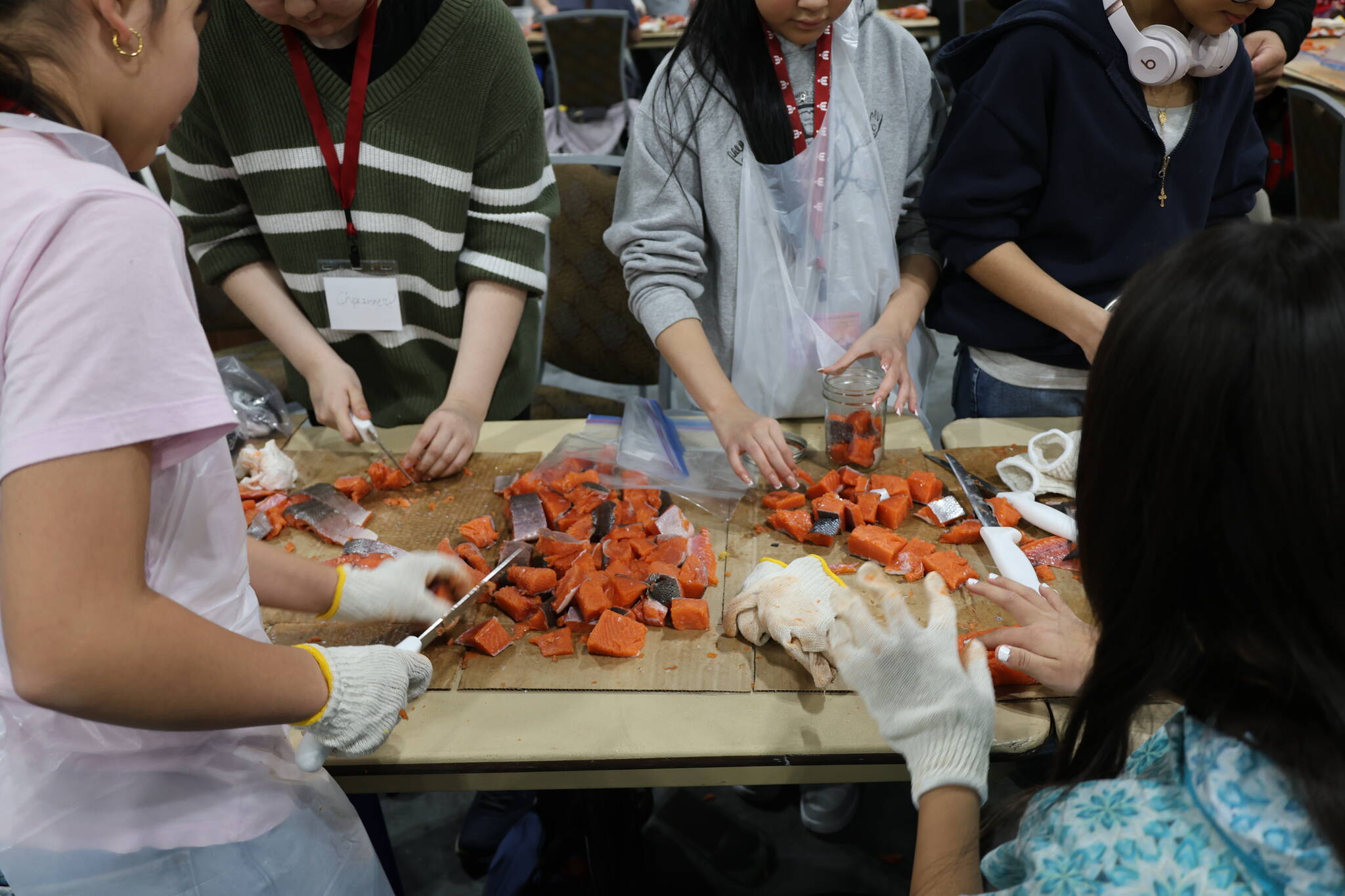
Halibut and black cod, herring roe and smoked salmon. These are some of the foods that the Traditional Food Security program wants to see on people’s plates.
With a $25,000 grant from the Newman’s Own Foundation and the Hunger to Health Collaboratory, the Central Council of Tlingit & Haida Indian Tribes of Alaska plans to expand that program. The H2HC announced last week that the Indigenous Food Justice for Youth award would go toward the tribe’s Traditional Food Security program.
In the last three years, the tribe has provided over 203,000 pounds of traditional foods to its 21 recognized communities. This includes more than 52,000 pounds of herring roe on kelp, 120,000 pounds of salmon and 31,000 pounds of black cod.
“Our innovation is … to preserve traditional methods, working with their elders to gain that knowledge, and then finding ways to package that and deliver it to, not just youth, but everyone in between that wants this experience, so that they can replace some of those ultra-processed foods in their diet with traditional food sources,” Aaron Angerman, Traditional Food Security program manager.
The TFS program plans to use the money in part to upgrade outdated outboards on harvesting boats. Angerman said that transportation is one of the biggest challenges of the program.
“Connecting food to anywhere in the Southeast is quite a task,” Angerman said “It’s probably why, for generations, we moved to a more colonial kind of commodities-based grocery store style food system that was more reliant on the Lower 48 and barges and things like that, than actually harvesting and getting out there ourselves.”
The grant will also go toward funding two traditional harvests, to gather and distribute 100 pounds of seafood to 12 early education classrooms across the Southeast.
Funding from private sources presents a crucial part of the equation, now more than ever. In March 2025, United States Department of Agriculture notified Tlingit & Haida that the $513,000 Local Food Purchase Agreement they’d signed in January would be terminated.
That agreement is what previously allowed the program to distribute hundreds of thousands of pounds of seafood to communities across Southeast Alaska and to tribal members in the Lower 48.
Since then, the tribe has been focusing on diversifying the program’s funding sources through grants such as the Indigenous Food Justice for Youth award. The goal, Angerman says, is to not be too reliant on federal funding.
Another one of their goals is to bolster the educational aspects of the program.
Last year, the program created educational videos on traditional food, from harvesting and steeping fireweed, to processing salmon and halibut. The videos were funded by a Newman’s Own Foundation grant.
“It’s important that when we are able to connect people with that food, they know what to do with it,” Angerman said. “If they’re getting a fish, they know how to properly process it, and how to use all of that fish.”
As the program grows, Angerman says the focus is not only on access to traditional foods, but on revitalizing the relationship people have with the places that provide them.
“By connecting people to these traditional foods, we hope we’re inspiring them to get out, to harvest their own food, process, and find that connection with our lands and our seas that our ancestors have,” Angerman said. “Thousands of years we’ve been doing that correctly. We believe we can get back to that point.”
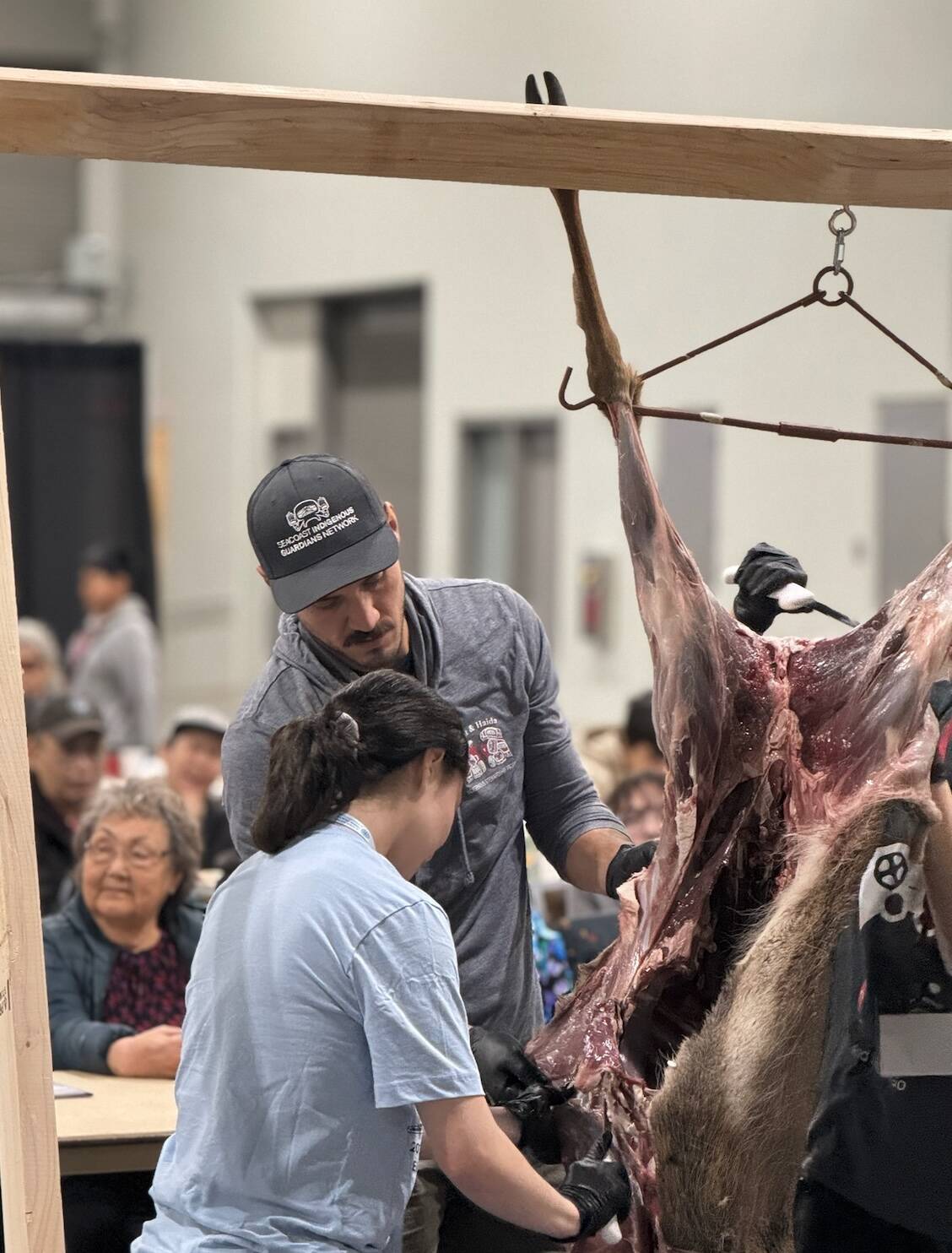
Traditional Food Security Coordinator Claude Young guiding the processing of a deer at the First Alaskans Institute Elders & Youth Conference, which took place in Anchorage from Oct. 12-15. (Photo courtesy of Aaron Angerman)
