
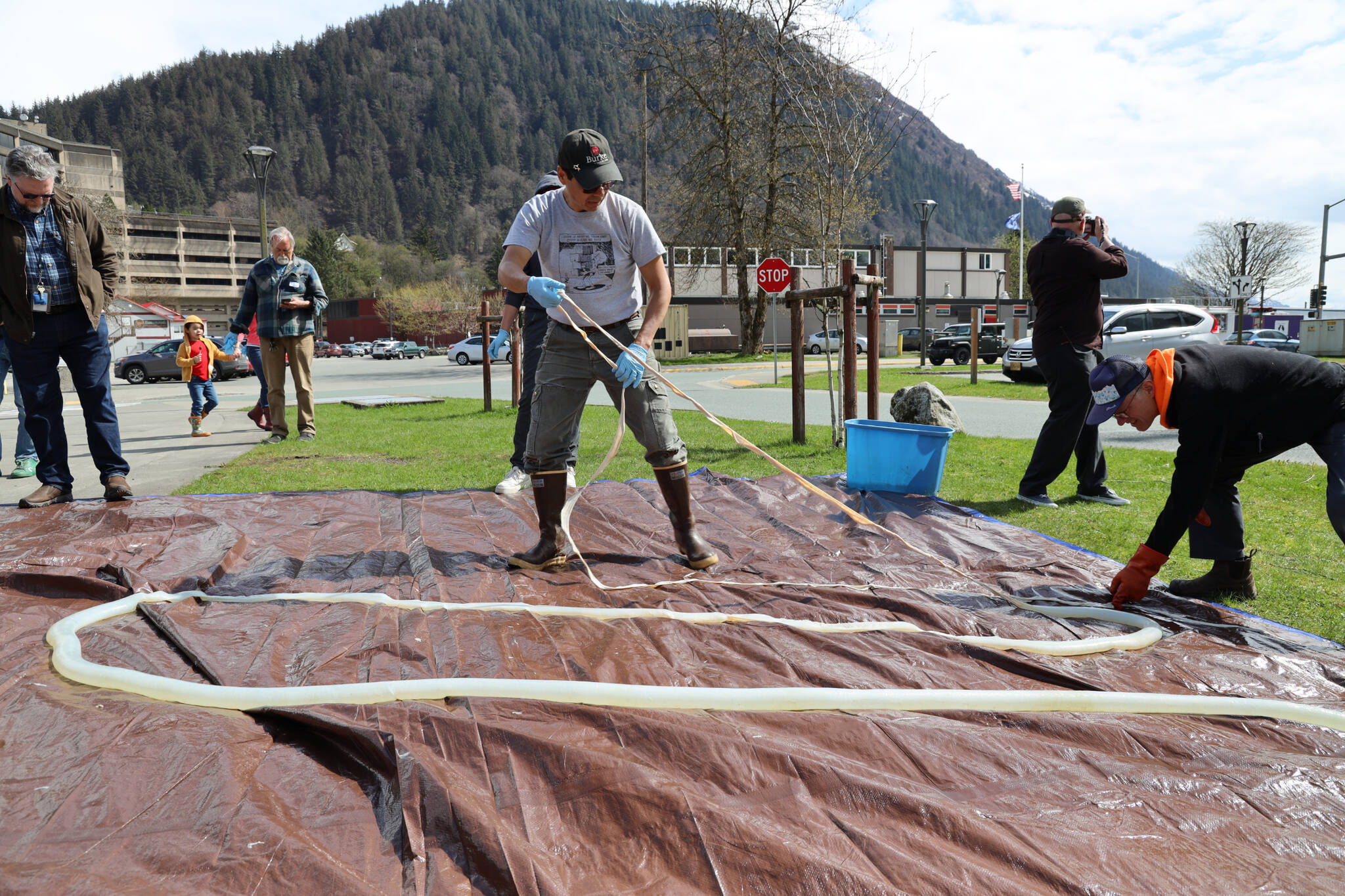
On Saturday afternoon dozens of Juneau residents and tourists gathered under a sunny sky outside of the Alaska State, Library, Archives and Museum downtown to participate in a bear gut processing workshop.
For the around three-hour event, participants were invited to carefully scrape away bits of membrane and waste from a Kodiak brown bear’s small intestine, estimated to be around 70 feet long, under the guidance of Sven Haakanson Jr., a Sugpiaq anthropologist, curator and artist of the Old Harbor Alutiiq Tribe from Kodiak Island.
Sven Haakanson Jr. spools the small intestine of a Kodiak brown bear while he leads a bear gut processing workshop Saturday afternoon at the Alaska State Museum. In its final form, Haakanson said the gut will be used to create a traditional Indigenous raincoat. (Clarise Larson / Juneau Empire)
After the scraping, the group filled the intestine with water to clean and check for holes before it is inverted and inflated on Sunday.
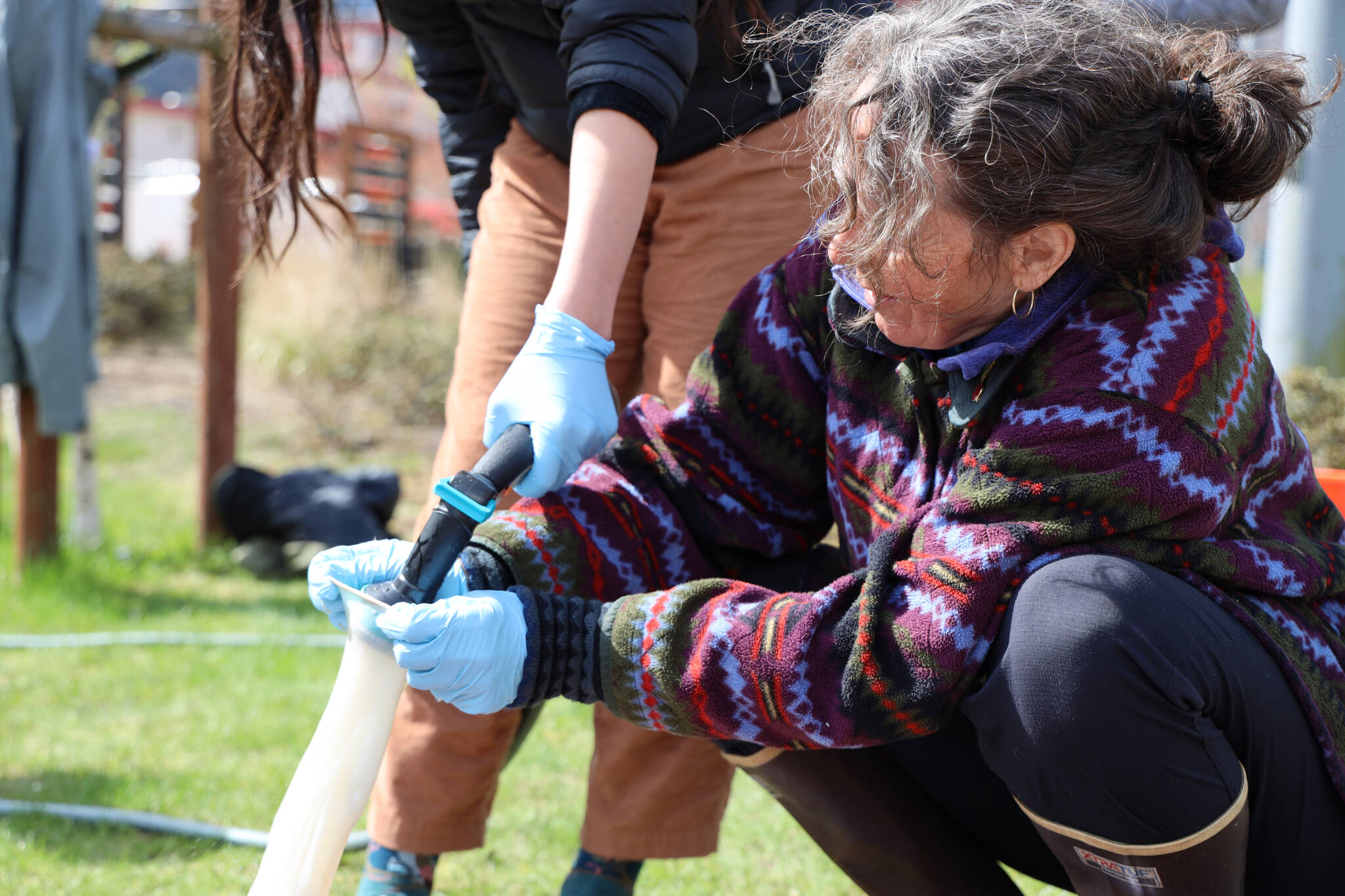
Karen Bosworth fills the small intestine of a Kodiak brown bear with water to clean it during a bear gut processing workshop Saturday afternoon at the Alaska State Museum. (Clarise Larson / Juneau Empire)
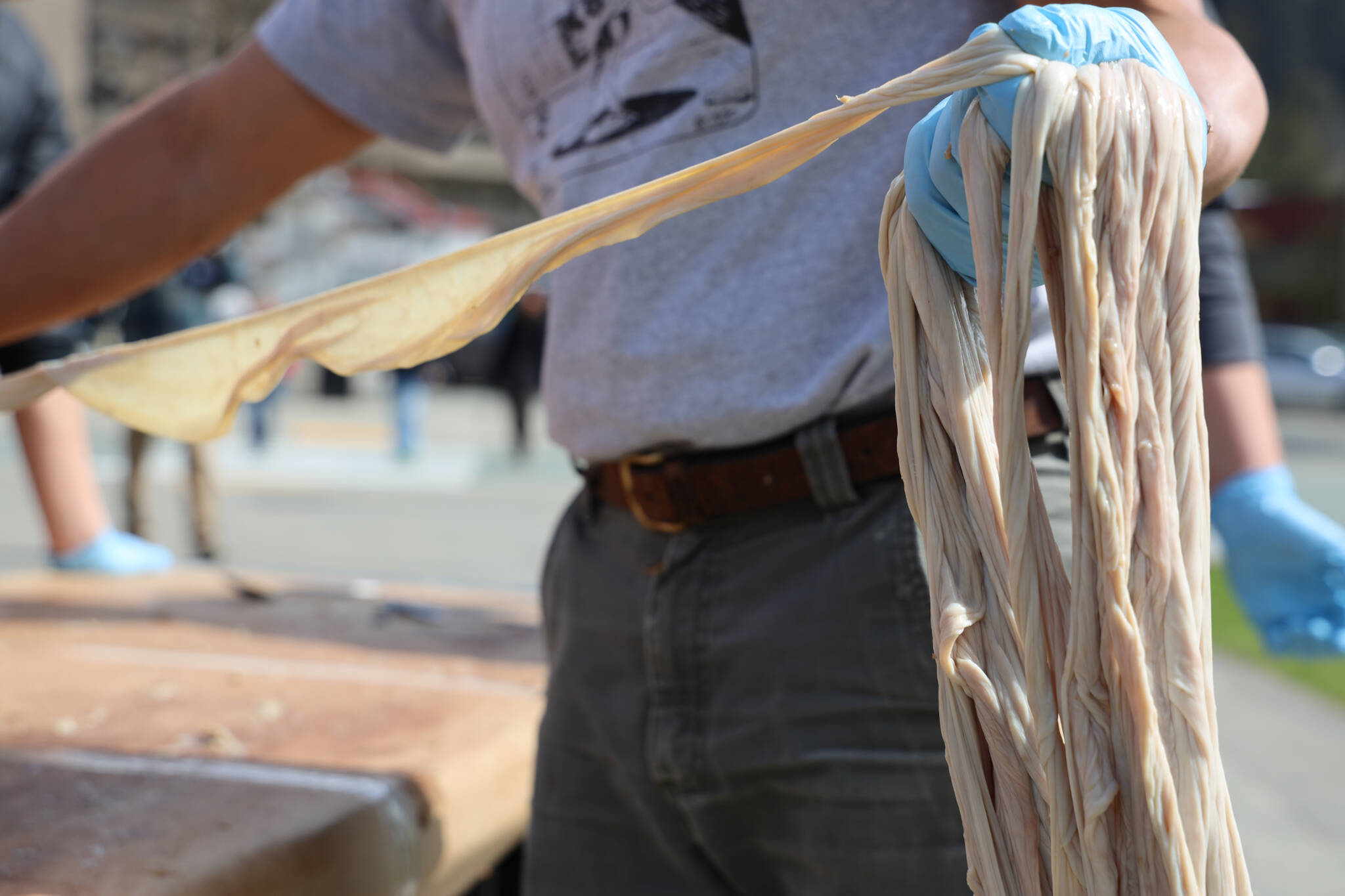
In its final form, Haakanson said the gut will be used to create a traditional Indigenous raincoat. He explained animal gut is kind of like an Indigenous Gore-Tex-like material that has been used for centuries by Indigenous peoples across Alaska. Bear guts —along with the innards of other animals like seals, whales and porpoises — have also been used to create things such as hats, windows, drums, sails and canteens.
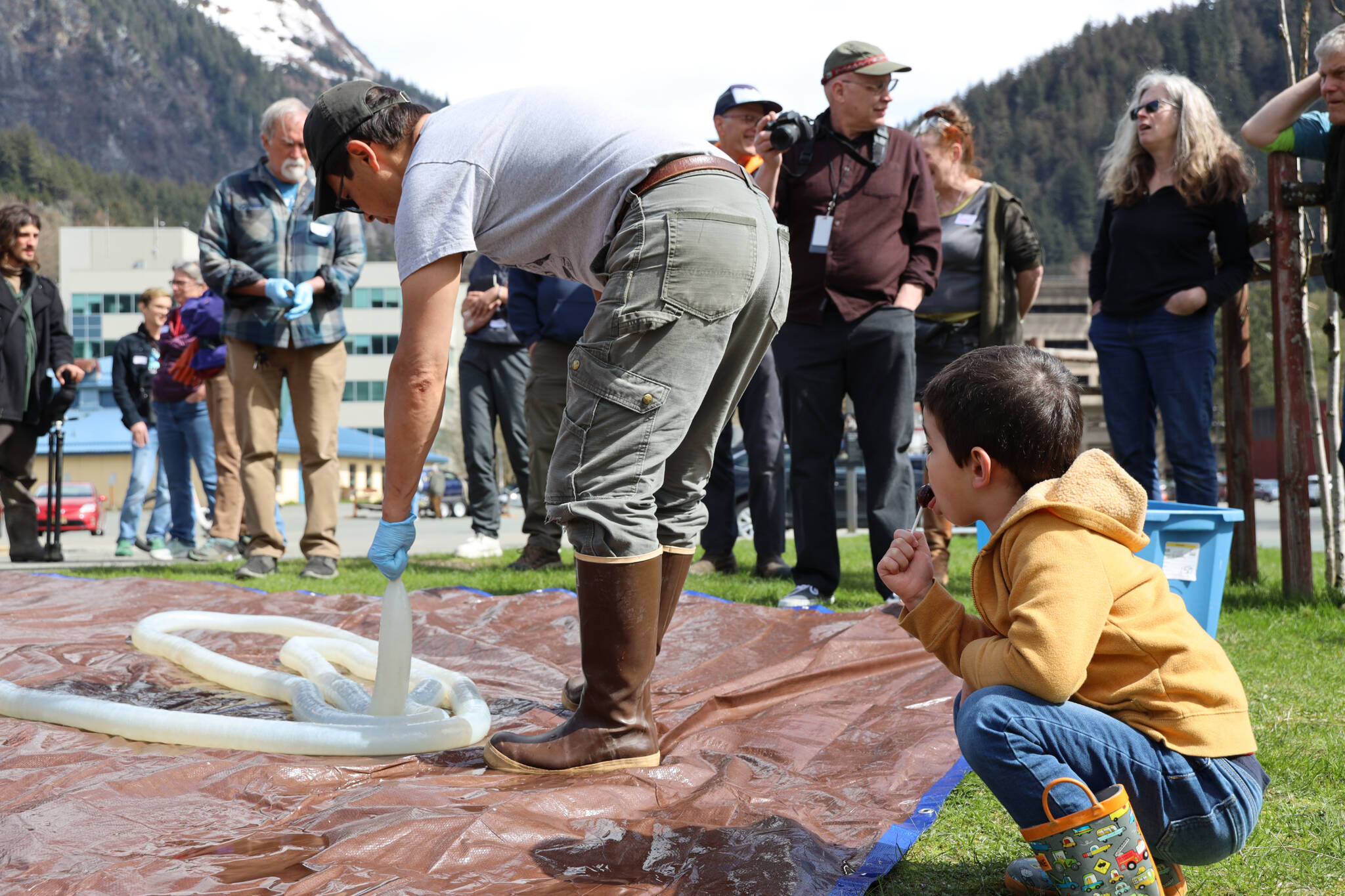
David Winston-Chan, 5, licks a lollypop while watching Sven Haakanson Jr. unwind the small intestine of a Kodiak brown bear while he leads a bear gut processing workshop Saturday afternoon at the Alaska State Museum. Winston-Chan said his favorite part of the day was “seeing the water come out.” (Clarise Larson / Juneau Empire)
Raincoats and other materials made from the gut are also currently on display at the museum’s new exhibit “Visceral: Verity, Legacy, Identity – Alaska Native Gut Knowledge & Perseverance,” which features both synthetic materials with natural materials like marine mammal gut to bring more awareness to the truth of the authentic experiences of Alaska Native and Indigenous peoples history, according to co-curator and artist Sonya Kelliher-Combs.
“It’s crazy to think about who thought about taking an intestine, cleaning it out, scraping it, and making it into a raincoat — it’s ingenious,” Haakanson told the Empire. “It’s a material that our ancestors have been using for probably thousands of years.”
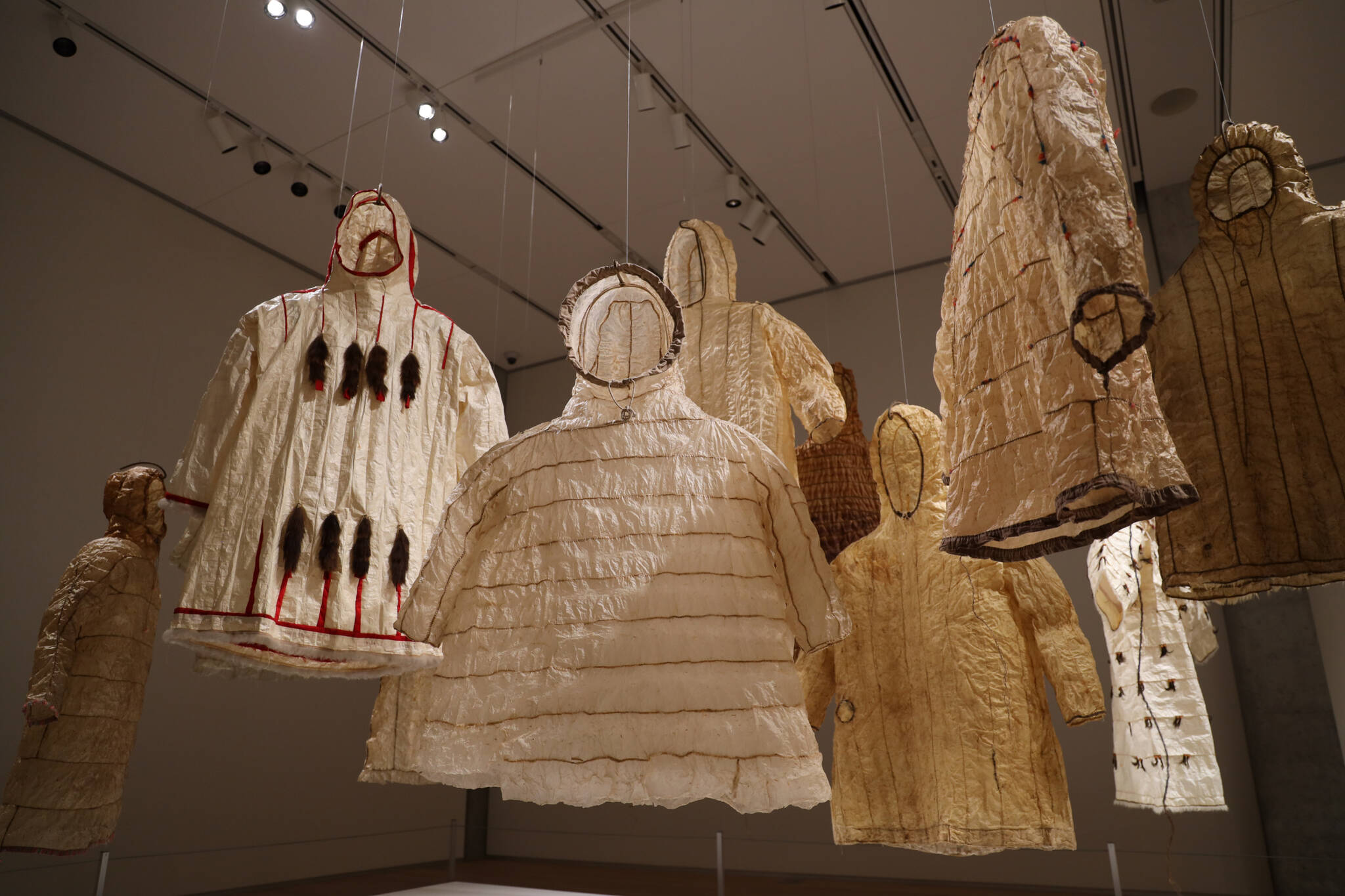
“Gut raincoats” made from animal intestines hang from the ceiling at the the Alaska State Museum’s exhibit “Visceral: Verity, Legacy, Identity – Alaska Native Gut Knowledge & Perseverance.” The Visceral trilogy of exhibitions displayed at the museum will be open for viewing throughout the summer. (Clarise Larson / Juneau Empire)
Haakanson, who has been experimenting with the art form since he was 17 years old, said the bear was provided by a guide based in Kodiak who often donates intestines to Haakanson to use for projects and teaching. This particular bear was harvested in the spring of 2022.
Haakanson said he learned from an elder that it is often better to use intestines harvested from a spring bear, rather than a fall bear because they can have holes in their intestines from salmon bones they consumed throughout the summer. Haakanson said knowledge shared like that is how Indigenous art forms like gut processing can continue to grow closer to what it once was.
“I’ve always been curious because there is so much knowledge that has been erased during the contact period of colonialism and now, so we need to look for ways to go back and learn about them,” he said.
South Douglas resident Debora Cross and her daughter, Courtney White, were among the crowd of people who donned latex gloves to assist in the process. Cross said she was hesitant to join in at first, but said it turned out to be a great day to do an activity like this.
“I saw it in the paper and I thought, ‘What an opportunity to do on a Saturday afternoon,’” she said, laughing. “I told my daughter I’d do it if she does it, and here we are.”
Resident Karen Bosworth agreed, saying she “just showed up” because she found the art form interesting and wanted to learn more about it.
The Visceral trilogy of exhibitions displayed at the museum will be open for viewing throughout the summer.
• Contact reporter Clarise Larson at clarise.larson@juneauempire.com or (651)-528-1807.
