
Deception is widespread in the animal kingdom. Caterpillars may look like twigs and crabs may cover their shells with a mini-forest of algae, to fool their predators. Fake eyespots on moth wings or the rear ends of caterpillars deflect predatory attacks from real heads. A predator may simply hide itself, in ambush, conveying no apparent threat.
Sometimes the fakery involves decision-making on a more immediate and individual level. For instance, a defensive animal may puff itself up to look bigger and perhaps more dangerous than it really is. Or a chimpanzee, a titmouse or a jay might emit a fake danger call when no predator is near, just to spook other animals away from a food source.
Deliberate deceitfulness is well-known among animals that cache food, particularly if another critter observes their caching behavior. The trickery goes beyond merely spacing the caches more widely, as chickadees do, or going behind some visual obstacle to make a cache. Gray squirrels make fake — empty — caches if they are watched by another squirrel. Ravens and other corvids are even more duplicitous. If observed by another raven, a bird with a food item caches the item but surreptitiously sneaks it out and goes away to stash it elsewhere, while the observing bird visits the now-empty cache site. And it matters just who the observer is: A stranger or known pilferer may be treated much more suspiciously than a mate or a buddy.
[Photos of Mother Nature in Alaska]
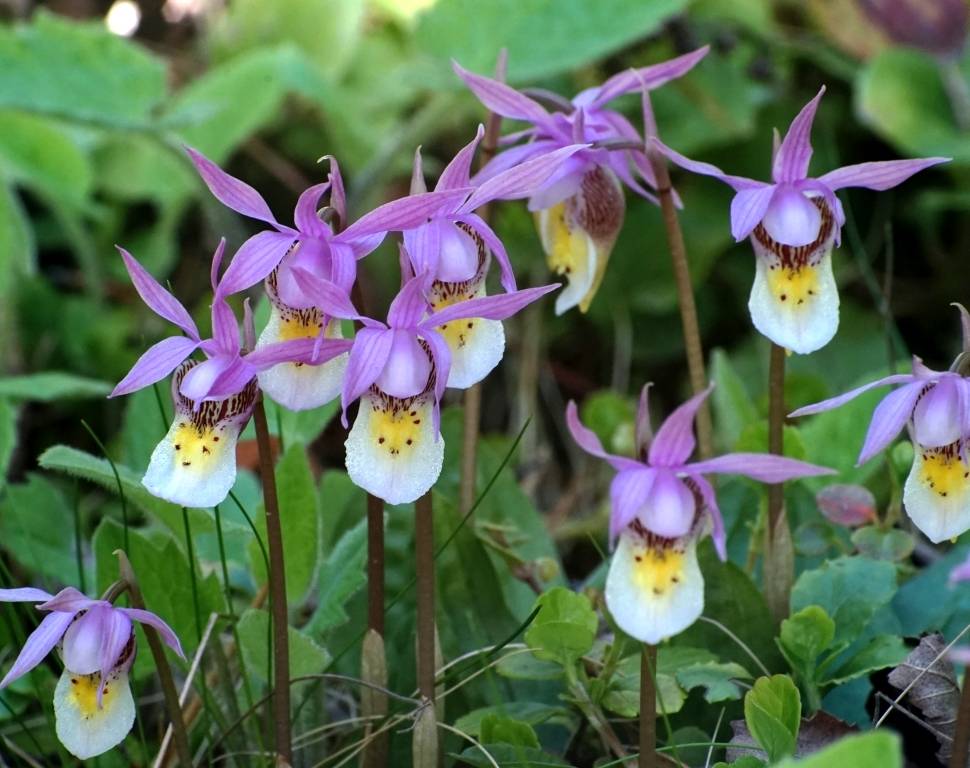
In the plant kingdom, a wide array of plants uses deceitful flowers to attract pollinators. A local example is the Calypso orchid, which looks and smells like food to a bee, but in fact offers no reward at all; thus it is visited mostly by naïve bees.
There are almost 30,000 species of orchids, mostly pollinated by bees and wasps — some by flies and other flower visitors, too — and researchers estimate that about one-third of them use some form of floral deception to achieve pollination. Food deception, as in Calypso, is common, fooling various wasps and flies, for example. Sometimes, an orchid flower looks or smells like a female wasp or bee, and males get revved up and try to copulate with the flower, accomplishing pollination in the process. Still others look like male bees, and when the flowers sway in the wind, they are attacked aggressively by other male bees. Some Old-World species emit the aroma of alarmed aphids, which attracts female aphid-eating hoverflies to a potential egg-laying site; but it’s a fake—if eggs are laid, there are no aphids for the larvae to eat. In the meantime, hoverflies can be good pollinators. And then there are orchids that resemble prey and are attacked by female wasps that are foraging food for their offspring.
Pollination by deception has evolved many times in the plant kingdom, occurring in many evolutionary lineages — but fewer in total than all the deceptive orchids. Here are some non-orchid examples. A South American species in the potato family attracts small flies with the odor of decaying carrion that smells like a place for these flies to lay their eggs, although it is not. A Middle Eastern member of the arum family emits the fragrance of dung and similarly deceives flies that are looking for a brood site. A Chinese member of the dogbane family uses a pitfall trap to capture certain little flies, using a scent that suggests a predator, such as a spider, has captured an insect. These flies are “kleptoparasites,” making their living by stealing prey from predators. They are drawn to the flower by the scent of the spider’s prey and fall into the trap. As they scrabble around in the trap, they pollinate the flower. In a few days, the trap collapses and allows the fly to escape and go to another plant with its load of pollen.
Fungus gnats are the typical pollinators of jack-in-the-pulpit, attracted by the smell of spongy, fungus-like tissue that seems to offer food for gnat larvae, but it’s a fake. Jack-in-the-pulpit plants bear many small flowers on a spike-like inflorescence that is surrounded by a vase of vegetative tissue — a type of pitfall trap. They usually produce male and female flowers on separate plants. Both draw in the gnats; in male flowers the gnats are temporarily trapped by tissues around the inflorescence but ultimately escape through an exit hole at the bottom of the trap. When they then visit a female flower, they carry pollen, achieve pollination, but cannot escape the trap.
[The life of Riley reaches its end: An old, tough wolf makes it to 11]
That’s just a wee sample of the nefarious ways that flowering plants fool a variety of insects into pollinating the flowers. Clearly, if all the visiting insects were fooled, populations of the relevant insects would die out — they’d waste time and energy on profitless activity, or starve, or their larvae would die. So some pollinators learn to avoid the frauds, as apparently happens for Calypso, or some members of the species that can be fooled are not so foolish.
• Mary F. Willson is a retired professor of ecology. “On The Trails” is a weekly column that appears every Wednesday.
