
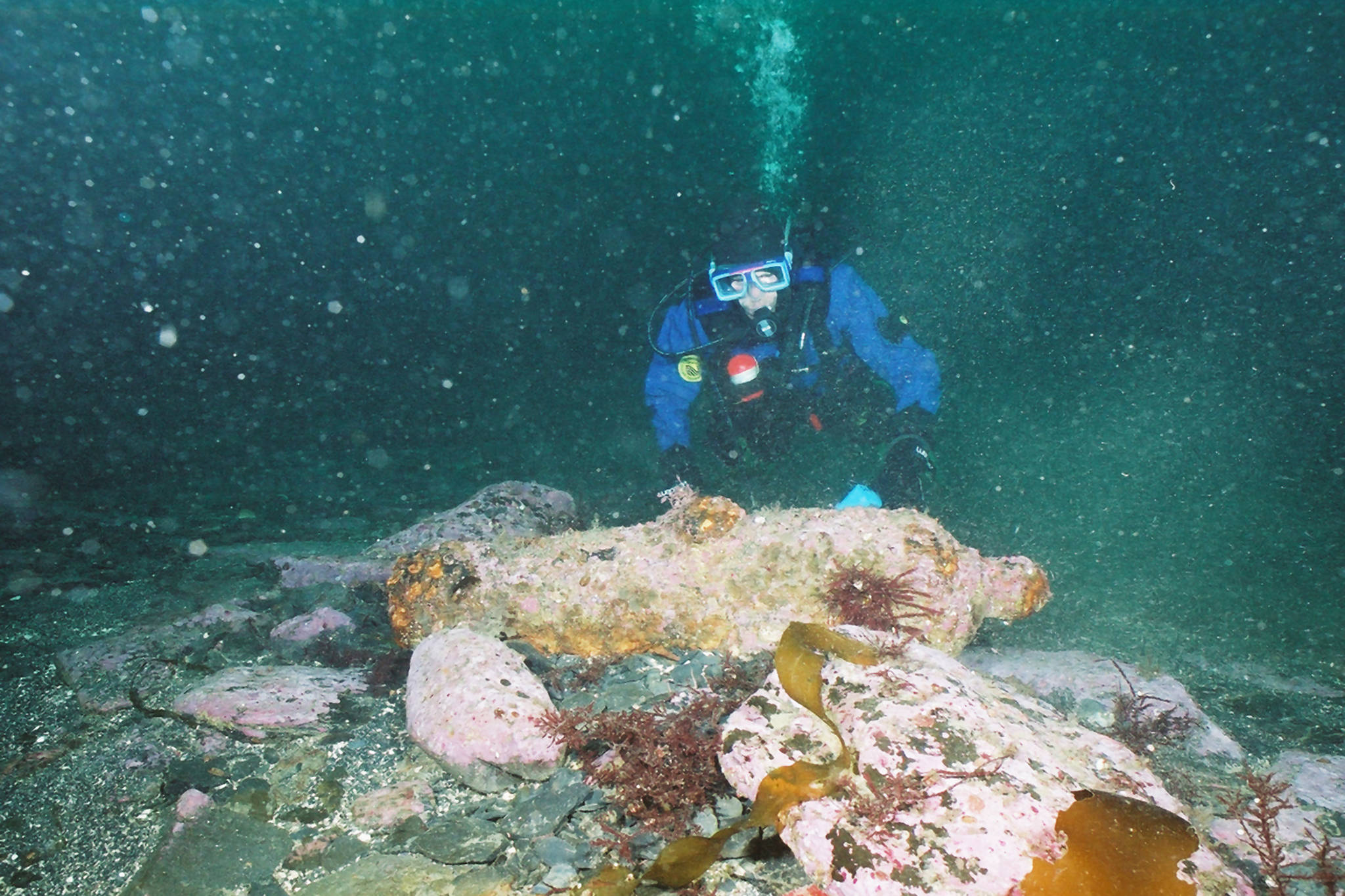
After a successful decades-long search for a sunken ship, Brad Stevens wrote about the search and what he learned, and he’ll be in Juneau today to talk about it.
Stevens, a longtime biologist for the National Oceanic and Atmospheric Administration and National Marine Fishery Service in Kodiak, lead an expedition in 2003 that discovered the Kad’yak, a wrecked Russian ship that sank in 1860. He’s chronicled the search and what he learned in a new book, “The Ship, The Saint, and the Sailor: The Long Search for the Legendary Kad’yak.”
Stevens will be in at Hearthside Books for a book signing from 4:30-6 p.m. and at the State Library, Archives and Museum at 6:30 p.m. for an author talk.
“I hope the takeaway is people will get an appreciation for Alaska’s submerged history,” Stevens said. “I’ve been telling this story to anyone who would listen for 25 years. I think it’s an important story for people to know both for the story of Alaska and marine archaeology. I had all of the detail, and I didn’t want them lost to history.”
A search begins
When archaeologist Mike Yarborough first told Stevens about the Kad’yak, Stevens had not heard of the ship, and looking into it was well outside his job as a National Marine Fisheries Services biologist in Kodiak.
“When I first got interested in it, I asked my boss, and he pretty bluntly said, ‘No, it’s not your job to go off and looking for this,’” Stevens said.
So, the research and search for the Kad’yak began in his spare time, and there was a lot of documents to find and review. The Kad’yak undeniably had Stevens’ attention, even if it’s difficult for him to articulate why.
“That’s hard to explain, and it must have to do with my scientific bent,” Stevens said. “I put one piece of the puzzle together and wonder if I can find another piece.”
The Kad’yak was a ship that carried goods between Russia and Alaska. It struck a rock while hauling ice in 1860, and the ice on board allowed it to float for several days before it sank near Spruce Island.
The wreck happened after the ship’s captain failed to follow through on conducting a ceremony to honor Saint Herman.
“It’s as if some divine providence said, ‘You made a mistake, and now we’re going to hold you accountable for it,’” Stevens said.
While its wreck was well-documented because everyone on board the ship was able to get to safety, the wreck wasn’t found for 143 years.
“There was documentation about where it went down, but it was very difficult to interpret,” Stevens said. “I spent about 10 years on it. The way (the captain) wrote his bearings was unlike anything I’ve ever seen. That took a lot of effort, and it wasn’t until I found another map that showed the place names as he knew them that that helped decipher them.”
Day 1 of Stevens’ expedition, July 21, 2003, recovered pieces of the ship, and while Stevens recalls he maintained a scientist’s skepticism, by Day 2, it was undeniable that the Kad’yak had been found.
“It’s all your perspective, so my attitude is, ‘I’ll believe it when we prove it,” Stevens said.
A piece of wreckage bearing the ship’s name provided that proof.
Pirates fighting for treasure
Stevens’ triumph was imperfect.
“It felt great. It felt really good,but there was a rain cloud over it, which is that at the end of the second day, a diver had absconded with one of the pieces of the wreckage he brought up,” Stevens said. “It was a great feeling, a great accomplishment, but there was stain.”
It became apparent that the missing wreckage was part of a plan for a group to apply for private salvage, and for the wreck site to immediately become a diving destination, Stevens said.
Stevens said there was a back and forth argument for months that threatened to turn into a legal battle, but ultimately a research permit was issued through East Carolina University, whose mascot is PeeDee the Pirate.
This protected the Kad’yak wreck for research, and now, Stevens said the site will be open to recreational divers. He hopes one of the takeaways from the book is that divers and scientists are not in direct competition and can work together.
“Now, we’ve learned what we can and they’re welcome to go back and dive on it,” he said. “Actually, I’d like to go back and make diving maps.”
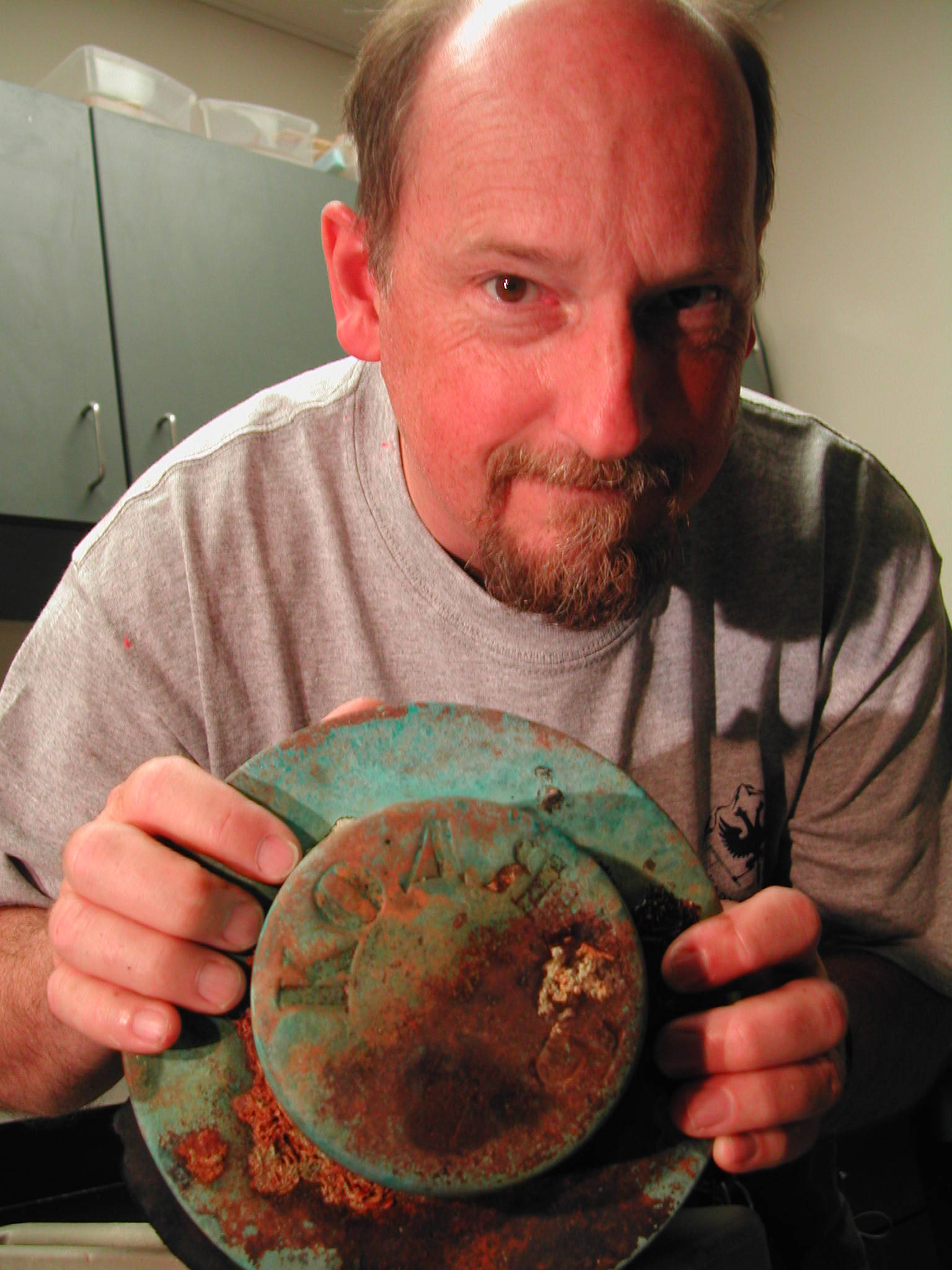
Brad Stevens, who lead a team that recovered the Russian ship, the Kad’yak, holds up an artifact from the wreck. Stevens wrote a book about the search and subsequent battle to protect the site for research. He will be in Juneau Friday to sign books and talk about “The Ship, The Saint, and the Sailor: The Long Search for the Legendary Kad’yak.” (Courtesy Photo | Brad Stevens)
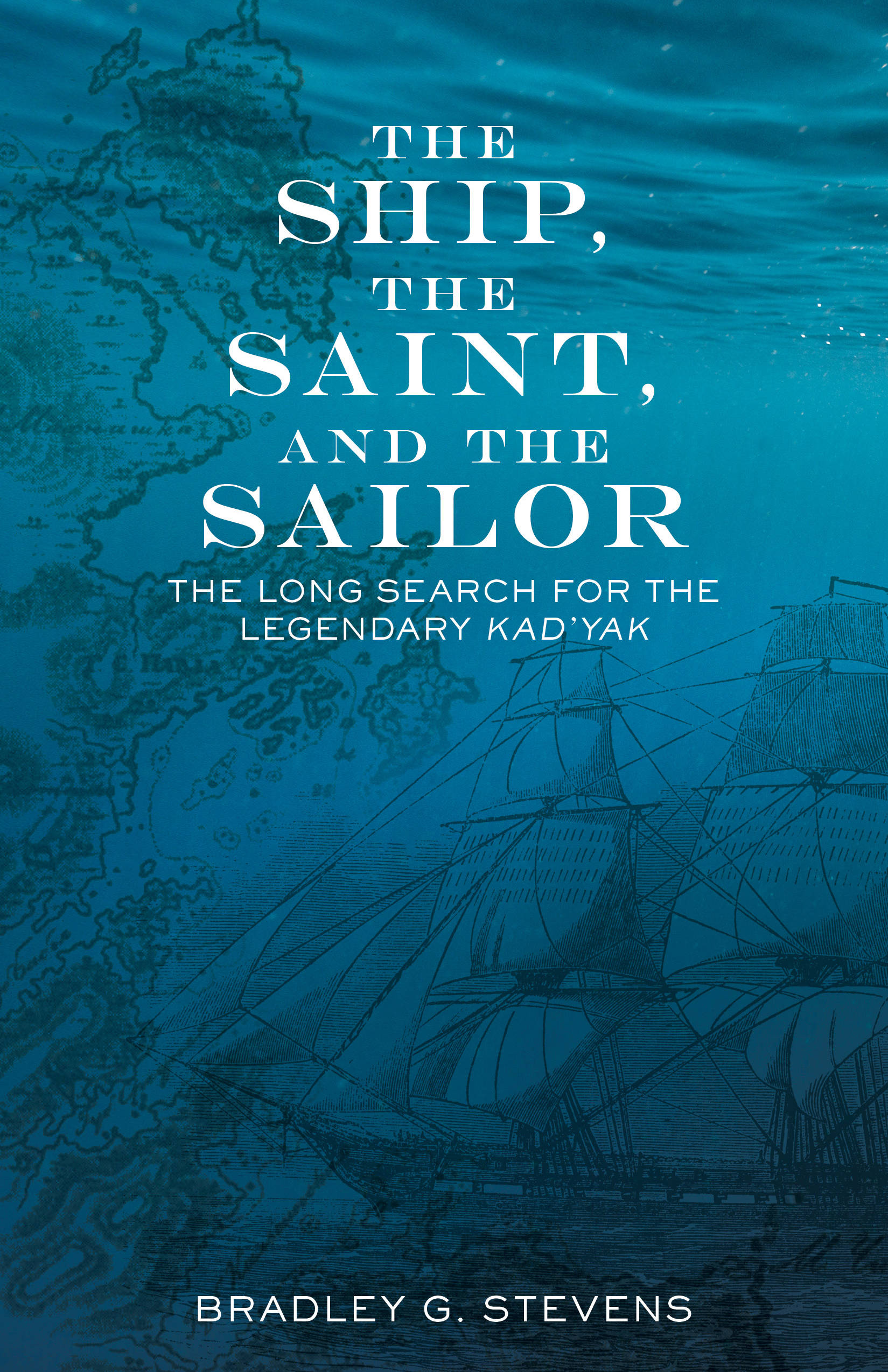
“The Ship, The Saint, and the Sailor: The Long Search for the Legendary Kad’yak” is a book by Brad Stevens, who helped discover the wreck of a ship that had been unrecovered for more than 140 years. (Courtesy Photo | Brad Stevens)
