
When you live in a floathouse in SE Alaska for over twenty years you develop vision not dissimilar to The Terminator’s.
You know how The Terminator’s cybernetic eye zooms in and information scrolls across the display? Well, the same thing happens when we’re out in the skiff, zipping past beaches: our eyes automatically zoom in to test everything’s “flotation potential.”
The sad truth is, a floathouse is under constant attack by wood-eating bugs that chew through float logs at a terrifying rate. We’re always trying to find ways to boost our homes’ flotation.
The other day my dad pointed toward something on the beach near Meyers Chuck’s back entrance and I could almost hear the mechanical whirring of his “flotation potential” vision dialing up.
“That would work,” he said. “We could put it in the back of the house under the bedroom and bathroom.” My parents’ floathouse had developed a decided list in that area.
I looked. And looked again, wondering if we were staring at the same thing, or if he was hallucinating from the dearth of flotation potential we’d been seeing lately.
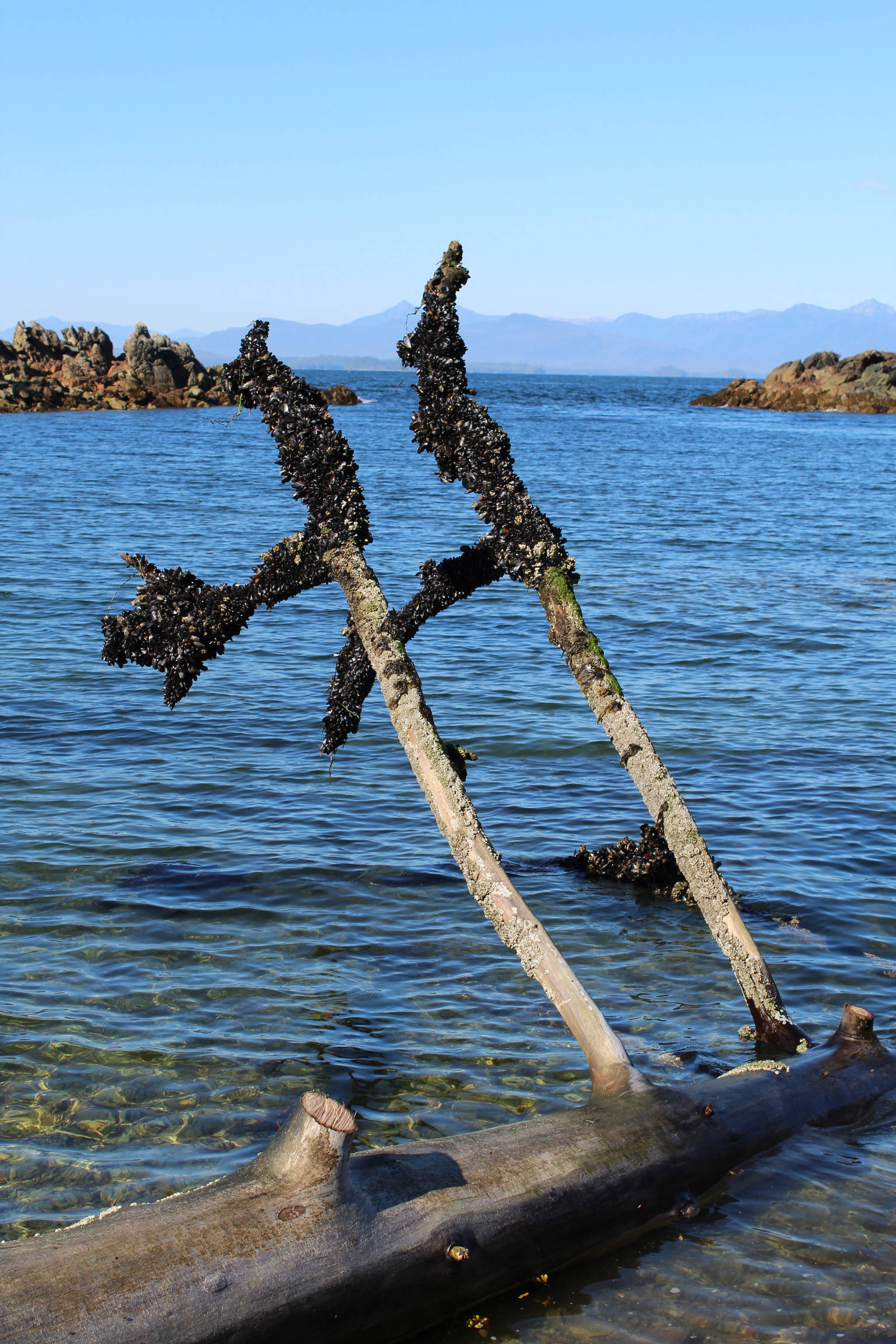
It was a windfall that lay across a rock-infested beach, half-submerged with all of its limbs still attached and sticking out in blatant discouragement. It was bleached from years of unrelenting weather with almost all of its bark gone, but it looked like it had plenty of bite left.
“That?” I said. “Really?”
He insisted it would work, so one day we loaded up the chainsaws (an extra one in case the primary one got pinched in the log) and headed for the uninviting beach. Up close the fallen tree looked even more unprepossessing than it had from a distance. But I had to admit it had the right kind of taper we were looking for.
The first thing to do was saw off the thick limbs, as big around as Terminator arms, that poked out in all directions, including straight down into the water. He sawed off the ones he could get at, grimacing as the skiff was layered in sawdust.
We realized that we’d come at the wrong tide, that the tree had to stick out of the water more than it was at the moment to be able to buck off the section we needed. So my dad waited in the skiff while I explored the surrounding area.
As we waited for the tide to do its thing a local from Meyers Chuck named Lee approached the skiff in her kayak, curious to see what we were up to. When we explained, she offered us a pile of foam blocks that were going to waste in her “back yard”—or, at any rate, in a stretch of woods near her house. She said, “I’ll have to check with Bob before I give away his property, but if he says yes you’re welcome to come and get as much of the foam as you want.”
Words to gladden any floathouse dweller’s heart! With winter coming on and the heavy threat of snow looming, the thought of having all that extra flotation made our hearts buoyant with relief. Wilderness neighbors are the best! Thanks, Bob and Lee.
But we still needed the solidity of a new log to support my parents’ floathouse, so we focused on the windfall again.
I didn’t like the idea of my dad sawing the heavy tree from the skiff. It wasn’t a stable platform and I’d have to keep us close enough to the windfall for him to saw through it while at the same time keeping the skiff far enough away from it so that the log didn’t land on the skiff or my dad.
But there was no other way to reach the section he needed so he bit the bullet and started sawing. I held the skiff against the warring pull of the saw and the tide and hoped and prayed for the best.
My shoulder muscles were tense as I waited to see 1.) if he could saw all the way through the tree from the skiff without the saw getting pinched, 2.) if the tree would land in the water rather than the skiff, and 3.) just how wet we’d get when it fell.
I should have had more confidence. I’ve been watching my dad use a chainsaw my entire life, many times in situations that I wouldn’t have believed possible—or safe—and it always worked out the way he figured it. This time was no different. The cut section of the windfall neatly dropped into the water beside the skiff, launching a wave that soaked my dad’s legs but didn’t fill the skiff.
I hammered a log dog in with the sledgehammer and we set it up to tow. We knew that some limbs stuck down into the water where we couldn’t get at them to cut them off and that they’d create a lot of drag, but we didn’t realize just how much drag. It took us over an hour to tow the log two miles to our little bight.
The next day when we inspected it when the tide was out we saw that the thick limbs were far longer than we’d realized and were encrusted with mussels and barnacles. It was a wonder we’d been able to tow it as fast as we had.
The foam, when we went to get it, was much easier to tow home, especially since my dad knew to slide the tow rope’s knot under the foam so that we pulled from the bottom. Pulling from the top made it plow, he said.
With the foam piled up in front of my parents’ floathouse and the now limbless log ready to be put into position we feel like we’re sitting pretty for winter.
• Tara Neilson grew up in a burned cannery in a remote area of Southeast Alaska. She still lives in the wilderness, in a floathouse near Meyers Chuck. She blogs at www.alaskaforreal.com and readers can reach her at alaskaforreal.tara@gmail.com.
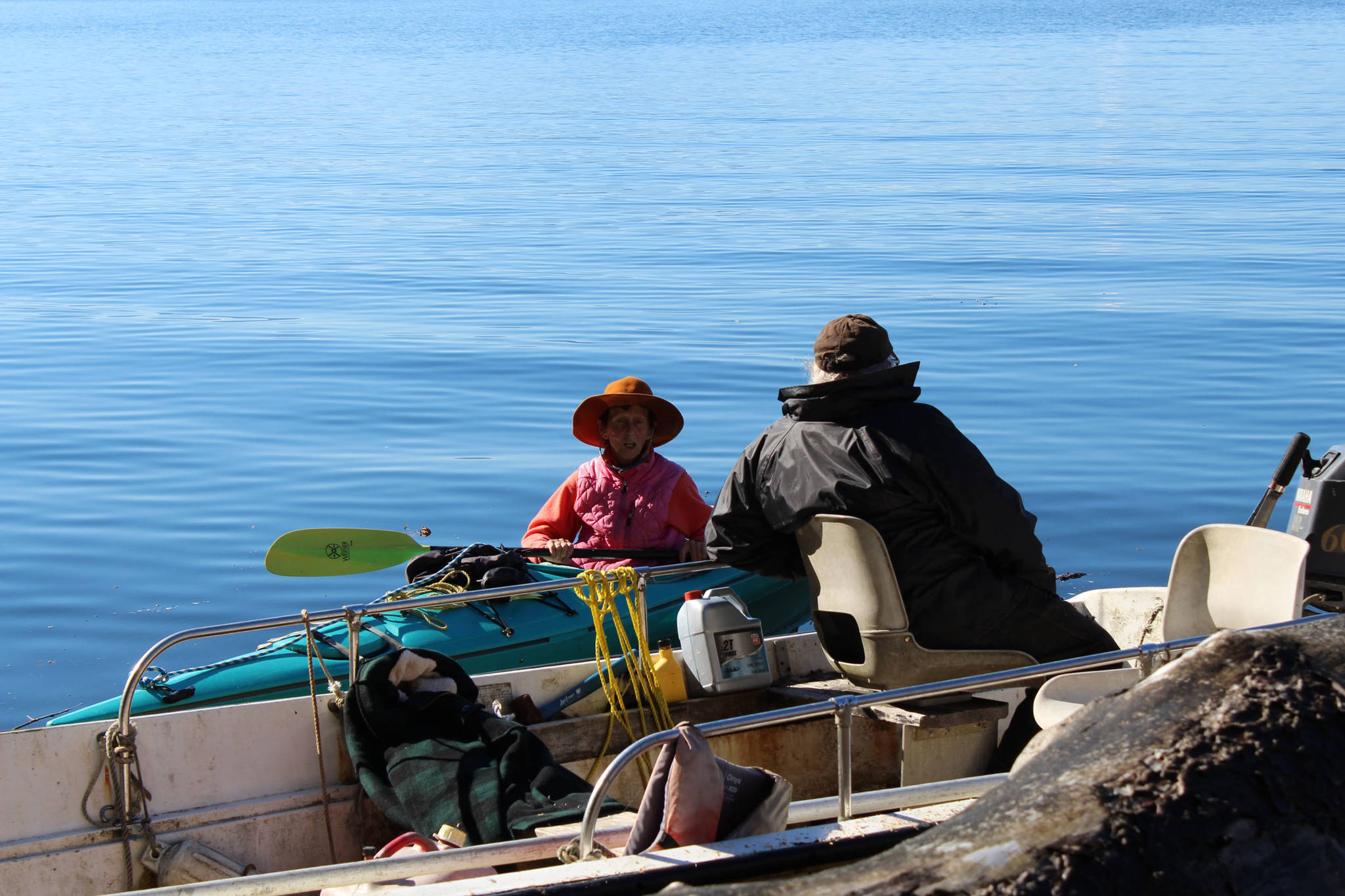
Gary and Meyers Chuck neighbor Lee discuss the eternal quest of floathouse dwellers. (Tara Neilson | For the Capital City Weekly)
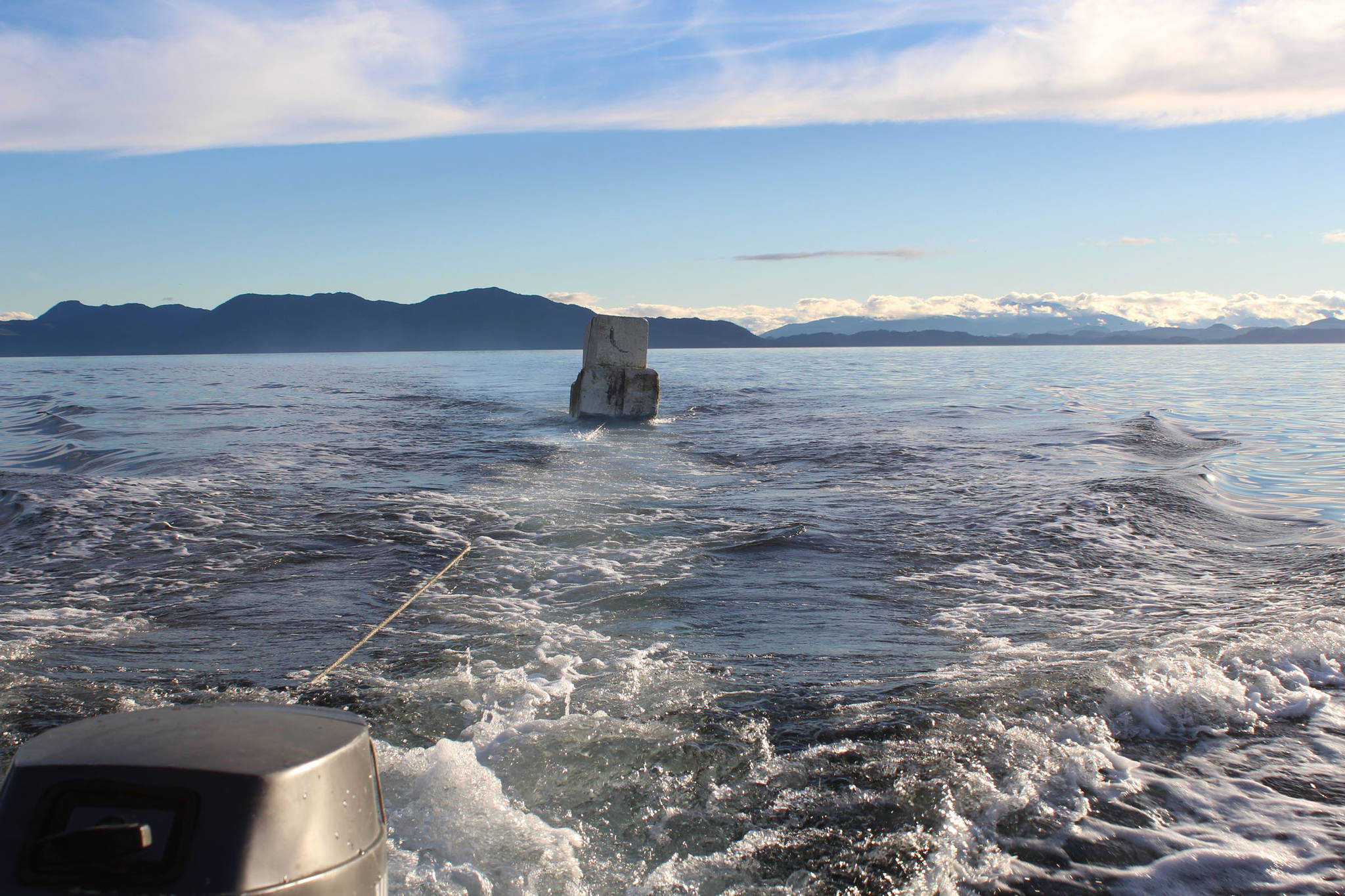
Towing the foam blocks was much easier than towing the log. (Tara Neilson | For the Capital City Weekly)
