
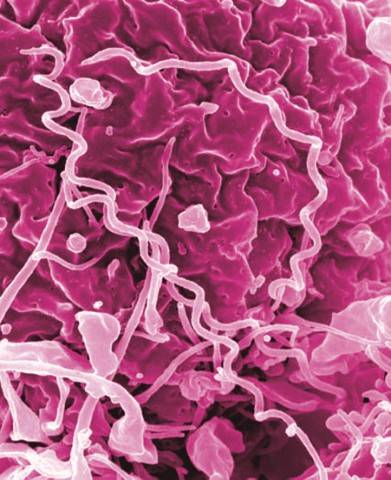
A future with more sexually transmitted diseases could be on the horizon for Alaskans.
According to Alaska’s Department of Health and Social Services website, Alaska’s syphilis cases were “high and rising” before the pandemic struck, a trend that has public health officials worried.
“It’s so crazy,” said Susan A. Jones, an Anchorage-based public health nurse consultant and Department of Health and Social Services HIV/STD Program Manager.
During a phone interview last month, she said that Alaska is seeing its highest syphilis case counts in the state’s history. Though 2020 numbers weren’t final at the time of the interview, she said that there were already over 300 cases reported.
Cases more than doubled from 114 reported to the state in 2018 to 242 in 2019, according to state data.
In addition, she said that the state was closing in on 10 cases of congenital syphilis. Congenital syphilis occurs when an infected mother passes the infection on to her newborn during birth.
“The most we’ve seen before is two,” she said. “The increase is significant on many levels.”
The reasons for the increasing infections are varied, Jones said.
“As people get COVID weary, they’ve increased sexual connections,” she said, noting reports that online dating apps are making it easier for people to meet new partners when traditional avenues are less available.
City announces vaccination clinic dates
Jones said many people are skipping routine health care to avoid possible exposure to the virus when visiting a clinic. As fewer people visit public health clinics, fewer condoms are distributed, and other preventive measures become more complicated, she said. When people do visit, she said that a shortage of testing kits has made it more difficult for people to get tested.
“We’ve had a shortage of testing kits as many of the swabs have been purloined for COVID-19 testing,” she said.
Additionally, disease intervention specialists have been reassigned to COVID-19 mitigation and contract tracing. Jones said many of the people with syphilis infections live in unstable housing situations, making contract tracing more difficult.
Juneau public health officials could not be reached for comment on the local situation.
However, Tanya Pasternack, Alaska Medical Director for Planned Parenthood, issued a statement echoing the statewide concerns.
City and Borough of Juneau reports no new COVID-19 cases
“Alaska is a nationwide leader in poor indicators of sexual and reproductive health, leading the nation in chlamydia, and second for gonorrhea. The syphilis rate has more than doubled in the state. This is a public health crisis and must be addressed,” she said in the statement Thursday.
In 2019, Planned Parenthood administered 18,506 tests for sexually transmitted infections to people in Alaska, according to the statement.
“Access to contraception and reproductive health care has grown more difficult in the pandemic, with Black and Hispanic women facing the worst barriers. COVID is serious and threatens our physical and mental health. Latinx, Black, Asian and American Indian/Alaskan Native communities are suffering in disproportionate numbers. While difficult, our doors have remained open to provide non-COVID-related, important health care to our communities in Alaska. We will continue to do so,” Pasternack said.
What’s the difference between a sexually transmitted infection and a sexually transmitted disease?
According to Jones, a secually transmitted infection is an infection that sets up the environment for disease. A sexually transmitted disease is the disease process that can unfold due to a sexually transmitted infection, especially if the infection is not treated.
She said that serious complications, such as infertility, can accompany sexually transmitted diseases.
“I want to stress that it’s safe to get tested,” Jones said.
•Contact Dana Zigmund at dana.zigmund@juneauempire.com or 907-308-4891.
