Sustainable Alaska: Saving Energy at UAS
Published 3:00 am Friday, December 6, 2019




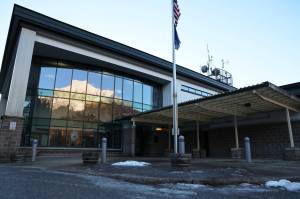
Efficient energy use on campus is a big part of the work of University of Alaska Southeast Facilities Services — the cost of energy consumes about one quarter of our total facilities budget — so we’re always looking for ways to save energy. Why focus on energy? 1) Facilities Services has some control over energy, 2) savings are measurable and quantifiable, and 3) energy efficiency frees money for other uses.
Staff at UAS’s Facilities Services have been working to conserve energy for a long time. The facilities consulting firm Sightlines noted that in fiscal year 2017 UAS consumed about 13% less energy per square foot than its peer institutions, most of which are small state universities in Maine and Pennsylvania. Sightlines noted that UAS saved $12 million on energy during the previous five years.
These energy savings were achieved through excellent maintenance, improvements to the Natural Sciences Research Lab (our least efficient building), the sale of the former Bookstore/Administration building, continual improvements in lighting on campus, and the installation of four heat pumps at J.R. Pugh Hall, the Whitehead and Hendrickson Buildings, and the Southeast Alaska Maritime Training Center in Ketchikan.
UAS’s first heat pump was installed in Pugh Hall, UAS’s freshman residence hall. Heat pumps work like giant refrigerators, using a liquid to move heat from one side of the system to the other. Kitchen refrigerators warm kitchens as they cool food and drink. In most of the world, heat pumps are used for cooling — like your refrigerator — but they work quite happily in reverse. Here in Southeast Alaska, we mostly want them to heat buildings. A heat pump can take heat from outside air, the ground, a lake or the ocean. The heat pump at Pugh Hall is an air-source design; it takes heat from the outside air.
UAS has long been interested in heat pumps because moving heat is much more efficient than heating or cooling by electricity or burning fuel oil or gas. We did not have sufficient funds when Pugh Hall was built, so we had it designed to allow for installation of a future ground-source heat pump. At that time, ground-source systems were more dependable, but between the original design in 2012 and 2016 when additional funding was available, the technology of air-source units improved dramatically. Air-source heat pumps are significantly cheaper to install than ground-source because there is no need to excavate or drill to connect the system to the ground.
UAS installs heat pumps to save energy, not money. The Pugh Hall heat pump installation cost about $450,000, and the total lifecycle cost is expected to be about the same for both the heat pump and the electric boiler system that was originally installed, but energy costs from the heat pumps are projected to be less than half of what they would be with only with the electric boiler. Electric boilers are about 95% efficient, which means that 95% of the energy put into it heats the space; a heat pump is 210% efficient because it moves heat around, rather than producing it from electricity or fuel. Facilities Director Nathan Leigh estimated the energy savings for 2018 for Pugh Hall at about $12,000.
This said our heat pumps have issues. At larger-than-residential scale, the technology is relatively new to Southeast Alaska, and UAS is an early adopter. All of our heat pumps were manufactured by LG, the only manufacturer at the time that made commercial-scale units. Unfortunately, LG’s units — like most in the industry — are optimized for cooling, not heating. Our exterior units do not always defrost correctly and periodically ice up, necessitating considerable effort over years. We cannot entirely fix the issue without replacing the heat pumps, but we manage it, mostly by monitoring the weather and turning them off when they are in danger of icing up and damaging themselves.
Besides that, UAS is satisfied with the heat pumps’ performance. A slightly different heat pump design is planned for the upcoming Auke Bay Integrated Science Building. That system will take heat from the seawater outfall from the neighboring Anderson building and use it to heat the new building. We’ll keep you posted.
• Ke Mell is Project Manager for Facilities Planning and Construction at University of Alaska Southeast and a member of the UAS Sustainabilty Committee. “Sustainable Alaska” is a monthly column, appearing on the first Friday of every month. It’s written by UAS Sustainability Committee members who wanted to promote sustainability. The views expressed here do not necessarily represent the views of the University of Alaska Southeast.