
Alaska teens are more likely to be depressed and have suicidal thoughts than were teens a decade ago, and some mental health problems have increased notably among girls, according to results from the state’s most recent Youth Risk Behavior Survey.
Administered in 2023 to nearly 1,200 high school students around the state, the survey found numerous negative trends.
Of the respondents, 19% reported attempting suicide at least once over the past year, compared to 8.7% in the 2011 Youth Risk Behavior Survey. Twenty-three percent said they had considered suicide, compared to 14.5% in 2011. And 43% reported feeling sad or hopeless for such extended periods that they were not able to carry out some of their usual activities, compared to 25.9% who reported feeling that way in the 2011 survey.
Alaska’s Youth Risk Behavior Survey is administered to students every two years, though 2021 was skipped because of the COVID-19 pandemic and the resulting school closures. Results were released this month by the Alaska Division of Public Health.
In many mental-health measures, girls reported more problems than boys. Among female respondents in 2023, 56% reported feeling too sad to engage in their usual activities, versus 32% for male respondents. While 20% of all respondents reported being cyberbullied – up from 15% in 2011 – 25% of the girls said they had been victimized that way.
Other survey results revealed worsening lifestyle habits. High schoolers maintaining a healthy weight dropped to 64.3% in 2023 from 71.9% in 2011. More students, 53.1%, reported drinking at least one sugary beverage in the prior week in the 2023 survey, compared to 44.9% in 2011. Those engaging in the recommended 60 minutes of daily exercise dropped to 18% in 2023 from 21.3% in 2011.
Lindsey Kato, director of the Alaska Division of Public Health, said she was saddened by the findings.
“My heart breaks for our young Alaskans who are struggling and for families across the state,” Kato said in a statement. “These statistics reinforce the continued work that is needed to support our children and families to improve community connectedness, economic stability, and access to quality health services; the need for public health and public safety to work side by side our violence prevention work, so that Alaskans can focus on things like physical activity, education, and nutrition. We know that all of this is connected, we know that these results are felt in our communities and seen in the state’s increased rates of overdose and high rates of suicide.”
The Alaska results mirror some of the national trends, as reported by the U.S. Centers for Disease Control and Prevention. Nationally, surveys show more mental health distress, including thoughts of suicide, particularly among girls.
However, the Alaska survey also shows some positive trends.
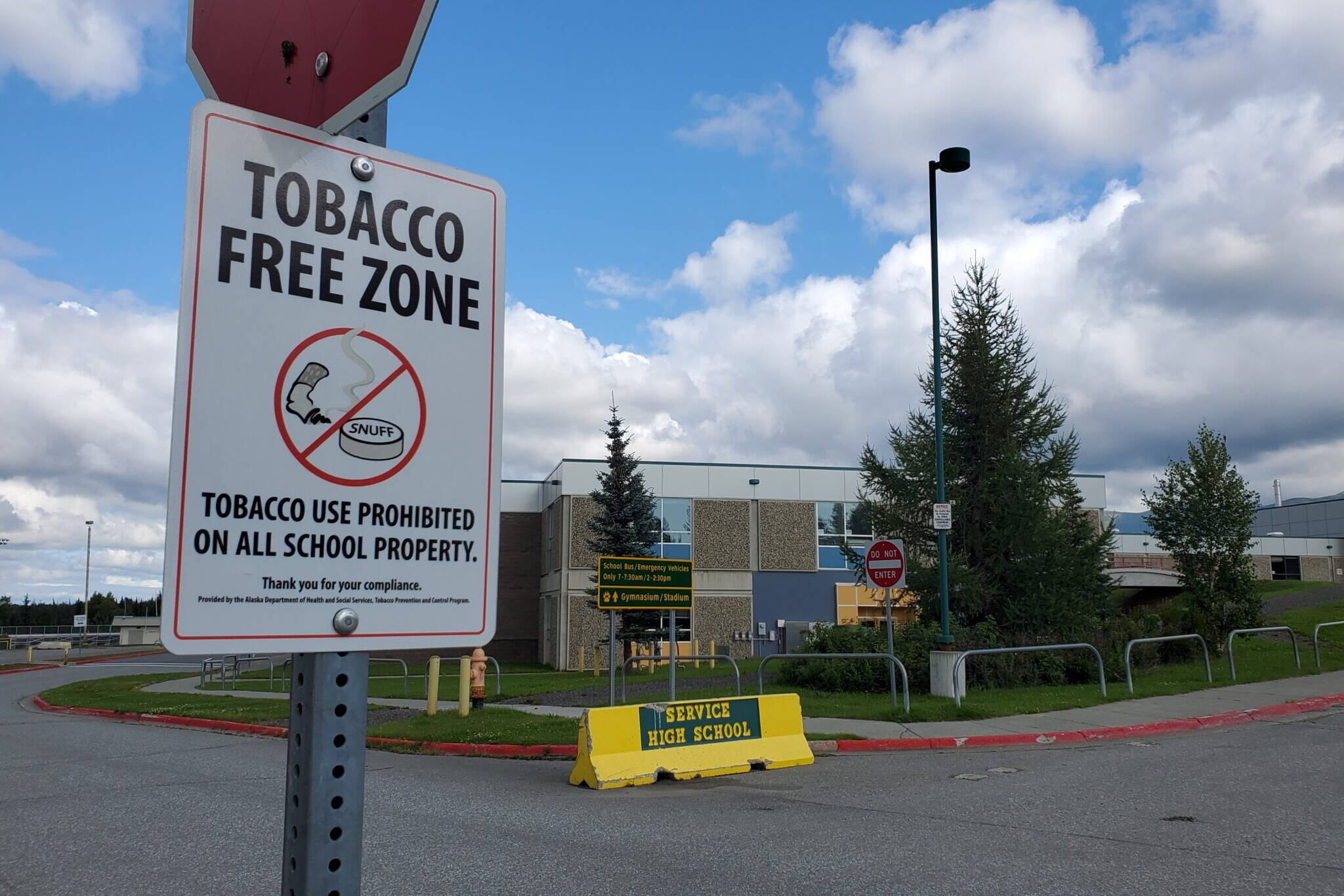
Use of tobacco products, including electronic cigarettes, and exposure to tobacco smoke is down, as is consumption of alcohol, according to the results.
Tobacco use continues its long-term decline among high schoolers, according to the results. For example, 6.5% of the 2023 survey respondents said they had smoked a cigarette in the prior 30 days, compared to 14% in 2011.
Of the students responding to the survey, 16.9% said they had consumed an alcoholic beverage in the prior 30 days, compared to 29% in 2011.
The use of e-cigarettes, a relatively new product, has changed significantly in recent years. The latest survey suggests that the popularity of vaping among Alaska high schoolers is declining. In 2023, 17.3% reported vaping over the prior 30 days, significantly lower rate than the 26.1% measured in 2019 and similar to the 17.7% rate recorded in 2015, the first time the youth survey queried students about e-cigarettes.
The decrease in vaping “is obviously a really exciting thing to see,” said Katie Steffens, deputy program manager for the Alaska Tobacco Prevention and Control Program.
The program, which is part of the Division of Public Health, has a wide-ranging strategy to discourage vaping, including working with schools, community groups and a “Not Buying It” campaign to counter e-cigarette companies’ youth-focused marketing.
“It’s a very comprehensive effort,” Steffens said. “I don’t know that there’s any one thing that would lead to this, but we have a lot of strategies that we’ve learned with cigarette use among the youth in the past that we’ve been using to address e-cigarette use today.”
One part of the strategy is establishing alternatives to academic suspensions that have been routinely meted out to students who smoke or vape at school. Students lost more than 1,800 school days in 2018 and 2019 because of such suspensions, according to the Tobacco Prevention and Control Program.
An alternative response, which is supported by the American Lung Association, is an educational program that informs students about the health risks while allowing them to continue attending class as normal.
The Tobacco Prevention and Control program recommends that schools and communities that have the capacity for it use the alternatives to suspension so students “can get that education, that they need to understand more about what these products are doing to their health,” Steffens said.
• Yereth Rosen came to Alaska in 1987 to work for the Anchorage Times. She has reported for Reuters, for the Alaska Dispatch News, for Arctic Today and for other organizations. She covers environmental issues, energy, climate change, natural resources, economic and business news, health, science and Arctic concerns. This article originally appeared online at alaskabeacon.com. Alaska Beacon, an affiliate of States Newsroom, is an independent, nonpartisan news organization focused on connecting Alaskans to their state government.
