
Alaska is seeing a drastic rise in the percentage of children experiencing mental health struggles including anxiety and depression, according to a recently released study.
Children and teens between the ages of 3-17 were found to have a 51.9% increase in the number struggling with anxiety and depression in Alaska between 2016 and 2020 according to a a study release on Monday by the 2022 Kids Count Data Book, a 50-state report of household data developed by Annie E. Casey Foundation to analyze child and family well-being.
The data also shows Alaska’s rate of children and teens struggling with a mental health crisis is less than the nationwide average by 3 percentage points but is still far higher than that of many other states. Currently Alaska ranks as the 41st state for overall child well-being this year which is an increase from its previous position as 43rd according to the Annie E. Casey Foundation.
Though the almost 60% rise might be alarming to at first glance, it might also be a sign pointing to a positive trend, according to experts.
Part of this comes from recognition,” said Sara Buckingham, an assistant professor of clinical-community psychology for the University of Alaska Anchorage’s Ph.D.program. “We’re recognizing mental health in society and we’re starting to pay attention in the community.”
She said while there has been an overall trend of declining child mental health recorded over the past 10 years based largely off factors like the pandemic, food and housing insecurities, poverty and neglect, she said she is also seeing a trend of decreased stigma around mental health which is opening the door for more people to come forward with their struggles.
“We have to normalize mental health care,” she said. “Just like we go to the doctor for physical health, we should go to a psychologist for our mental health.”
Trevor Storrs, the president and CEO of Alaska Children’s Trust, Alaska’s Kids Count network affiliate, said the statistics didn’t really shock him and he hopes it invigorates people in Alaska to ask why the increase may be happening.
He said over the past 10 years, Alaska has always ranked in the bottom third of states on this issue, and he wasn’t expecting a major change because of the recent decrease in funding for child and family well-being in the state and added stress from the pandemic.
He said the system to provide child and family well-being in the state was already fragile before the pandemic because of the lack of available and specialized providers, and now the same issue persists but at a magnified level.
“It puts so much more strain on an already fragile system that hasn’t been able to keep up with the demands of overall need. We really need to give this greater attention because if we don’t we’ll be paying for it now and will see greater demand and higher costs after the fact.”
He said openly talking about mental health as you would about exercise and nutrition is a great step a community can make to open the door for children to feel more comfortable coming forward with their struggles. He said he also thinks it’s important for people to ask candidates running for office in the coming elections what they are doing to create an avenue for more resources to go toward mental health in the state.
“Talking does not create the problem, it helps identify and address it,” he said. “I think that it is important to realize all ages deal with mental health no differently than how we deal with physical health and we encourage people to ask the question ‘how are our children?’ and ask children ‘how are you doing?’ and letting them know that what they or their friends are struggling with is okay.”
He said he doesn’t try to compare how Alaska is doing on this issue compared to other states because even though other states’ statistics may point to a lower number, the problem still exists.
“Just because we’re doing better, does it mean what we’re doing is right or good? The question is what is a good number? And I think anyone would agree it is zero,” he said about the number of children dealing with mental health struggles. “Until we reach that, no one is doing good.”
Aaron Surma, the executive director for National Alliance on Mental Illness Juneau and the Juneau Suicide Prevention Coalition, said although the numbers might be shocking at first, he also thinks it might be pointing toward a more positive trend.
“I think people are becoming more comfortable asking for help,” he said. “It might not be that there’s an increase in the problem, but that people are acknowledging the problem.”
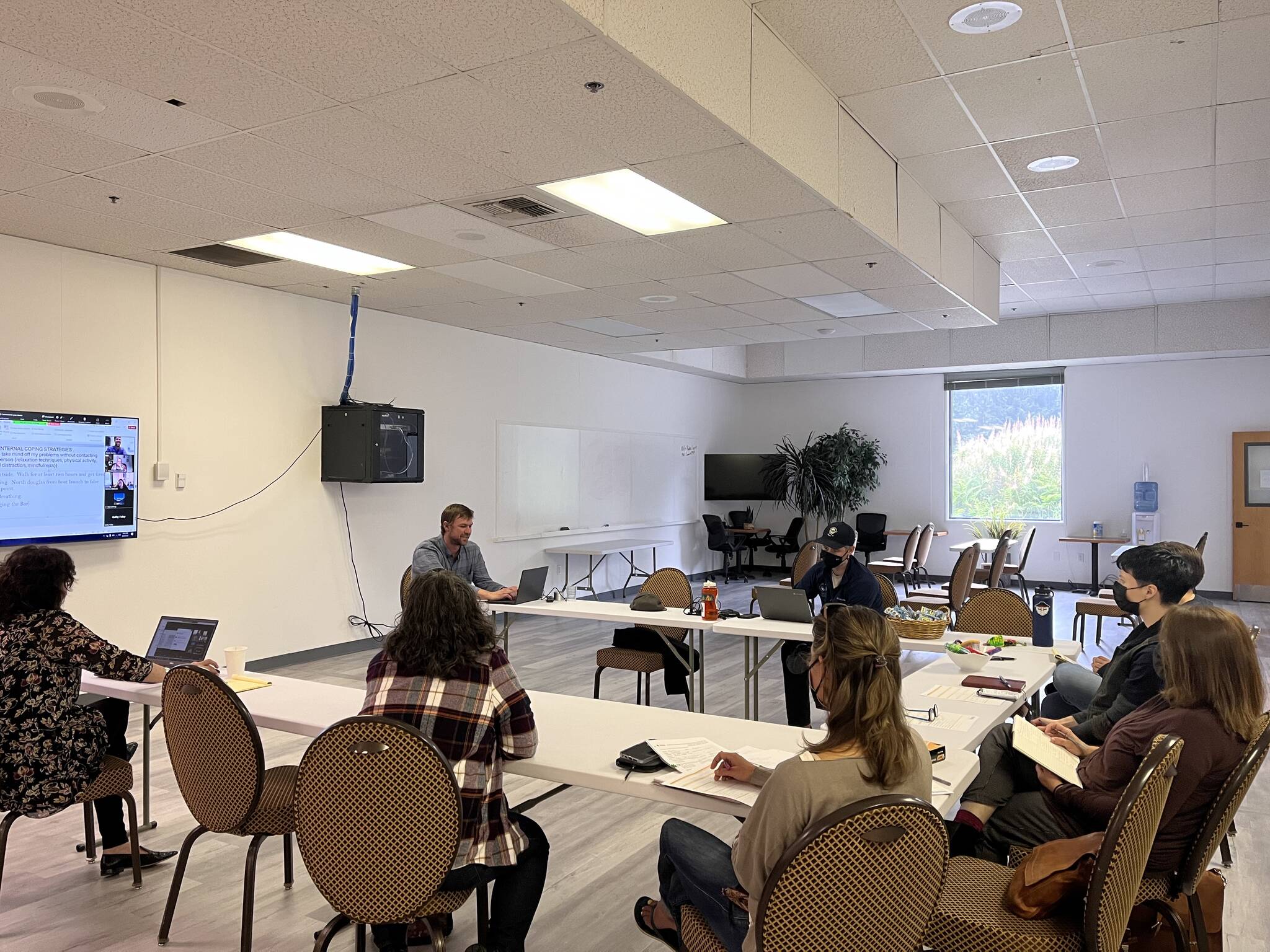
Surma Tuesday night helped lead a workshop hosted by NAMI and the Juneau Suicide Prevention Coalition that offered a brainstorming session to help Juneau residents learn how to build a safety plan that can be used to help someone who is experiencing a mental health or suicide crisis.
“It’s about how you can best care for yourself and how you can best care for your friends,” he said.
He said the workshop is just one of many things NAMI and the Juneau Suicide Prevention Coalition are doing to create more ways for people to get involved with mental health resources and offer support to people around them who could be struggling.
Surma said through the difficulty of the pandemic, the change in the culture around reaching out for help about mental health issues has turned to a more positive direction because of the emphasis on mental health during the pandemic, and as an outcome, the number of people reaching out has increased as people continue to come forward for help.
He said since the beginning of the pandemic, NAMI and Juneau Suicide Prevention Coalition have seen an increase of around three times the amount of calls asking for help than before the pandemic.
He said there is still a long way to go for meeting the needs of children and adults’ mental health in the state, some of the issues getting in the way being the amount of care available and the cost of care.
“There is support available and I want people to know that they can support one another and be more intentional about it — that alone can have an impact on mental health — and talking to people and knowing your support is hugely valuable,” he said.
• Contact reporter Clarise Larson at clarise.larson@juneauempire.com or (651)-528-1807. Follow her on Twitter at @clariselarson.
