
Successive marine heat waves appear to have doomed much of the chum salmon swimming in the ocean waters off Alaska in the past year and probably account for the scarcities that have strained communities along Western Alaska rivers in recent years, a newly published study found.
In the much-warmer water temperatures that lingered in the 2014-2019 period, juvenile chum salmon metabolism was super-charged, meaning they needed more food, said the study, by scientists with the National Oceanic and Atmospheric Administration and the Alaska Department of Fish and Game. But the food that was available was of low quality – things like jellyfish instead of the fat-packed krill and other prey they normally eat, the study said.
That means for the juvenile salmon trying to survive their first year at sea, “there’s not much gas in the tank,” said the study’s lead author, Ed Farley, manager of NOAA Fisheries’ Alaska Ecosystem Monitoring and Assessment Program.
Juvenile chum salmon that swam from spawning areas in the rivers suffered what was essentially a double hit, said Farley, who works in the NOAA Fisheries Auke Bay Laboratories in Juneau. They encountered one extreme heat wave in their critical first summer when they were in the northern Bering Sea and then, when they entered their wintering grounds in the Gulf of Alaska, swam into the tail end of another extreme heat wave, he said.
It’s likely that large amounts of the population died out in the ocean, Farley said.
Chum salmon typically spend one to four years in the ocean, swimming between the Bering Sea and the Gulf of Alaska as the seasons change, according to NOAA.
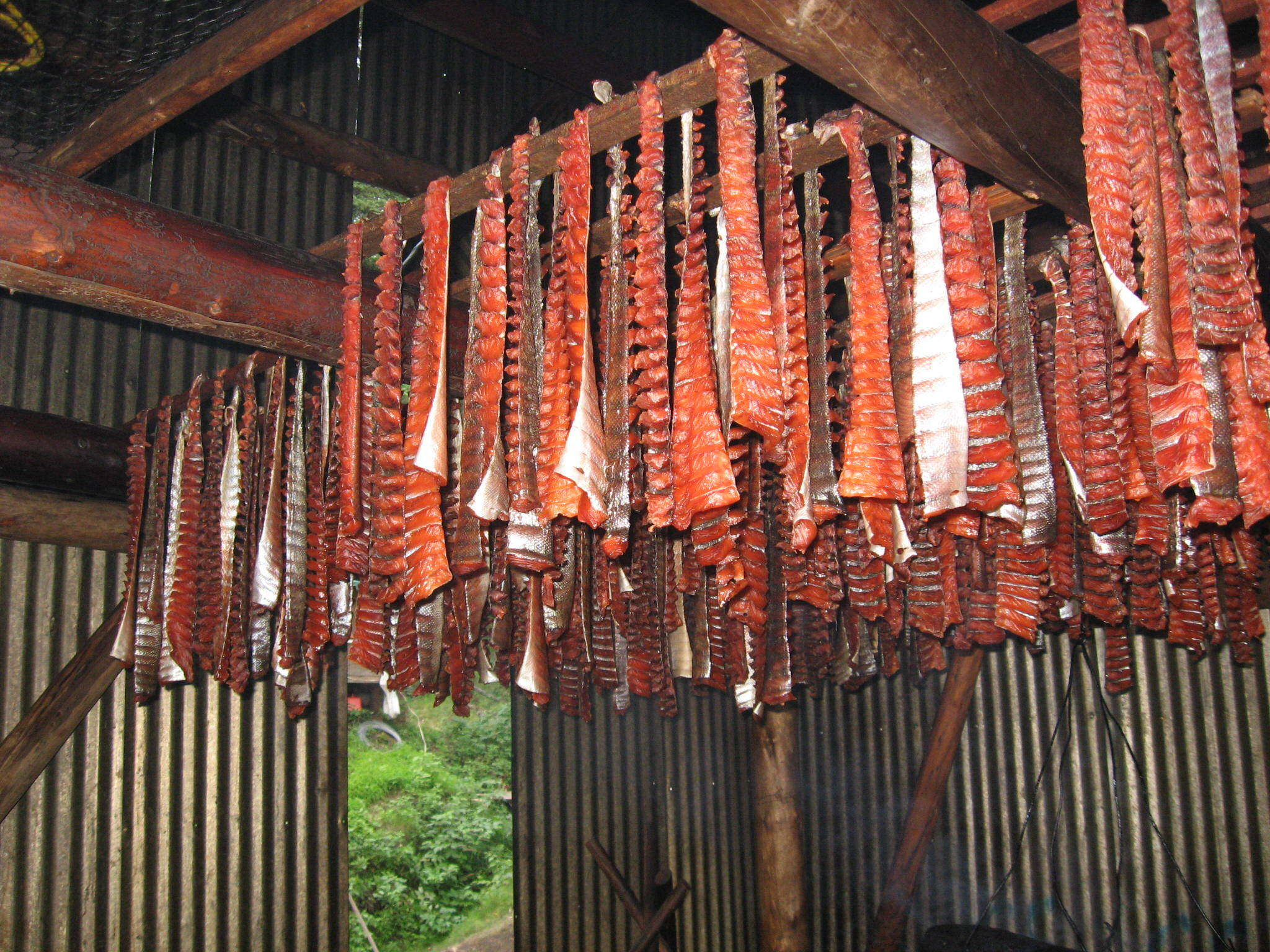
Chum salmon make up a large portion of the traditional diet for Indigenous residents living along Western Alaska rivers. In past years, commercial chum salmon harvests were also important income sources in Indigenous villages. But recent years’ crashes caused extreme hardship in those communities.
After 2019, conditions cooled considerably in the Bering Sea, Farley said. In those more normal conditions, NOAA surveys have found that juvenile salmon appear to be packing on the fat that they need to survive, though there are far fewer of them than there used to be.
That leads to some optimism about upcoming chum salmon runs along the Kuskokwim and Yukon rivers and elsewhere in Western Alaska rivers, where communities depend on the fish, he said.
“This just means, I think, that we’re seeing a turning point,” he said.
But the improvement may be only temporary as the global climate warms, he acknowledged.
Since the 1990s, there have been increases in the frequency and intensity of marine heat waves in the North Pacific, according to scientists. Projections are for that trend to accelerate, both globally and in the North Pacific Ocean off Alaska in particular.
That leaves fishery managers with the “very difficult question” of how to cope with the marine heat to come, Farley said.
“It’s going to happen. It’s happening quicker than we thought,” he said. ”I think we got a taste of what the Bering Sea and the Arctic are going to look like in the not-too-distant future.”
• Yereth Rosen came to Alaska in 1987 to work for the Anchorage Times. She has reported for Reuters, for the Alaska Dispatch News, for Arctic Today and for other organizations. She covers environmental issues, energy, climate change, natural resources, economic and business news, health, science and Arctic concerns. This story originally appeared at alaskabeacon.com. Alaska Beacon, an affiliate of States Newsroom, is an independent, nonpartisan news organization focused on connecting Alaskans to their state government.
