
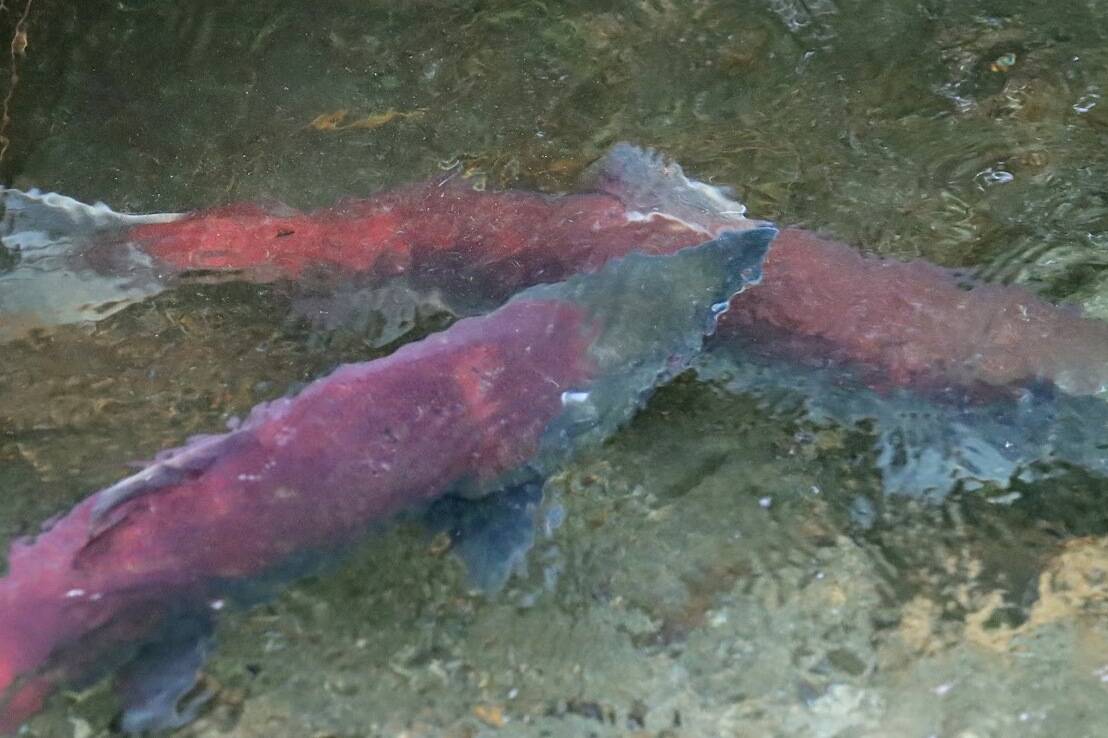
As summertime in Alaska slowly winds down, salmon harvests across the state saw a brief low period but the overall species harvest continues to surpass numbers from this time last year, according to recently released data.
Alaska’s overall salmon harvest across all species is currently up 15% from 2021 (2020 for pinks) with Bristol Bay and the Prince William Sound largely carrying the weight while other regions lag, according to data from the most recent Alaska Seafood Marketing Institute weekly salmon harvest update.
Bristol Bay was met with an early season record-breaking boom of sockeye harvests — the current harvest sits just under 60 millionwhich is 43% higher than last year. That’s aided the rise in the overall statewide harvest even while the recent pinks harvest continues to lack, and ketasalmon harvest sits at a historically small harvest similar to 2021.
[Sockeye harvest numbers soaring, other species see decline]
“An especially large number of salmon this year were caught in Bristol Bay, and because the Bristol Bay harvest was so big, we are still ahead of benchmark years, but only mostly because of the massive weight of the Bristol Bay harvest while some other areas have been down,” said Sam Friedman, a research analyst at the McKinley Research Group, which organizes the harvest data from the Alaska Department of Fish and Game.
He said that now that the sockeye season is coming to a close, the focus has shifted to pinks which in the last three weeks have seen low harvests statewide when compared to previous years. Friedman said he expects the rather low numbers to pick back up in the coming week or soas it’s around the same time last yearthat the statewide pink harvest hit its peak.
The region hauling the most pink numbers is by far the Prince William Sound which currently has a harvest 63% higher than this time in 2020 (the statistics use the most recent even-year for pink salmon). Other regions like Kodiak, Cook Inlet and the Alaska Peninsula are seeing notably smaller harvests.
Friedman said because of the varying pink harvest performances across the state, the current statewide numbers level out at a middle ground that compares “right about where we were in 2020” at just under 50 million pinks caught so far.
“It even out because a big one, Kodiak, which is a really big area for pink salmon harvest hasn’t been this year and Cook Inlet also has seen very few pink salmon caught this year,” he said.
In the Juneau region, commercial salmon harvests across all species seem to correspond similarly to the rest of the Southeast Alaska region, which overall is doing OK, said Scott Forbes, the Juneau area management biologist for the division of commercial fisheries.
“We kind of went into the season without super high expectations, but we were pleasantly surprised this year,” he said.
Forbes said Juneau’s commercial drift gill netting and purse seining are seeing an “abundance” of sockeye this year, which is in step with the rest of Southeast Alaska, Prince William Sound and Bristol Bay that also saw a significant jump in harvest numbers.
“The sockeye this year has just been exceptional, it’s definitely the highlight of the season,” he said.
Forbes said the pink harvest is better than expected for this year and looks like all escapement goals this year will be met, but it still lags compared to previous years. He said that it’s not all surprising to him as Juneau has been in the “even year blues” when it comes to pink harvests since around 2010, so it’s not unexpected that this year’s pinks are not as abundant, but he said he expects better numbers for the 2023 odd year.
“For pink salmon in the Juneau area, it’s definitely better than we thought and throughout the regions as well,” he said. “Oftentimes, there’s an even-odd year dominance that develops and for whatever reason we kind of got into a cycle where on even years the pink runs are kind of really poor, but it definitely flip-flops — It’s just the nature of pink salmon.”
• Contact reporter Clarise Larson at clarise.larson@juneauempire.com or at (651)-528-1807. Follow her on Twitter @clariselarson
