
As the state of Alaska considers stiff budget cuts and firing employees to close a multibillion-dollar budget deficit, there’s one part of government that’s seeking more staff.
It’s the division in charge of regulating marijuana.
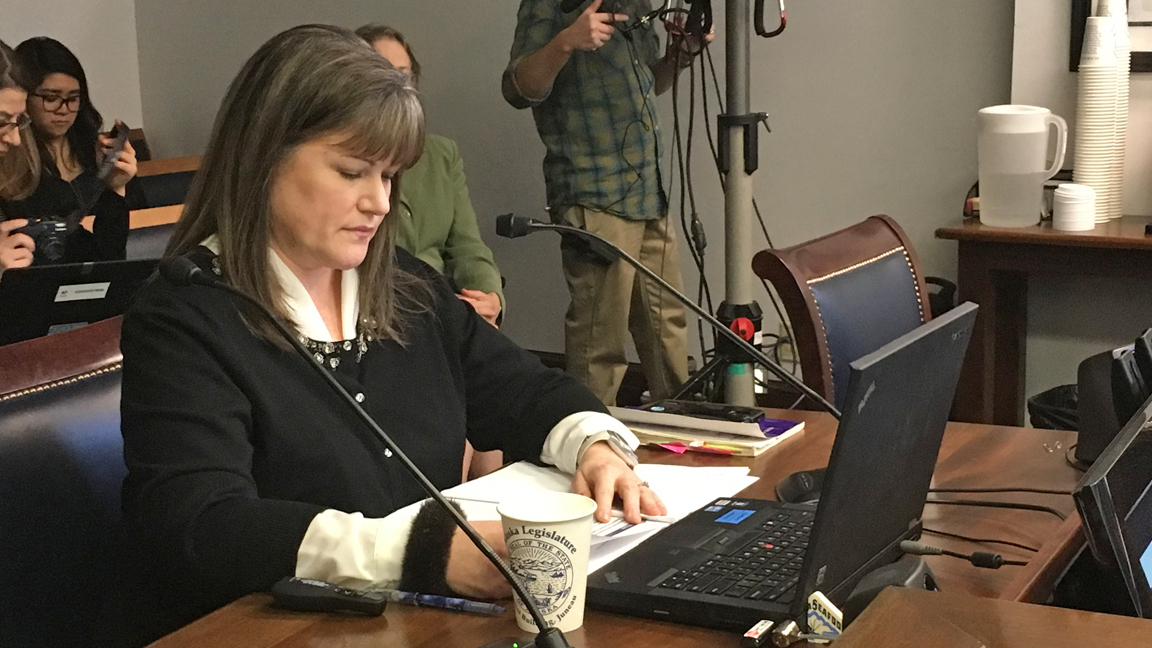
Sara Chambers, interim director of the Alaska Alcohol and Marijuana Control Office, told a House of Representatives subcommittee Tuesday that her office is seeking three more positions ─ two license examiners and an assistant ─ that will be paid with fees collected from the nascent industry.
“We definitely need more staff to keep up with demand,” Chambers said after the meeting.
AMCO currently has 18 employees and a $3.5 million budget. It has not added any new license examiners since assuming marijuana responsibilities alongside alcohol duties, though it has received more money.
The department’s existing license examiners are assigned to both alcohol and marijuana; the two new examiners would be marijuana-first.
Of the department’s existing budget, $1.9 million is allocated to alcohol issues, and the alcohol portion of the office is already funded entirely with fees. The marijuana portion of the budget, about $1.6 million, is expected to be covered this fiscal year with about $1 million in fee revenue and $600,000 from the state’s general fund.
In the next fiscal year, which starts July 1, AMCO has requested a $3.8 million budget and 21 employees. It isn’t clear how much of that budget would be supported by the state’s general fund, but Chambers said the office remains on track to be fully paid for with fees by fiscal year 2020, which starts July 1, 2019.
It’s important to separate taxes and fees: The state of Alaska collects a tax of $50 per ounce on marijuana flower and bud. It also charges license fees. A grower, for example, would pay a $5,000 fee to AMCO for the right to grow marijuana, then the per-ounce tax on every flower grown. The tax goes to the Department of Revenue and the state general fund. The fee stays with AMCO to pay for its operations.
Rep. David Guttenberg, D-Fairbanks and chairman of the subcommittee in charge of AMCO’s budget, asked Chambers when the state’s tax revenue would equal the cost of setting up the regulation system.
Chambers said she was unable to talk about tax figures, but according to previously published estimates by the Alaska Department of Revenue, the state is forecasting $5 million in marijuana tax revenue this fiscal year. If that forecast holds true, it would more than equal the amount the state has spent over the past two years to set up marijuana regulation.
Moving forward, Chambers said it’s important to keep up regulations on the industry, which is expanding in a “very natural economic process … of supply and demand.”
While retailers can’t keep enough marijuana on the shelves to meet demand, that situation isn’t expected to last forever. Only 48 marijuana licenses are in use out of almost 100 approved by the Marijuana Control Board, according to figures supplied by Chambers to the board on Tuesday. Dozens more businesses have started the application process.
Tuesday’s meeting was largely an informational one, and the subcommittee adjourned without taking action. The subcommittee’s next step is to consider AMCO’s budget proposal alongside other portions of the total Department of Commerce budget.
It will then make a recommendation on the Department of Commerce budget to the full House Finance Committee. That committee will consider the state’s budget as a whole, then send a final version to the full House. Once approved by the House, the budget will go to the Senate for consideration.
On-site consumption
Speaking after the meeting, Chambers clarified a decision made by the Marijuana Control Board during its meeting last week in Juneau.
On Thursday, the board voted 3-2 to drop plans for “on-site consumption areas” at marijuana retail stores. Chambers issued a statement on Friday saying that retailers could still apply to have a space where buyers could use marijuana at the store.
The issue is that the board voted to drop plans for a standardized set of guidelines that retailers could consult, Chambers said. The regulation allowing an on-site consumption area still exists, she said, but the board would have to approve proposals individually, on a case-by-case basis with no set guidelines.
“Whether they will do it is up to them,” Chambers said.
Contact reporter James Brooks at james.k.brooks@juneauempire.com or 419-7732.
