State employee salaries fall short of levels intended to be competitive, long-delayed study finds
Published 9:30 pm Tuesday, April 8, 2025




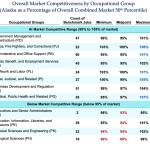
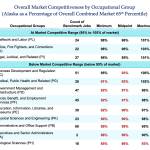
A long-delayed survey of state employee salaries released Wednesday — the first such survey since 2009 — shows Alaska largely isn’t competitive by traditional standards with other government and private sector employers.
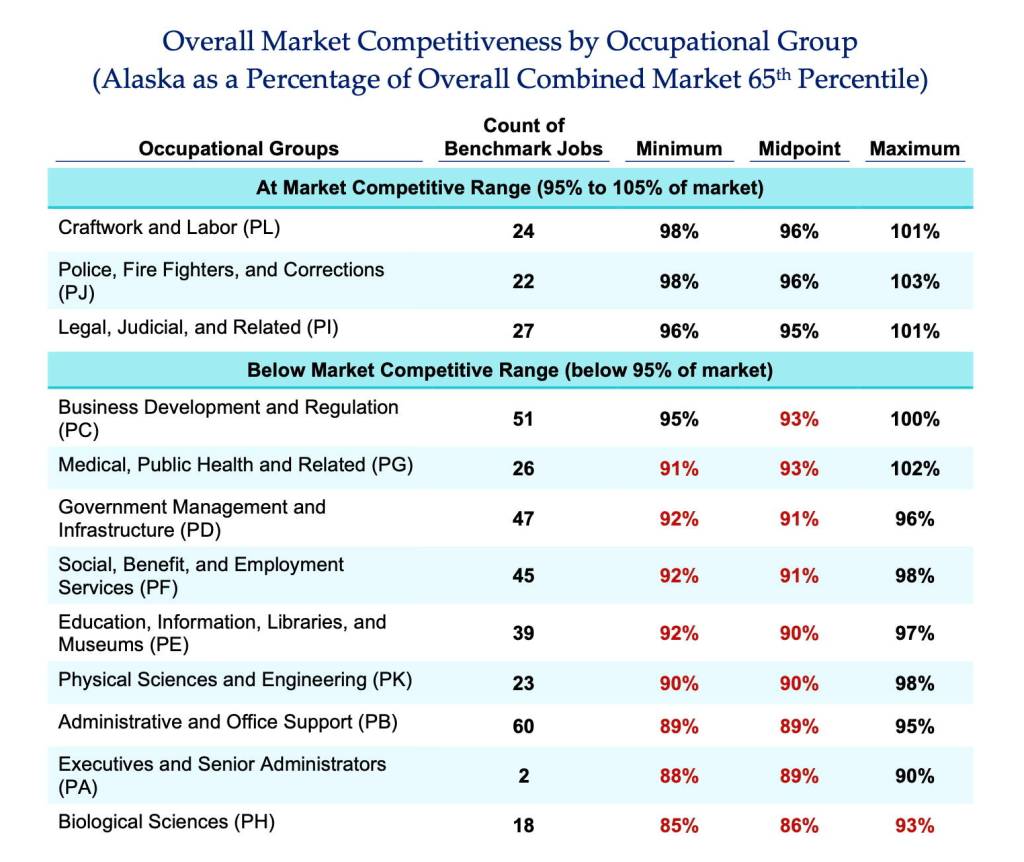
Midpoint public employee salaries are 91% of Alaska’s declared benchmark compared to other government and private sector pay, according to the study by the consulting company Segal. That benchmark is the 65th percentile of wages for specific professions — an official state policy level that means 35% of Alaska employers pay more and 65% pay less — and the target originally set for the study requested by the Alaska Legislature that was supposed to be released last June.
Among 36 occupation groups, 31 had competitiveness scores between 85% and 98% of the benchmark salaries, one equaled the benchmark and four exceeded it with scores between 101% and 103%.
Biological sciences jobs were the least competitive with scores between 85% and 93%, followed by executives and senior administrators with scores between 88% and 90%. Craftwork and labor positions were the most competitive overall at 98% to 101%, with police, firefighters and corrections employees next with a range of 96% to 103%.
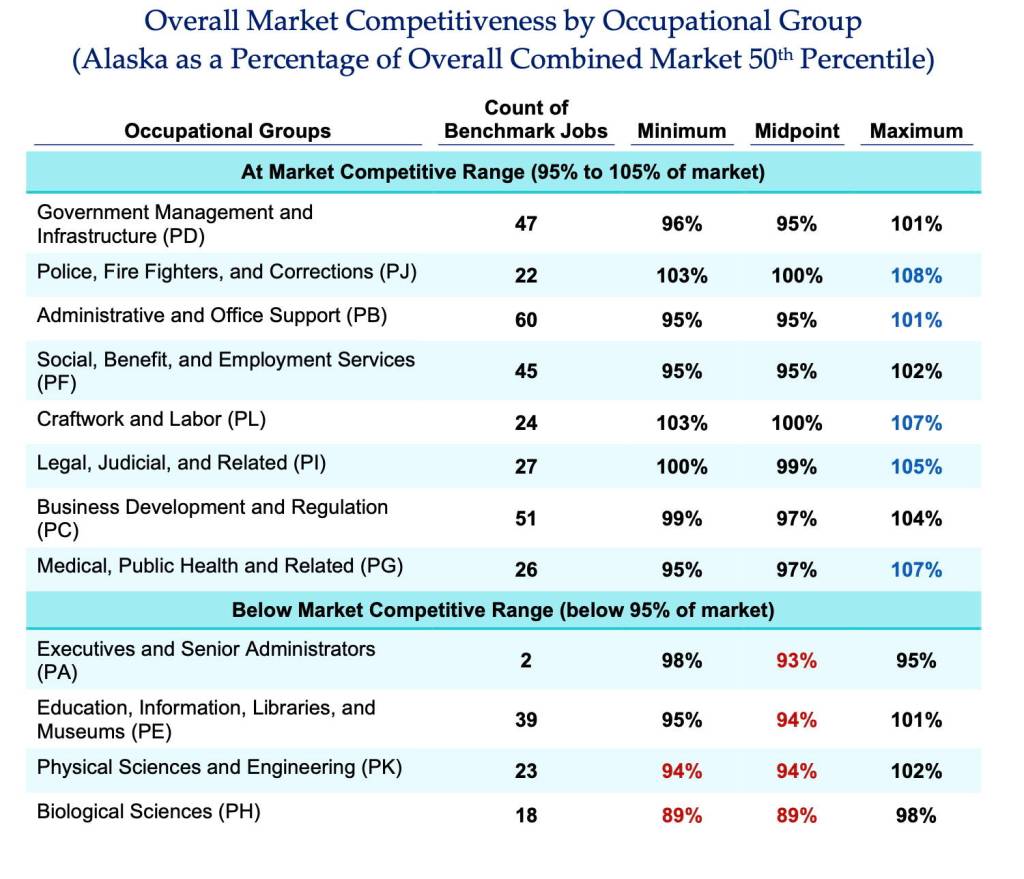
The initial study was withheld by the Dunleavy administration and Segal asked to also compare state salaries to other employers at the 50th percentile. The study released Wednesday finds midpoint state salaries are 96% of the lower benchmark.
When the lower standard is applied to the 36 occupation groups, 21 have scores ranging from 89% to 99% of average salaries, three equal them at 100% and 11 exceed them with scores ranging from 101% to 108%
“Segal has confirmed there are areas where the State of Alaska is well within the market for pay as well as areas for improvement,” the state Department of Administration stated in a press release accompanying the study.
Union representatives and some legislators have long said state employee pay is subpar, and a contributor to a high vacancy rate that currently is about 16% statewide. Many of the same officials accused Dunleavy of delaying the release of the study to avoid the leverage such data would give unions in contract negotiations.
“This study confirms what we have known for a very long time,” Heidi Drygas, executive director of the Alaska State Employees Association, said Wednesday in a prepared statement. “Not only are Alaska’s state employees the only ones in the nation without a pension, salaries have fallen miserably behind. It’s no wonder so many of our friends, neighbors, and colleagues are leaving the state and public service.”
A press release issued by ASEA, the state’s largest public employees’ union with more than 8,000 members, asserts a criminal justice technician would need an 18% salary increase “to be competitive with the market,” a Medicaid program specialist 26%, wildland firefighter 37%, petroleum economist 41% and emergency management specialist 55%.
“Even worse, non-union employees’ salaries across the board are lower than their union counterparts,” Drygas said.
The Department of Administration, in its press release, declares “72% of employees in benchmark jobs are paid At or Above Market rates compared to the market median (50th percentile)” and “57% of employees in benchmark jobs are paid At or Above Market leading rates (65th percentile).”
“The current pay range for Police, Fire Fighters, and Corrections; Legal, Judicial, and Related; and Craft and Labor occupational groups is consistently At or Above Market,” the press release adds.
A lawsuit seeking the release of all study data collected to date was filed in February by ASEA. Last week the Democratic-led House State Affairs Committee introduced a resolution asking the governor to release “all copies of the statewide salary study.”
Department of Administration officials said in late January additional time was needed for the study, with March 31 set as a new completion date — due to legislation and collective bargaining agreements enacted last year that might have altered the parameters of the $1 million study approved by the Legislature in 2023. But legislators said last week they were told by administration officials the study was being further delayed without a specific release date.
The study evaluates the pay of about 7,310 employees at 404 different job positions, although only 384 of those positions had enough data to be considered valid by Segal in its survey results.
Other government employers compared were state and federal entities in 13 other states ranging in population from Wyoming to California, plus in-state entities such as the University of Alaska and Juneau’s municipal government. Segal states its public sector database includes nearly 21,000 items from more than 400 public sector municipalities nationwide.
Private sector data was compared from more than 20 employers ranging from Alaska Communications to Sealaska Corp., and nationwide using five data sources such as the Economic Research Institute and Kaiser Family Foundation.
“This report does not define appropriate compensation for employees nor address changes to the current salary structures,” Segal states in the study’s executive summary. “Instead, the report is intended to provide State leaders data and related insights to make decisions related to compensation for State positions.”
Among the takeaways the state Department of Administration cited in its press release was an overly complex job classification system.
“The State’s current classification system is complex, administratively burdensome, and lacks agility to adjust to market with more than 250 unique salary ranges across 12 bargaining units,” the release states. “Its outdated structure makes it challenging to implement changes to maintain competitiveness in the labor market. The study recommends that the State of Alaska develop a streamlined classification structure, supported by a rotating schedule for regular review, maintenance, and updates to job classifications.”
Segal, in its recommendations, states Alaska should be more consistent and reflective of current salary trends in setting pay levels.
“Inconsistencies within pay ranges and salary structures in these areas have the potential to result in pay compression issues between line staff and supervisors, as well as between employees in the same or similar positions based on tenure with the State,” the study notes. “Additionally, the current salary structure designs lack agility to adjust to labor market conditions and are administratively burdensome.”
• Contact Mark Sabbatini at mark.sabbatini@juneauempire.com or (907) 957-2306.