
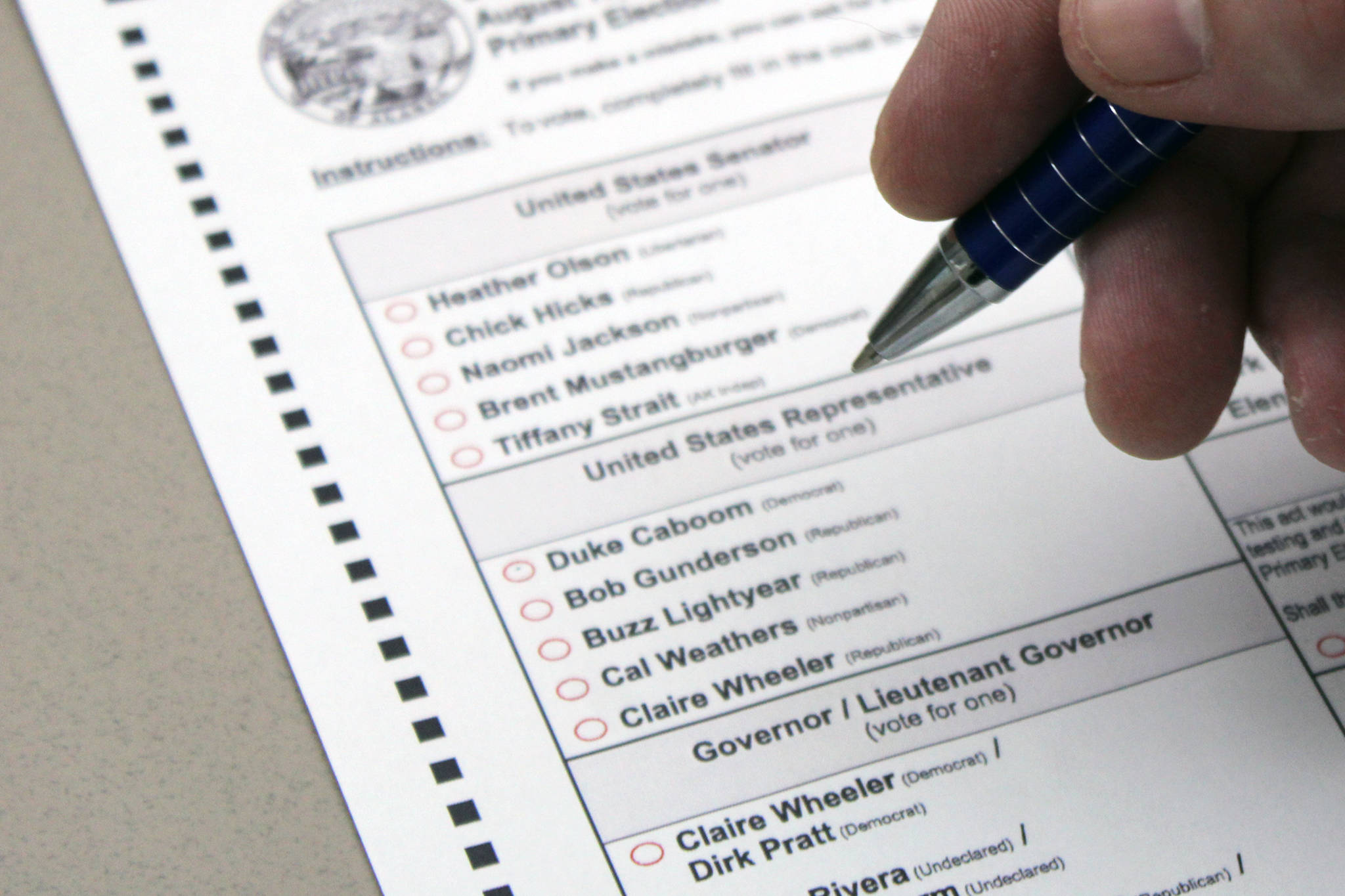
A ballot initiative narrowly approved by voters last year will rework the way the state conducts elections, and Alaskans will start seeing some of those changes soon, according to the Division of Elections.
In a news release Monday, the division said some of the changes in the Better Elections Initiative, which voters approved as Ballot Measure 2, are being implemented. However, Alaskans won’t see ranked-choice voting on their ballots until 2022.
The provisions of the law went into effect on Feb. 28, 2021, the division said. Voters won’t see open primary ballots until Aug. 16, 2022, and ranked-choice ballots until the Nov. 8, 2022, general election.
“The process of fully converting Alaska’s current election system to the voter-approved new one is extensive and takes time,” the release said. “But DOE is committed to being transparent and keeping voters involved along the way.”
The division will work with Alaskans to explain the changes, said Division of Elections director Gail Fenumiai in the release, and the division is developing an outreach program to educate voters on the new election system. The most substantial changes to Alaska’s elections are the implementation of open or “top four” primaries and ranked-choice voting.
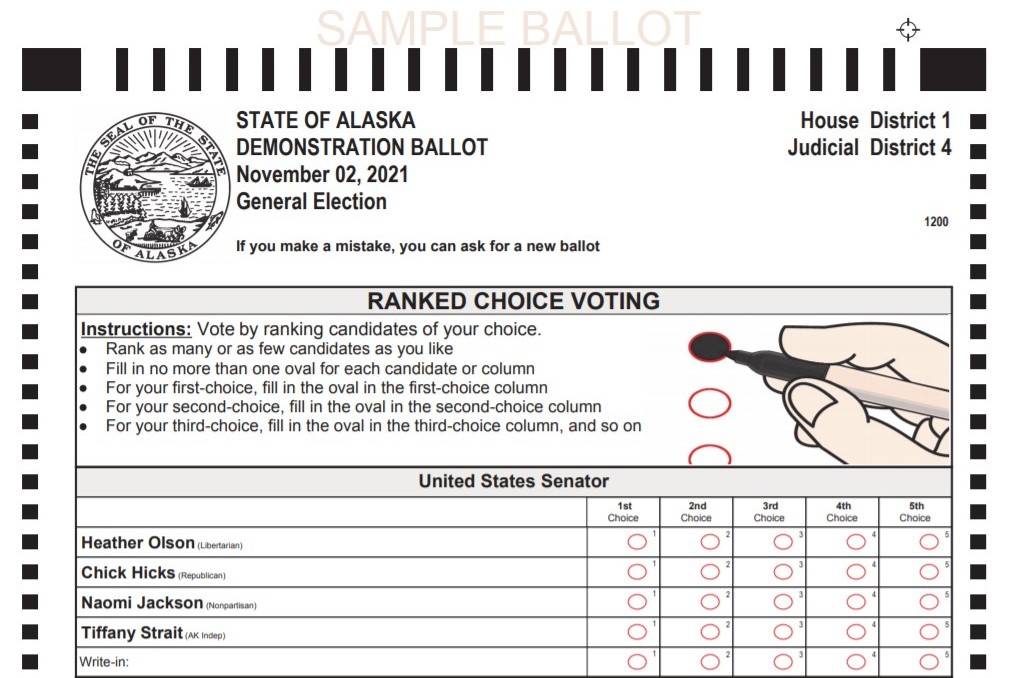
Screenshot This screenshot shows a sample ranked-choice voting ballot released by the Alaska Division of Elections.
The state is developing its own materials, according to the division, and in the meantime has created a frequently asked questions section on the DOE website and provided links to explanatory videos from the state of Maine, where ranked-choice voting was implemented in 2016. However, the division notes that Maine does not use ranked-choice voting in as many races as Alaska will. The division’s website is being restructured to include more information on the process including sample ballots and implementation timelines.
Ranked-choice voting and open primaries will significantly change how Alaskans vote, and the division wants Alaskans to be aware of those changes. Ballots will look different to accommodate for the new ranked-choice voting system, and sample ballots are currently available for Alaskans to review.
Political parties will no longer have their own primaries, and the top four candidates in the primary election will advance to the general election, according to the division. Petition candidates, people who submit petitions to have their name listed on the ballot, will no longer be allowed under the new system, but write-in candidates will still be allowed in the general election.
[Assembly to consider voting processes for future elections]
In a general election with ranked-choice voting, only the first round of results is reported on election night, according to the Division of Elections, and those results will be unofficial results in the same way elections results are currently reported. Ranked-choice voting only goes into effect when one candidate fails to receive at least 50% of the vote. If that happens, the retabulation won’t take place for 15 days, the division said, until all ballots have been received and counted.
Ballot Measure 2 passed in a close vote in November, and the vote was audited following unfounded but vocal concerns from Alaskans about the validity of the election. The audit found no change in the vote, and Lt. Gov. Kevin Meyer, who oversees elections in the state, has said repeatedly he believes Alaska’s elections were conducted honestly and fairly.
The implementation is estimated to cost nearly $1 million to implement, according to the Office of Management and Budget review of the imitative. A funding request is currently before the Legislature, according to Division of Elections spokesperson Tiffany Montemayor.
“Over the next year and a half, we will be engaging with Alaskans to explain how these changes will affect upcoming elections, and I believe voters will be well prepared come 2022,” Fenumiai said. “My team will continue their hard work as we ensure the smooth transition of our election system.”
Voters can reach the division with questions specifically related to ranked-choice voting by emailing elections@alaska.gov.
• Contact reporter Peter Segall at psegall@juneauempire.com. Follow him on Twitter at @SegallJnuEmpire.
