
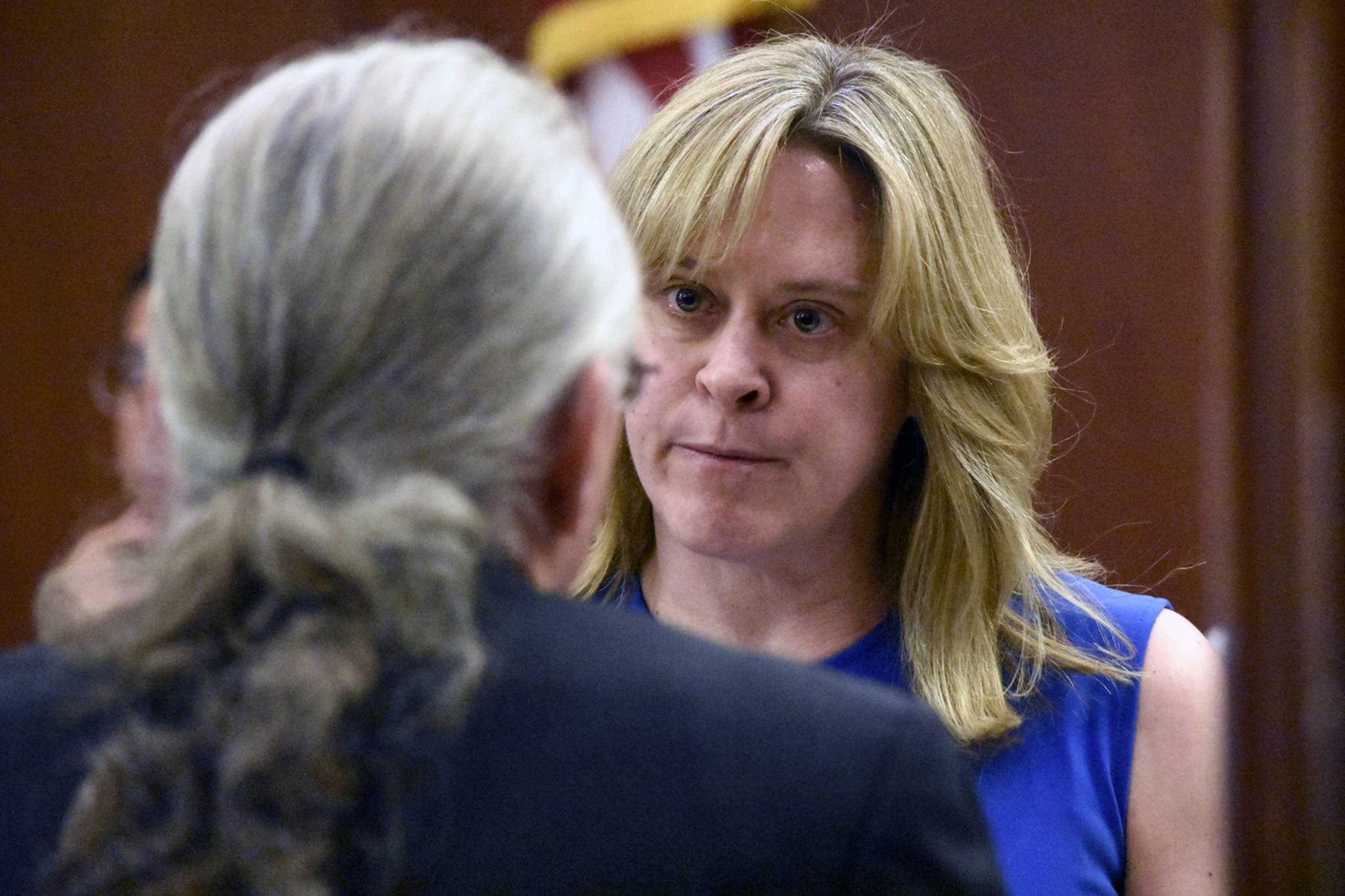
The state of Alaska avoided a shutdown Wednesday after Senators approved a budget proposal from a bicameral conference committee. Similar to the House of Representatives the night before, the Senate passed the operating budget but was unable to muster the three-quarter vote necessary to access the multiple fund sources laid out in the proposal.
Without those funds, certain state programs will remain unfunded and this year’s Permanent Fund Dividend will be only $525.
That could change if lawmakers do vote to access funds in the state’s Constitutional Budget Reserve, but at this point, no one can say when that might be. The Legislature’s current special session ends Friday, June 18, and another special session begins Aug. 2. However, lawmakers have been unwilling to compromise without the assurance the state’s long-term fiscal problems will be solved.
“There’s a good chance the three-quarter vote is not happening today or tomorrow, it’s going to happen,” said Senate President Peter Micciche, R-Soldotna, in a meeting with reporters following the Senate vote.
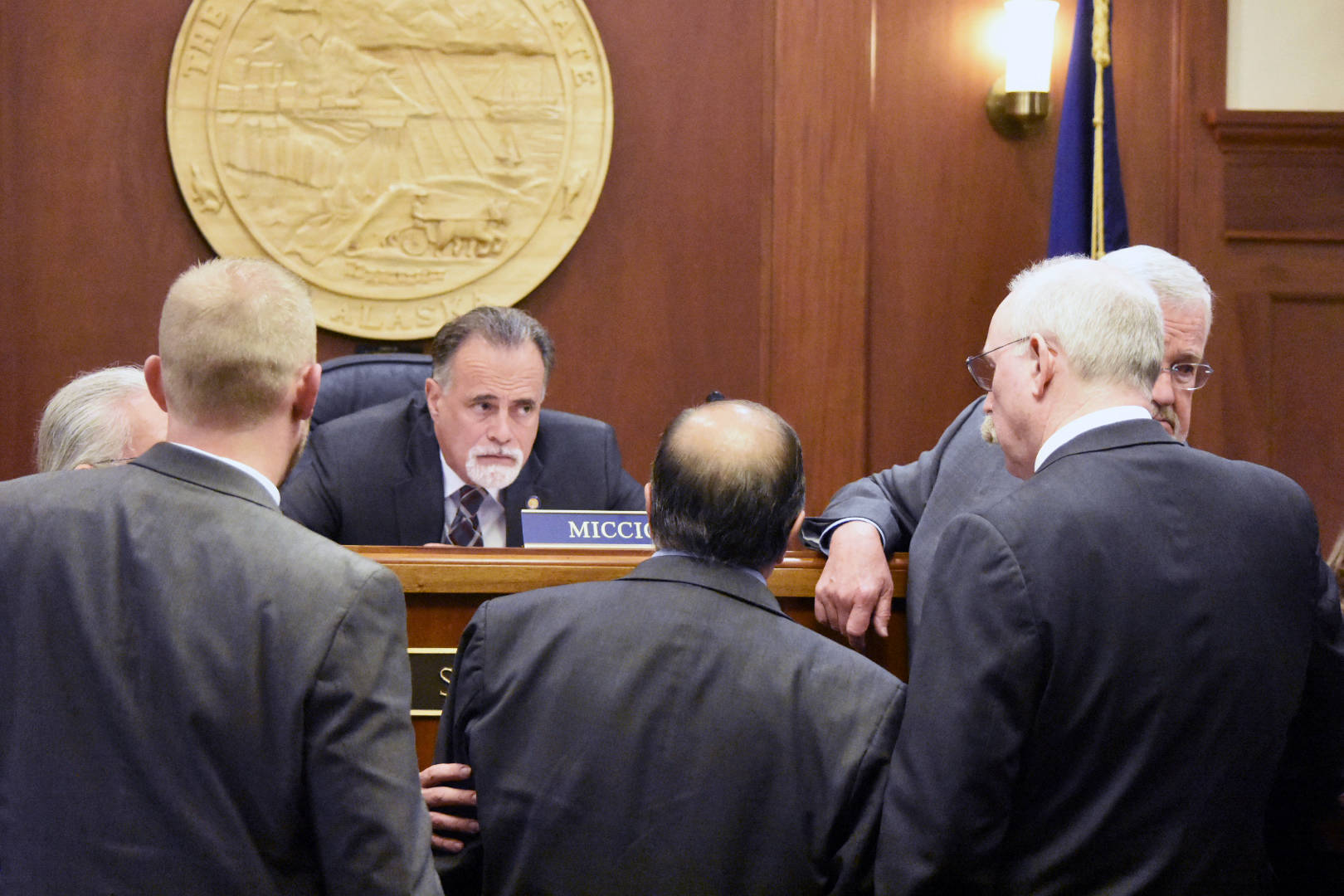
Senate President Peter Micciche listens to senators Wednesday during a contentious day at the Capitol. The Senate was able to pass an operating budget, but questions remain regarding the Permanent Fund and other state programs like the Power Cost Equalization fund. (Peter Segall / Juneau Empire)
Micciche said he and other lawmakers who voted for the budget were unhappy with tactics used in changing the funding sources for the PFD that came out of the conference committee on Sunday. But the prospect of a government shutdown was worse than the idea of a smaller PFD for now, he said, as it’s still possible more money could be added to the dividend in another special session.
“The Senate’s position remains a 50-50 this year,” Micciche said, referring to a formula for the PFD espoused by Gov. Mike Dunleavy as part of his fiscal solution. Dunleavy is proposing combining the two accounts that currently make up the Alaska Permanent Fund and using an annual percent of market value draw to fund state government. Under the governor’s plan, half of that draw would automatically be put to PFDs and the other half toward state services.
The Senate passed a budget with a $2,300 PFD, an amount reached using the 50-50 formula, but the PFD was reduced to roughly $1,100 in the conference committee tasked with hashing out the differences between House and Senate budget bills. Over the weekend, the committee released a final proposal using funds from the CBR to partially fund the PFD, meaning lawmakers in favor of a larger PFD would have to vote for programs they don’t approve of.
Lawmakers from both parties bristled at the tactics, with many saying they felt coerced. In a statement, Dunleavy called the House vote incomplete and urged lawmakers to vote again before the end of the special session on Friday, June 18.
Caucus divisions.
It was an emotional day on the floor of the Senate with lawmakers delivering emotional speeches both for and against the budget or the decision to mix the fund sources. Several lawmakers, including Sen. Mia Costello, R-Anchorage, said her no vote was not against the budget but the tactics used and the amount of the PFD.
Sen. Lora Reinbold, R-Eagle River, said the budget didn’t have meaningful cuts to state spending, which she said should be reduced in favor of a larger dividend.
“The (percent of market value) is around $3.1 billion,” Reinbold said on the floor. “The Dunleavy administration put the entire amount towards government. That is not budget cuts, that is still massive government.”
However, supporters of the budget proposal countered the division in the Legislature lay with lawmakers demanding large dividends the state can’t afford. Nearly shouting, Sen. Natasha von Imhof, R-Anchorage, said lawmakers had debated the size of the PFD for years at the expense of long-term investments in the state.
[House passes budget, fails key vote affecting PFD]
“The greed and the entitlement is astounding to me,” von Imhof said. “I just don’t fathom it.”
Sen. Bert Stedman, R-Sitka, and one of the conference committee members, said on the floor the committee had switched the fund sources as a way of evenly distributing impact to the state’s budget.
Alaska has an accounting mechanism known as the sweep which automatically empties several state accounts at the end of each fiscal year, June 30. But the vote to reverse the sweep takes three-quarters in both bodies and minority caucuses have used the vote as leverage in budget negotiations.
The state’s Power Cost Equalization fund provides subsidies for electric bills in rural Alaska and has its funds swept at the end of each fiscal year. Stedman said the state’s Railbelt had received billions of dollars in subsidies over the years, and state-funded infrastructure projects like hydroelectric dams can’t be suddenly defunded like PCE.
“I would argue that’s not fair, they’re not going to put a motion on the floor to take my dam,” Stedman said. “Here we stand, the poorest communities are going to have their energy costs go up. Can you imagine the squealing we would have if Anchorage or Fairbanks had those rates?”
Attaching projects to CBR funds gave rural legislators a bargaining chip, Stedman said. Additional money could be appropriated to the dividend in August, he said, and it was possible lawmakers could ultimately reach a 50-50 PFD if the state’s fiscal situation were resolved in that session.
But the prospect of the state reaching a comprehensive solution remains precarious. Lawmakers from both parties have been critical of the financial projections the Dunleavy administration is using to advocate for his proposals, and the state is still in need of new revenue sources.
Although both bodies agreed on the operating budget and several lawmakers were expected to fly out of Juneau on Wednesday, the Senate was still scheduled to meet Thursday morning.
Capitol reopens to the public
After the Senate’s floor session, the bicameral Legislative Council met and mostly ended the COVID-19 mitigation rules at the Capitol complex, reopening the building to the public.
Guidelines from the federal Centers for Disease Control and Prevention will still be in place at the building, according to Jessica Geary, executive director of the Legislative Affairs Agency which oversees the buildings’ operations.
• Contact reporter Peter Segall at psegall@juneauempire.com. Follow him on Twitter at @SegallJnuEmpire.
