Standout in the law, Garland would blend in at Supreme Court
Published 8:05 am Thursday, March 17, 2016
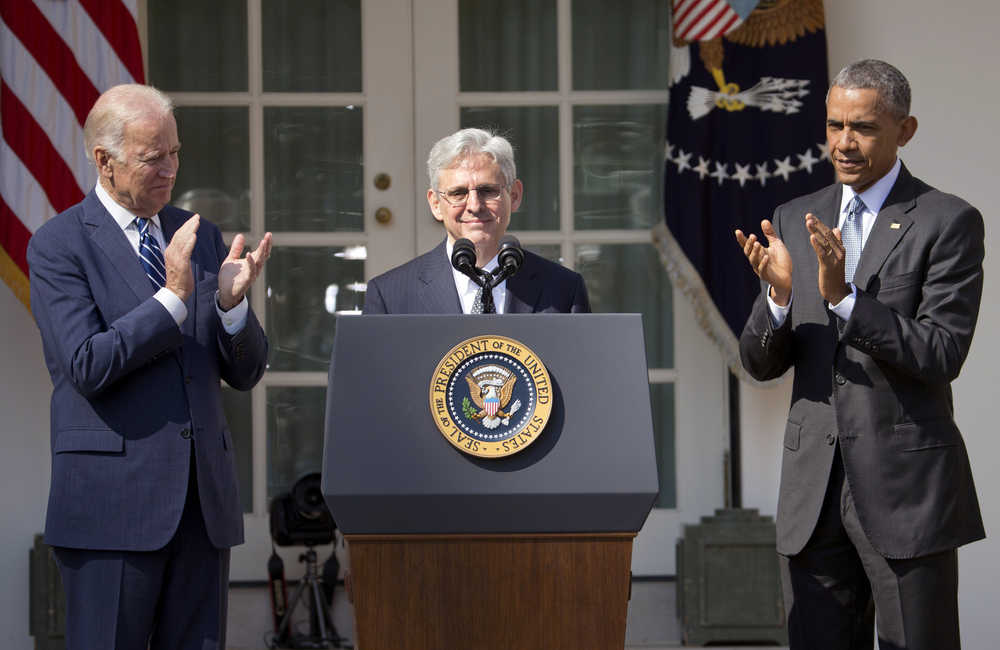
WASHINGTON — In experience, background and even in his personal characteristics, Merrick Garland resembles the men and women he would join on the bench if he is confirmed to the Supreme Court.
President Barack Obama nominated Garland Wednesday to take the seat of Justice Antonin Scalia, who died last month. Republicans have pledged to leave the seat empty until after the presidential election and said they won’t even hold hearings on Garland’s confirmation.
Obama said he chose Garland, an appeals court judge for more than 18 years, in part because he is “uniquely prepared to serve immediately.”
Little known outside Washington, Garland has spent more than 35 years in the nation’s capital, mainly in government jobs that have made him quite familiar to the justices and high-ranking officials in both Democratic and Republican administrations.
Garland has developed friendships and a stellar reputation that cross party lines. “He’s one of my best friends. I think the world of him as a human being. I think he’s an excellent judge,” said Judge Laurence Silberman, a Reagan appointee and Garland colleague on the appeals court, who also was so close to Scalia that he spoke at Scalia’s memorial service.
Obama passed over Garland twice in putting Sonia Sotomayor on the court in 2009 and Elena Kagan, a year later. At 63, Garland is the oldest nominee since Lewis Powell in 1971, and is older than three current justices — Chief Justice John Roberts, Sotomayor and Kagan.
He would blend in with the other justices to a remarkable degree. Like Roberts, Kagan and Justice Stephen Breyer, Garland spent a year as a Supreme Court clerk. He worked for Justice William Brennan. He and Roberts also worked for the same appeals court judge in New York, Henry Friendly.
Before becoming a judge himself, he was a prosecutor and supervised Justice Department investigations into the 1995 Oklahoma City bombing and Unabomber Ted Kaczynski. Former FBI General Counsel Howard Shapiro recalled Garland as “the indispensable point man” for the investigation of the 1995 bombing that killed 168 people and prosecution that resulted in the execution of Timothy McVeigh. “He was terrific to work with, a spectacular lawyer and extraordinarily decent man,” Shapiro said.
Since 1997, Garland has been on the U.S. Court of Appeals for the District of Columbia Circuit, where he is now chief judge. That puts him in line with seven of the eight current justices who were appellate judges before joining the Supreme Court. Only Kagan had no judicial experience.
Like the entire court, Garland has an Ivy League law degree, from Harvard.
In any other era, Garland’s religion — he is Jewish — would have added to the court’s diversity. But now, three justices are Jewish and five are Catholic.
In the White House Rose Garden Wednesday, Garland spoke of his grandparents, who came to the United States from Eastern Europe, and acknowledged his mother, who he said “is watching this on television and crying her eyes out.”
Garland is married to Lynn Rosenman Garland and they have two daughters, Rebecca and Jessica, who are Yale graduates.
Garland’s wealth was estimated in 2012 at between $7.1 million and $18.6 million, according to the most recently available financial disclosure form that judges file annually.
At the time, Garland owned significant stock holdings in several corporations with a history of court actions and lobbying contacts with Congress and federal agencies. Among Garland’s holdings at the time were investments in pharmaceutical firms Pfizer Inc. and Bristol-Myers Squibb — each worth as much as $50,000 — stakes in General Mills, Inc. and General Electric Co. worth as much as $100,000 and an interest in Procter & Gamble Co. valued up to $250,000, according to the disclosure.
Garland’s largest investments were a trust fund and U.S. Treasury notes, each worth between $1 million and $5 million. Garland also held bank accounts at a federal credit union, Citibank and Bank of America totaling between $215,000 and $500,000. Garland’s disclosures since 2009 have also noted a property owned in New York City, but no details were provided about the property or its value.
Garland was born and raised in the Chicago area, where he attended public schools and amassed a comic-book collection that he sold, Obama noted Wednesday, to help pay for law school.
___
Associated Press writers Don Babwin in Chicago and Stephen Braun contributed to this report.