
Coffman Cove commercial fisherman Dugan Paul Daniels, 55, was sentenced on Monday to six months in prison for illegally “taking” an endangered sperm whale and falsifying fishing records in 2020.
The term “take” legally means to harass, harm, pursue, hunt, shoot, wound, kill, trap, capture or collect, or to attempt to engage in any such conduct.
According to research done by the prosecution in preparation for Daniels’ case, this appears to be the first Endangered Species Act charge to result from a sperm whale take in the United States.
The National Oceanic and Atmospheric Administration (NOAA) Office of Law Enforcement investigated the case. Ainsley McNerney, an assistant U.S. Attorney, and Andrea Hattan, a special assistant U.S. Attorney/NOAA Office of General Counsel enforcement attorney, prosecuted it.
Court documents state the NOAA Office of Law Enforcement does not know if Daniels succeeded in killing the whale, as no sperm whale carcass was reported in Southeast Alaska in 2020.
McNerney said since the Endangered Species Act offers a broad definition, Daniels’ violation of it — whether he killed the whale or not — would result in the same class A misdemeanor charge.
“He still is held accountable for the harassment, the pursuit, shooting at the whale, but kill is captured in that definition as well,” she said.
In March 2020, Daniels and three crew members were fishing for sablefish southwest of Yakobi Island in the Gulf of Alaska when they confronted a sperm whale, according to court documents.
The encounter was documented in writing through text messages sent from a GPS communication device. Some of the messages stated he wished he “had a cannon to blow” the whale out of the water and that he hoped “to be reeling in a dead sperm whale.”
During the encounter, Daniels tried to kill the endangered sperm whale by having a crewman shoot the whale multiple times and by trying to ram the whale with his fishing vessel Pacific Bounty. He said he came within five to ten feet of doing so.
Sperm whale depredation is not something new to the commercial fishing industry. McNerney said commercial fishermen engage in dangerous activities while trying to meet their daily quotas. She said it’s common for them to come across sperm whales — the world’s largest toothed whale, averaging between 40-52 feet in length and weighing up to 90,000 pounds.
“This particular individual tried to take the easy way out, whereas other individuals are out there every day on the open seas, fighting the elements, doing the right thing and abiding by the law,” McNerney said. “This is an important sentence. It’s an important message to send to other individuals who might consider engaging in this kind of activity, that they will be held responsible, that these resources are important. They’re important to Alaska, and they are, frankly, important to the larger fishing community, who are trying to do their job while following the law.”
There are resources available for fishermen to learn how to address sperm whale encounters legally. The Alaska Longline Fishermen’s Association and the Southeast Alaska Sperm Whale Avoidance Project offer tips for whale avoidance.

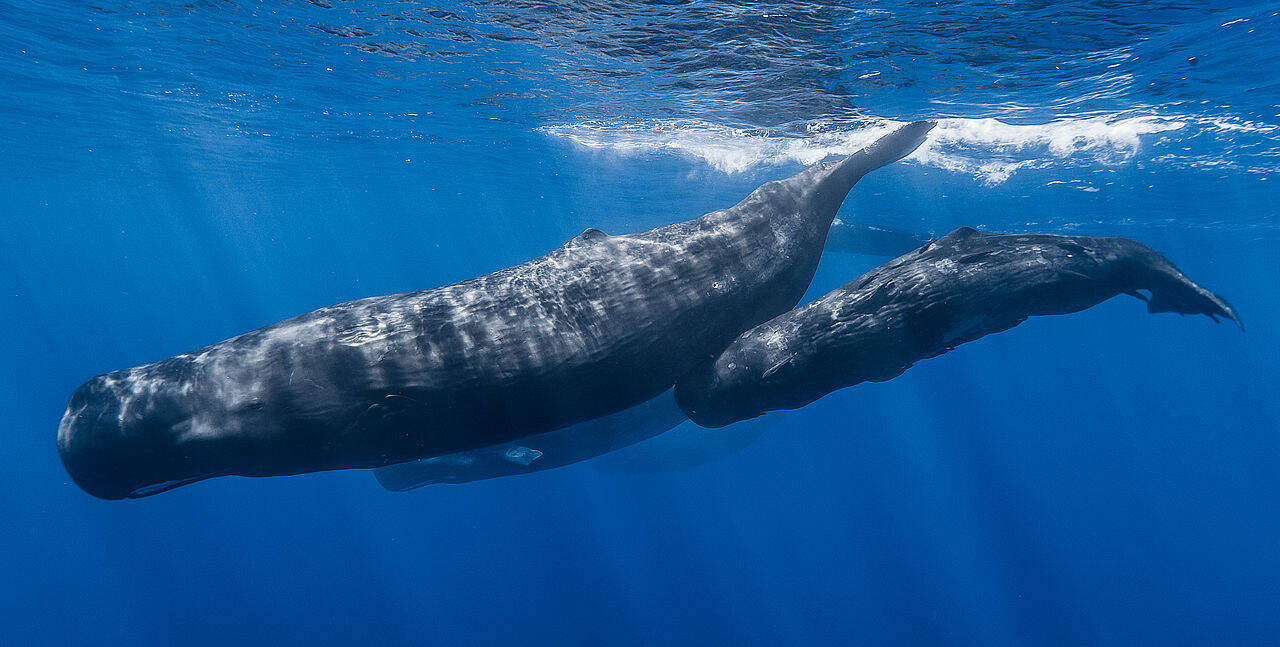
A sperm whale dives in this undated photo. (Photo by Brenda Rone/NOAA Alaska Fisheries Science Center)
The sperm whale was listed as endangered in 1970. Their populations were decimated by commercial whaling between 1800 and 1987. In the past 30 years there have been changes regarding sperm whales in the Gulf of Alaska and Southeast Alaska’s Inside Passage. Sightings of sperm whales have become far more common, especially by longliners fishing the Gulf of Alaska who’ve had their catch stolen by the marine mammals, according to the Alaska Department of Fish and Game. Sablefish, also known as black cod, are included in sperm whales’ diet.
Daniels also knowingly submitted false records about his commercial fishing activities to make it appear that he lawfully caught sablefish in federal waters on two separate occasions between October and November 2020.
An investigation revealed he harvested the fish illegally in Chatham Strait and Clarence Strait. The total market value of the illegally harvested fish was $127,528.
On June 6, 2024, Daniels pleaded guilty to one count of a Lacey Act violation for submitting falsified fishing records and one count of an Endangered Species Act violation for an illegal take.
“Falsifying recordkeeping and reporting documents has a direct effect on sustainable fishery management and interferes with Alaska’s ability to ensure species are not overfished,” said U.S. Attorney Michael J. Heyman of the District of Alaska in a prepared statement.
In handing down the sentence, the court called Daniels’ actions “deliberate” and emphasized Daniels’ 20 years of experience as a commercial fisherman and the importance of deterring others from similar conduct because of the threat it poses to the sustainability of Alaska’s marine resources.
At sentencing, the court ordered Daniels to pay a $25,000 fine and serve three years on supervised release, with a ban on commercial fishing during the first year of that release. He will also be required to perform 80 hours of community work service as special release conditions.
• Contact Jasz Garrett at jasz.garrett@juneauempire.com or (907) 723-9356.
