If it sounds unusual to have a drought in a rainforest, it is.
Low snow and little rain combined to deliver an almost unprecedented drought to southern Southeast Alaska over the winter and spring, officials with the National Weather Service said in a Tuesday teleconference.
Given Southeast Alaska’s profligate use of water — for hydroelectric dams, drinking water reservoirs, fisheries, fish processing and more — anything less than normal can have widespread consequences.
“This was the most significant drought in the wet season in Southeast Alaska in 40-plus years,” said Aaron Jacobs, a hydrologist with the Weather Service office in Juneau.
Rick Thoman, a climate specialist for the National Weather Service in Alaska, said last winter’s conditions were unusual enough that the Weather Service has struggled to determine what constitutes a drought here.
“This is something that we haven’t thought of a lot in Alaska, at least on the Weather Service side,” he said.
The last significant Southeast drought — official declarations come from the U.S. Department of Agriculture, the University of Nebraska, and the National Weather Service — came in the dry spring season of 1989 and didn’t have as much of an effect because winter snowmelt made up a gap in rainfall.
Droughts are determined by a handful of characteristics, but one of the key markers is how much precipitation (rain and melted snow) is expected to fall in a given period and how much actually arrives.
According to Weather Service measurements, Ketchikan received 11.21 inches of precipitation in October and 7.59 inches in November, less than half its normal tally for the rainiest months of the year in the First City.
“It’s all relative to normal,” Jacobs said by phone after the teleconference. “Eleven inches (of precipitation) in a month? That’s a year’s worth for Fairbanks, but that is below normal for Ketchikan in the wet season.”
More rain fell in December and January, but February and March were drier again. In April and afterward, conditions have come closer to normal but haven’t fully resolved the deficit. Since Oct. 1, Ketchikan has had 82 percent of its normal precipitation. That city isn’t alone: Sitka and Haines are each running about 30 percent short of average. (Juneau is almost exactly average.)
The drought was mostly quenched in late April and early May, but Southeast Alaska remains unusually dry overall.
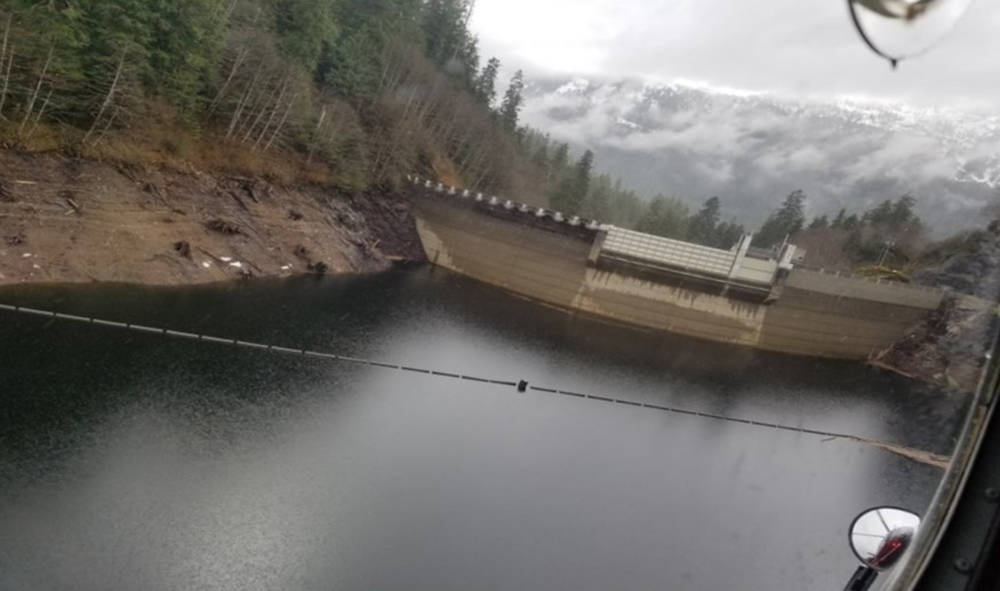
At its peak, the drought had its biggest effects in Wrangell, which enforced water restrictions on residents, and Ketchikan, where the Swan Lake hydroelectric plant had to stop producing power because its reservoir was so low.
On Prince of Wales Island, the hydroelectric plant at Black Bear Lake encountered the same problem.
Mark McCready, a spokesman for Alaska Electric Power and Telephone, which operates the hydroelectric plant there, confirmed the shutdown by phone. He added that it will have knock-on effects for customers as well.
“I know we have burned a lot more diesel in the first quarter than we had hoped to,” he said, referring to the need for backup generators.
Diesel costs more than hydroelectric power, and customers there will see higher electric bills.
Jacobs said attention now is focusing on the drought’s potential effects on fisheries. With less precipitation over the winter, the mountaintop snowpack is smaller. That means less water running downhill and downstream for returning salmon during the drier summer months.
“That could have dire effects on fisheries,” he said, but the effects could be mitigated by enough rain at the right point in the summer.
Asked whether Southeast Alaskans should be prepared for more winters like the one just passed, Thoman said it’s anyone’s guess.
“We don’t know what the future holds.”
• Contact reporter James Brooks at jbrooks@juneauempire.com or 523-2258.
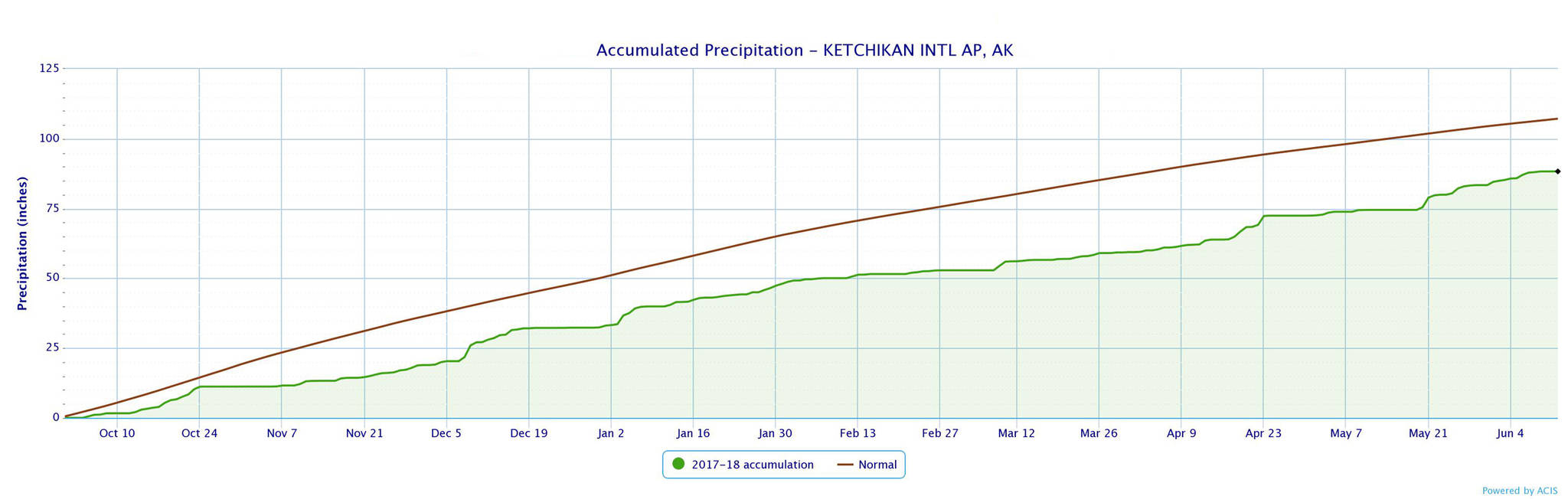
This NOAA climate chart shows Ketchikan has had only about 80 percent of its normal precipitation since Oct. 1. At the peak of the drought in late March and early April, the figure was closer to 70 percent. (NOAA ACIS data)
