
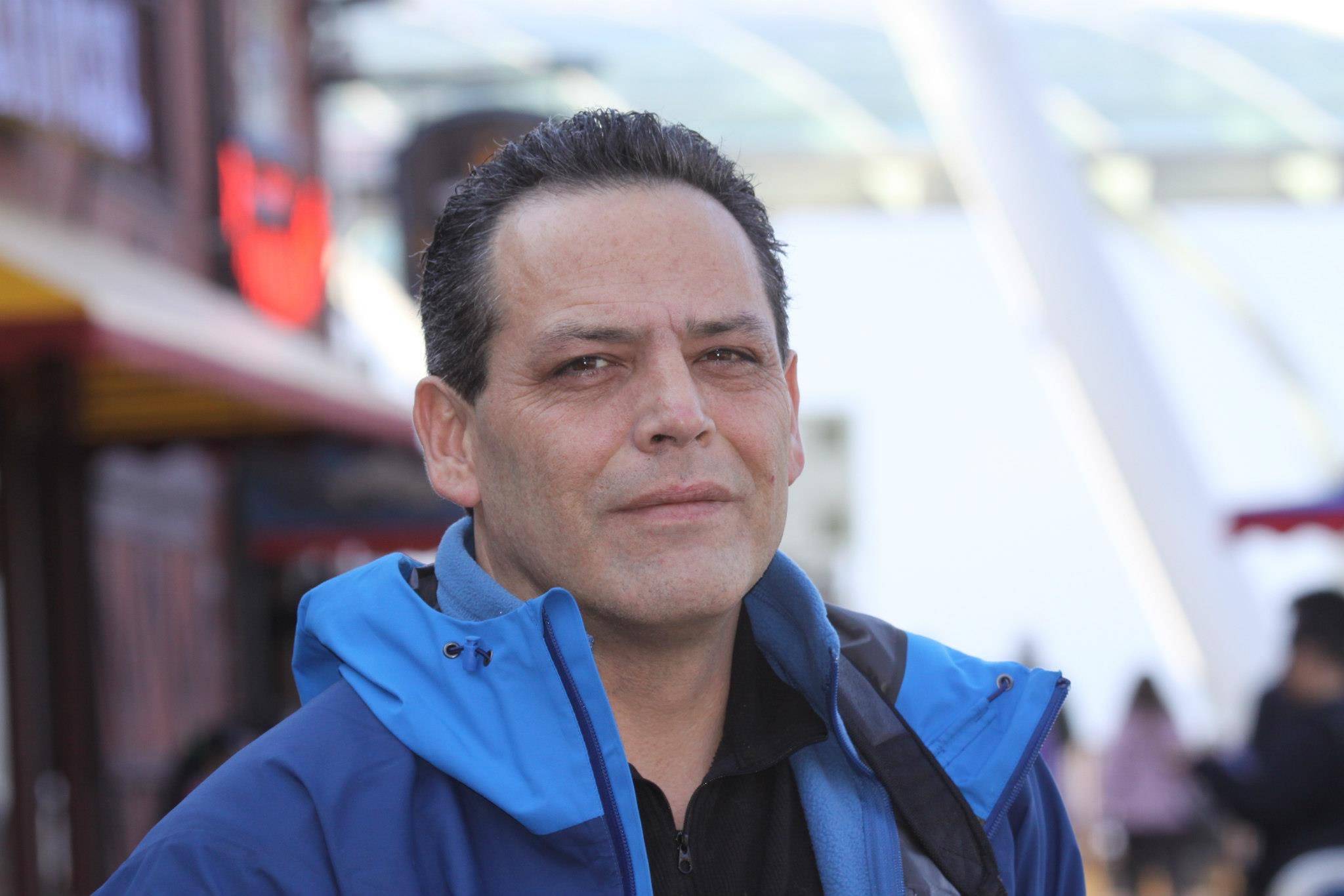
Charlie Skultka Jr. of Sitka recently received a surprise call from the Governor’s office: he’d been selected to receive a 2018 Governor’s Arts and Humanities Awards’ Margaret Nick Cooke Award for Alaska Native Arts and Languages.
The award goes to an individual who has furthered education in traditional Alaska Native arts and languages. As a Haida man, for many years Skultka has been teaching arts and culture classes as a traditional arts specialist for the Sitka Native Education Program, which partners with the Sitka Tribe of Alaska and Sitka School District to bring Alaska Native art into schools. He also works to integrate Alaska Native arts and culture into schools with other teachers through Sitka’s Arts, Culture and Technology program.
He had been contemplating this being his last year before he retired, but said he’ll likely teach longer before retiring and then make guest visits to classrooms afterwards.
“It seems like every time I plan for retirement either a kid reminds me why I teach or I get an award,” he said.
In 2016, the Alaska Arts Education Consortium recognized Skultka with the Champion of the Arts award.
Skultka teaches a variety of mediums, from painting, weaving and carving to graphic design, 3D printing, and halibut hook making, all with an Alaska Native arts aspect to them. He’s worked in a variety of mediums over the years: cedar and spruce root weaving; Chilkat and Ravenstail weaving; carving with ivory, wood argillite, steel, aluminum, copper, gold, silver and titanium; printing; working with clay; making silk screens; painting; and drawing with pen, graphite, and charcoal.
“All the training I’ve done my entire life just through jobs and actually going to school has all snowballed and rolled down the hill and it’s like I ended up where I’m supposed to be. I’ve got such a unique set of job skills that it was a perfect match for me to work in the schools,” Skultka said.
Skultka grew up in Sitka, learning traditional art and culture from an early age. He remembers beading with his grandmother or working on Native style arts and crafts in the Head Start school readiness program. Many things, like carving a paddle, were skills he learned since they were practical and useful, and if he wanted it to look “cool” he decorated the paddle in Northwest Coast designs. He never considered these activities art when he was young, just something that he did.
“For the longest time I took for granted that everyone knew how to do that kind of stuff. As I got older I started noticing a lot of the kids around me were actually being sent to the culture classes to learn this stuff, but I grew up doing it,” he said.
Growing up around commercial fishing, he developed an interest in boatbuilding. He travelled south as an adult to learn metallurgy, naval architecture and other skills, and eventually returned to Sitka. He took on many different roles over 20 years in the industry, eventually leaving it after an accident. He began volunteering and then was offered a job as a demonstrating artist at the Southeast Alaska Indian Cultural Center at the Sitka National Historic Park. There were three different studios, one for fiber, wood, and metal working. He worked in the metal studio as a carver, showing tourists and others how these traditional art forms were done. He also worked with master carver Reggie Peterson, learning more about wood carving.
As he worked in the metal shop, one of the most common questions people asked was what the difference was between Tlingit and Haida art.
“To the disappointment of most of the people asking is that the only difference I’ve found over the years between Tlingit and Haida art is Tlingit produce Tlingit art and Haidas produce Haida art. Other than that it’s art,” he said. All he had to do was make the art, and it would be Haida art, he said.
Years later, he was offered the position with the Sitka School District. While he teaches traditional art forms and cultural knowledge he encourages students to get creative and know that their art does not have to look a specific way to be Alaska Native art.
“If all of our artwork looked alike it would become very generic and eventually stagnate and it wouldn’t be art at all. It would all be the same. So when I get the chance I let kids explore using different colors other than the three traditional primary colors than we used because I know for fact had my ancestors had these bright, vibrant colors they would have used them. …For me, Native art is art that is produced by Natives,” he said. “Art should be fun and it should be new and it should be fresh. Why does it have to be the same old stuff? I’ve got nothing wrong with the same old stuff but in order for our art to move forward it’s got to change.”
He’s shown first graders how to make and play their own drums, and then use those drums to reinforce other skills like how to count, understand syllables in words, and learn Alaska Native songs. He’s shown middle schoolers how to design and build bentwood boxes and make deer calls. He’s shown high school students the basics of formline design.
Having the cultural component along with the art is important.
“It’s not so much the art as it is teaching the culture to our kids, showing it to them. It’s not something that happens anymore. When I was kid, all the families would get together and we’d all go fishing together, we’d all go process our fish, we’d go picking seaweed,” he said.
The art he teaches also encompasses many other subjects and skills, and has real world applications. There’s crossover in weaving to what he used to do as a seiner tying knots, he gave as an example. Art forms like weaving can also illustrate and reinforce other subjects students learn, like math, he said.
Art is extremely important for students, Skultka said, but it’s usually one of the first subjects slashed when budgets grow tight. He’s gotten creative to help fund art programs in Sitka. Recently Skultka redesigned the Baranof Elementary School logo, making a Northwest Coast Art styled bear named Buddy. He shrunk the line drawing down and used a laser engraver to make copies so students could make two, one to keep and another to sell as a Christmas ornament to fundraise for school. They ended up making $2,000, which averages out to about $10 per child, he said.
Currently he’s thinking up other ways to keep the arts funded and thriving for Sitka students. Within the next month, he will be coming to Juneau to work with the University of Alaska Southeast on their new Northwest Coast Art degree, focusing on developing the dual enrollment component for high school students taking college classes.
This week he will also be coming to Juneau to accept his award. The awards ceremony will take place on Thursday, Feb. 8, at the Juneau Arts & Culture Center. The doors will open at 6:30 p.m. and the ceremony will begin at 7 p.m. Tickets cost $25 and can be purchased online at: akgovawards.org/attend.
Skultka gives credit to his wife Tane Skultka, colleagues and many other people for working and supporting him all these years.
“I’ve got some brilliant teachers I work with who are amazing. Bringing their ideas to life is as exciting as bringing mine. … It’s all about the kids, really, and giving them the opportunity to make good choices and steering them in that direction.”
• Clara Miler is the Capital City Weekly’s staff writer.
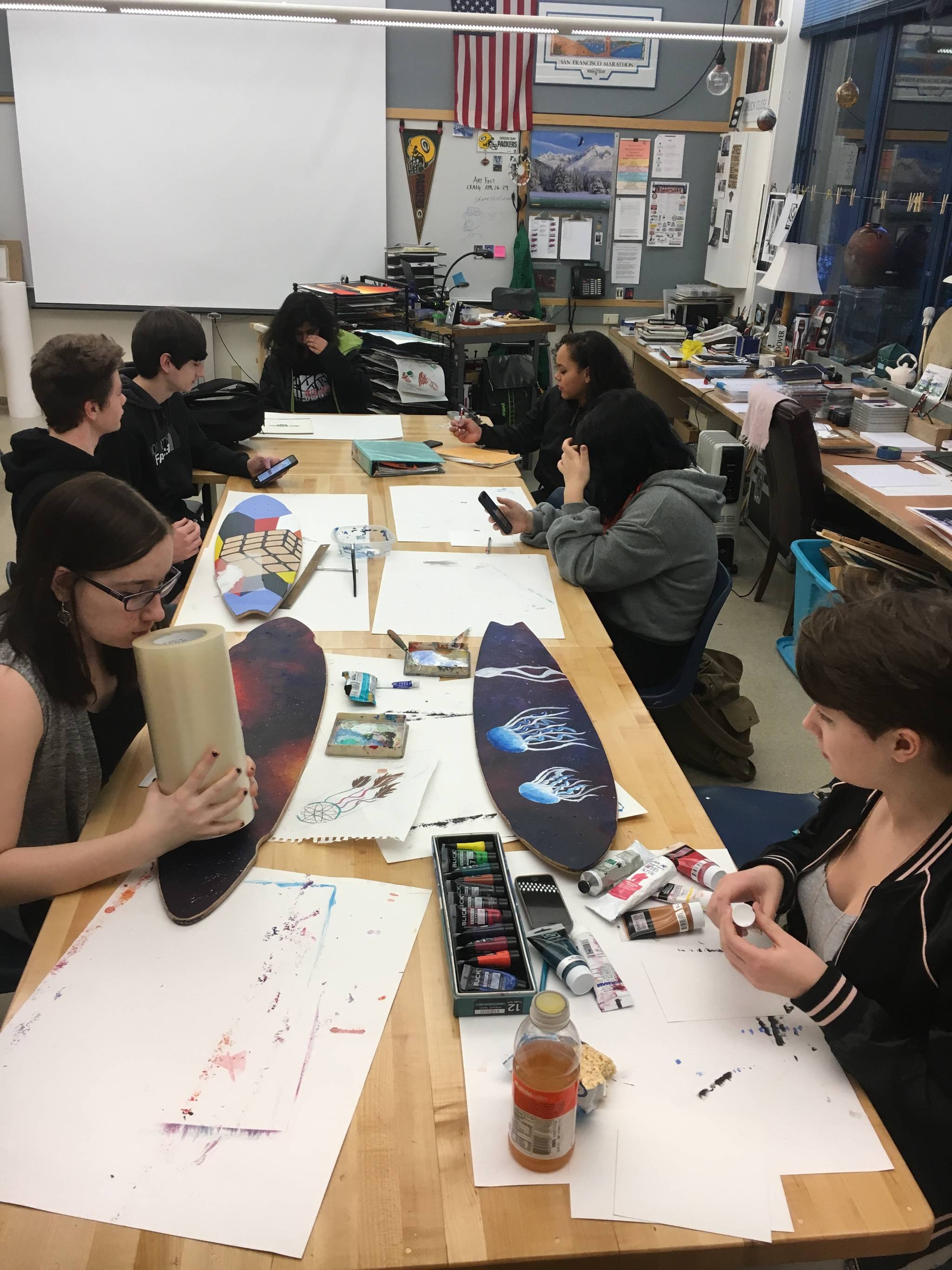
Sitka students paint skateboards for art class. Photo by Tane Skultka.
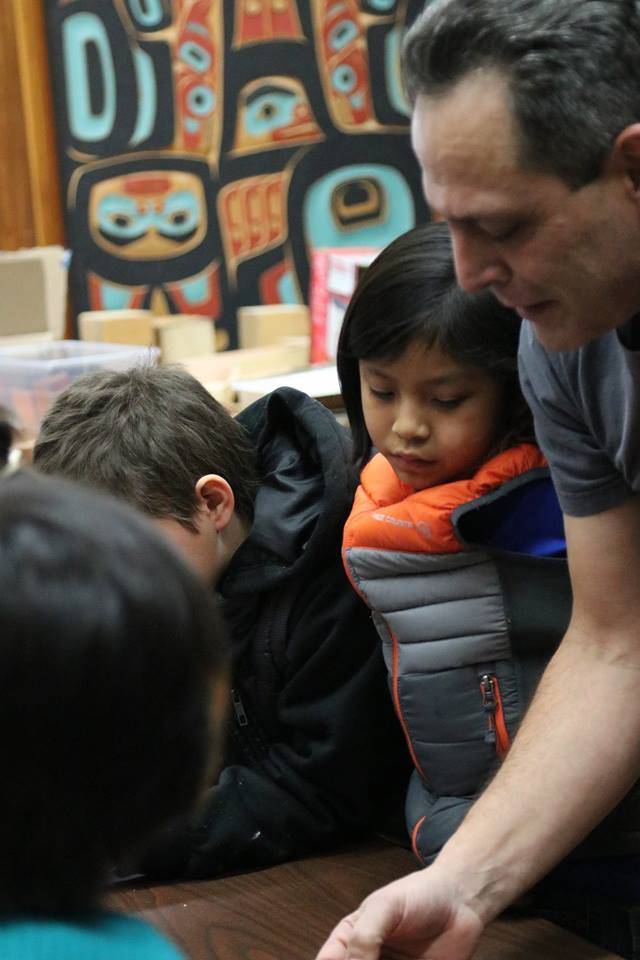
Charlie Skultka Jr. teaches a class. Photo by Tane Skultka.
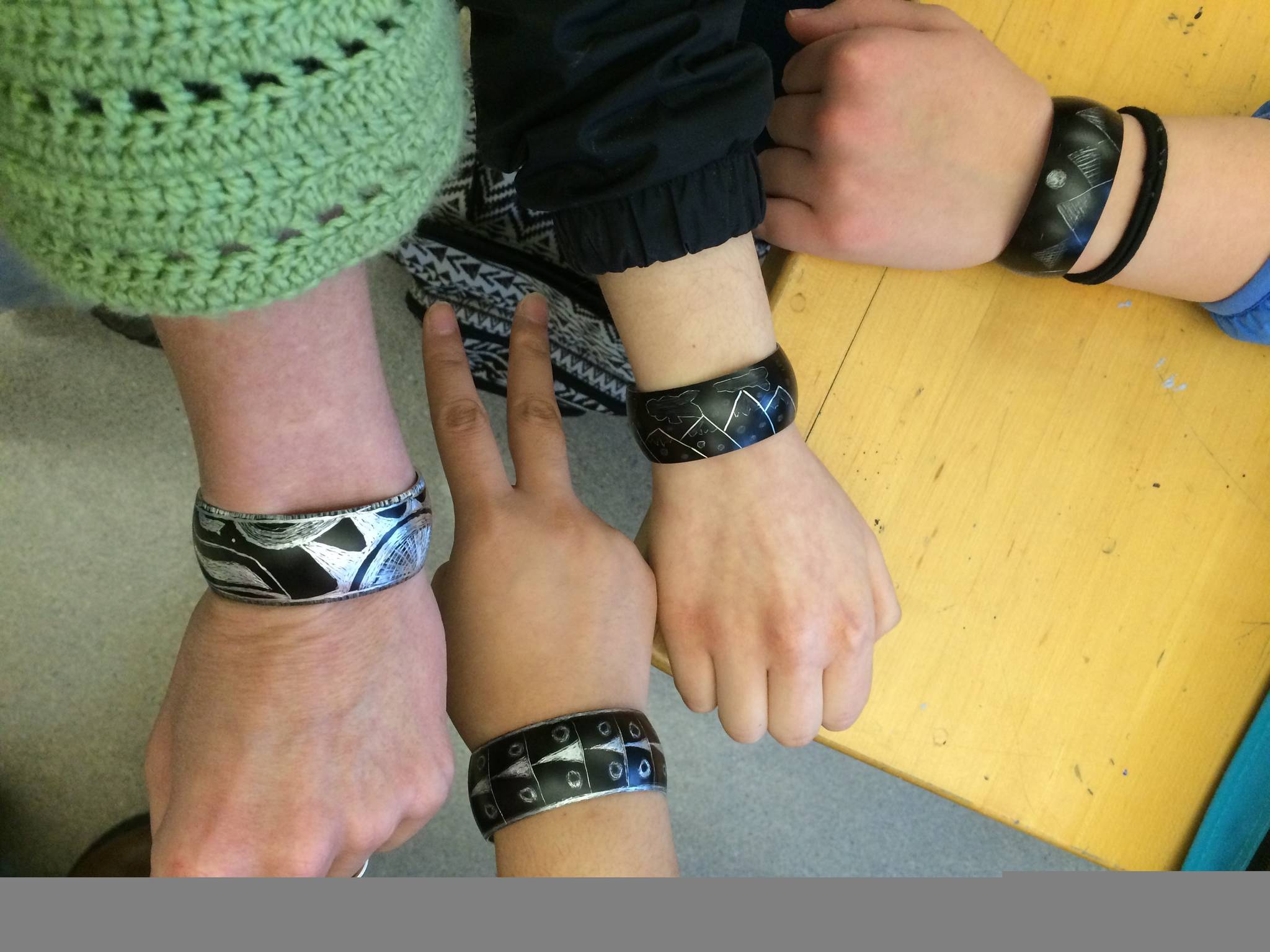
Students show off bracelets made during art class. Photo by Tane Skultka.
