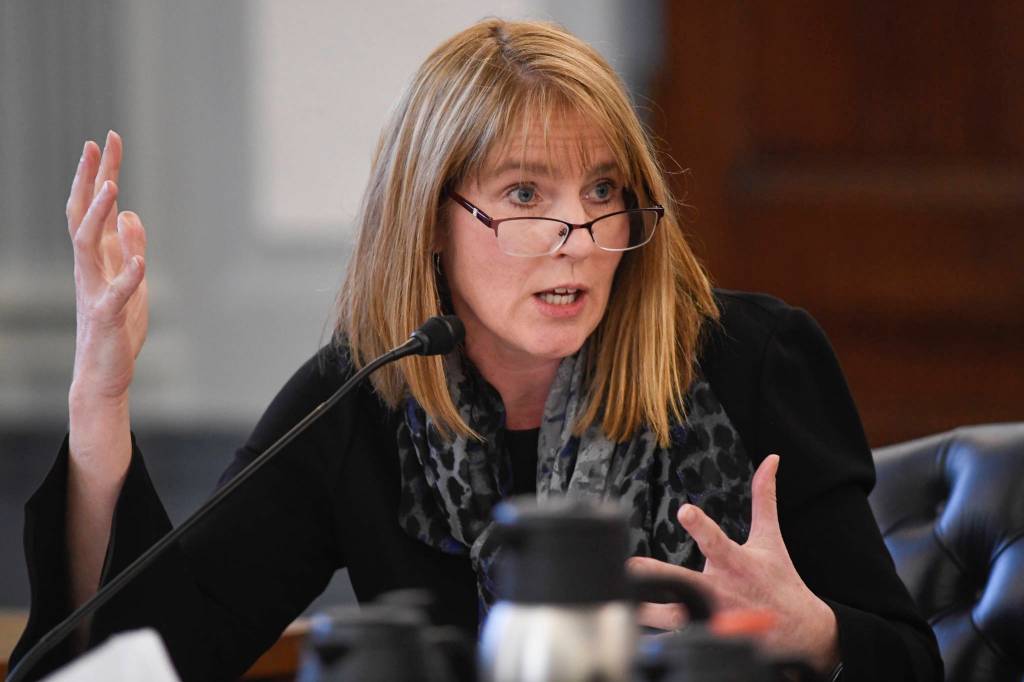
Sen. Natasha Von Imhof, R-Anchorage, pictured here on Feb. 18, asks why adult preventative care was targeted for elimination, saying she has heard from providers that this service often will bring people into a clinic where they can be asked if they have other medical needs. (Michael Penn | Juneau Empire File)                                Sen. Natasha Von Imhof, R-Anchorage, pictured here on Feb. 18, 2019, asks why adult preventative care was targeted for elimination, saying she has heard from providers that this service often will bring people into a clinic where they can be asked if they have other medical needs. (Michael Penn | Juneau Empire File)

Sen. Natasha Von Imhof, R-Anchorage, pictured here on Feb. 18, asks why adult preventative care was targeted for elimination, saying she has heard from providers that this service often will bring people into a clinic where they can be asked if they have other medical needs. (Michael Penn | Juneau Empire File) Sen. Natasha Von Imhof, R-Anchorage, pictured here on Feb. 18, 2019, asks why adult preventative care was targeted for elimination, saying she has heard from providers that this service often will bring people into a clinic where they can be asked if they have other medical needs. (Michael Penn | Juneau Empire File)

Bills look at PFD’s future, spending cap for Legislature

Finance Committee unveils legislation on limiting state spending

The Senate Finance Committee introduced two bills Friday that would cap government spending and establish a 50-50 split between dividends and state expenses from the earnings reserve of the Permanent Fund.

Senate Bill 103 splits revenue from the state’s annual draw of the Permanent Fund’s earnings reserve equally between dividends and state expenses. This bill follows in the footsteps of Senate Bill 26, which passed into law last year.

SB 26 limited the amount the Legislature can pull from the Permanent Fund’s earnings reserve to prevent the government from taking too much from the fund. That bill did not clear up how much of that draw (which is 5.25 percent of the fund’s market value) could go to expenses and how much goes to dividends.

SB 103 seeks to clarify how much of that 5.25 percent can go to state services and how much can go to dividends, so that future dividends are more consistent.

“The Senate is committed to protecting the Permanent Fund and dividends for future generations of Alaskans,” said Sen. Bert Stedman, R-Sitka, co-chair of the Senate Finance Committee, in a press release. “SB 103 creates a revenue limit for government and ensures the dividend program survives by protecting it from being consumed by the operating budget. It draws a line in the sand beyond which the state cannot cross over and take from the dividend.”

[Alaskans weigh cost of protecting PFDs]

Under a 50-50 split, eligible Alaskans would receive approximately $2,340 in their PFD, according to a presentation to the Senate Finance Committee last week.

One of the main themes heard around the Capitol this session is that these budgets and proposals are serving as starting points rather than the final word on the issue. Sen. Natasha von Imhof, R-Anchorage, co-chair of the Senate Finance Committee, characterized SB 103 in the same way.

“SB 103 is a conversation starter,” Von Imhof said in a release from the Senate Finance Committee.

Senate Bill 104, which was also introduced Friday, would cap government spending at $5 billion for the 2021 fiscal year.

“A spending cap gives the Legislature the discipline it needs to keep state spending at a reasonable level from one year to the next,” Von Imhof said in the release.

SB 103 and SB 104 were referred to the Senate Finance Committee where a hearing is scheduled for both bills on Wednesday, April 10.


• Contact reporter Alex McCarthy at amccarthy@juneauempire.com. Follow him on Twitter at @akmccarthy.


More in News

Eaglecrest Ski Area as seen in a photo posted to the hill’s Facebook page on Tuesday, Dec. 11, 2025. (Eaglecrest Ski Area photo)
Eaglecrest boots up for a limitted opening this weekend

15 degree highs usher in the hill’s 50th season.

Sen. Jesse Bjorkman, R-Nikiski, speaks Wednesday, April 23, 2025, on the floor of the Alaska Senate. (Photo by James Brooks/Alaska Beacon)
State senators express skepticism about proposed Juneau ferry terminal backed by Dunleavy

In a Friday hearing, members of the Alaska Senate spoke critically about… Continue reading

SouthEast Alaska Regional Health Consortium is one of the primary health care providers in Juneau, accepting most major public and private insurance plans. (Mari Kanagy / Juneau Empire)
Marketplace health premiums set to rise in 2026

Here’s what you need to know about how coverage is changing, and for whom.

Capital City Fire/Rescue completes last season’s ice break rescue training at the float pond near Juneau International Airport. (photo courtesy of Capital City Fire/Rescue)
On thin ice: Fire department responds to season’s first rescue at Mendenhall Lake

This week’s single digit temperatures have prompted dangerous ice ventures.

Brenda Schwartz-Yeager gestures to her artwork on display at Annie Kaill’s Gallery Gifts and Framing during the 2025 Gallery Walk on Friday, Dec. 5. (Mari Kanagy / Juneau Empire)
Alaska artist splashes nautical charts with sea life

Gallery Walk draws crowds to downtown studios and shops.

A totem pole, one of 13 on downtown’s Totem Pole Trail in Juneau, Alaska, Nov. 27, 2024. (Christopher S. Miller/The New York Times)
Downtown Juneau experiences its first significant city-level snow fall of the season as pictured on Saturday, Dec. 6, 2025. (Mari Kanagy / Juneau Empire)
Sub-zero temperatures to follow record snowfall in Juneau

The National Weather Service warns of dangerous wind chills as low as -15 degrees early this week.

Most Read