
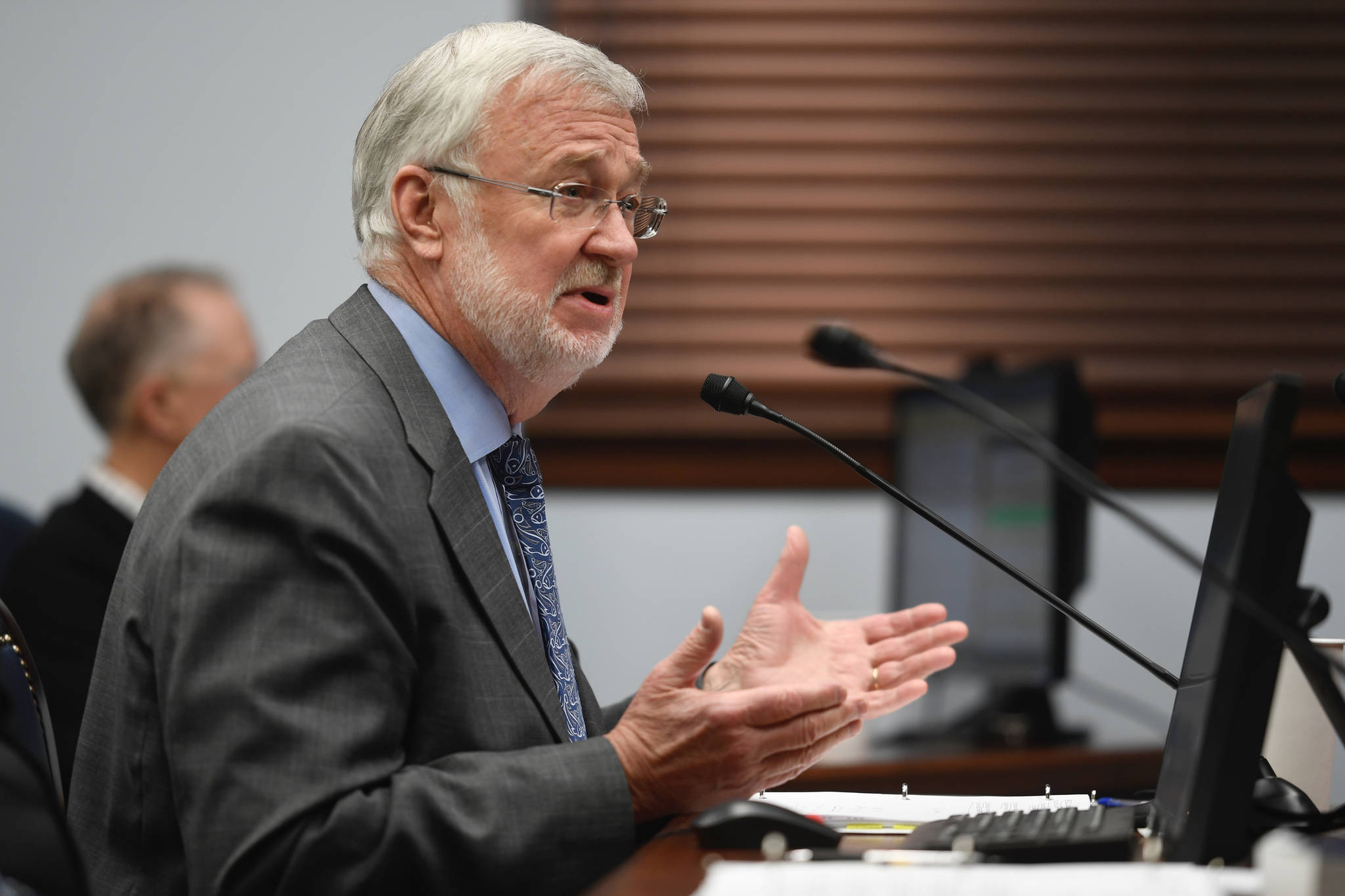
A shellfish habitat enhancement bill could improve the stocks of sea life such as crabs and clams in Alaska’s coastal waters. Sen. Gary Stevens, R-Kodiak, introduced Senate Bill 22 to the Senate Resource Committee on Wednesday.
In short, the bill would allow for organizations to get permits to rehabilitate shellfish habitats.
“Large-scale enhancement projects, especially for king crabs, have significant possibility for economic development,” Stevens wrote in his sponsor statement. “Eight of 11 king crab stocks in Alaska have been closed for many years. If successful, these enhancement projects could help reestablish localized populations, which could in turn provide breeding populations to help reestablish larger areas.”
Tim Lamkin, one of Stevens’ staffers, explained the bill to the committee.
“At one time these crabs were the dominant biomass in our oceans,” Lamkin said. “These crabs and clams, when they’re small they’re eaten up. This bill will provide some legal framework for hatcheries to grow these babies, protect them and nurture them. (It would) have a net positive affect on our economy.”
He said these shellfish would supply the private sector, not compete with it. He explained how shellfish stocks have been on the decline for decades and the state Department of Fish and Game’s only tool was to restrict the seafood industry’s harvests. This bill could provide a new tool for Fish and Game to maintain and improve the stock of ocean life.
A similar bill was introduced last year by Rep. Dan Ortiz of Ketchikan, who is the only non-affiliated member of the House.
“Great credit should go to Ortiz, we’re just trying to help out on the Senate side,” Stevens said in his office, before the committee hearing began. Stevens is hoping to get the bill through the Senate earlier in the session so it will be ready for the House to address. The House has yet to hold committee hearings on bills because it does not have any committees set up.
Reps talking, but House still unsettled
Lamkin told the Senate committee the bill had widespread support during the last session.
“It didn’t quite make it and washed up on the beach,” he said.
Some senators expressed concern about these farm raised stocks of shellfish being in the ocean.
“I know there’s some concern over the integrity of wild stock.” Sen. John Coghill said. The North Pole Republican said he did not expect an answer at the moment.
There was also a presentation from the Alaska Mariculture Task Force, which was created by former Gov. Bill Walker by way of administrative order. In Alaska, legal mariculture refers to shellfish and seaweed. The task force’s studies projected that the industry could grow into a $100 million industry within 20 years if the industry is allowed to grow.
Alutiq Pride Shellfish Hatchery, for example, is an organization that has farmed many different shellfish including blue king crabs and butter clams in salt water tanks. Much of Alutiq Pride’s work is research based and it has not yet released king crabs into the ocean. This crab release may happen soon. But the hatchery has successfully enhanced clam habitat. By planting clams on beaches in their natural habitat and protective netting, the hatchery ensures clams grow to adult size.
If this bill passes, Alaska could see more businesses like this working to improve shellfish stocks.
Julie Decker, who is executive director of the Alaska Fisheries Development Foundation and has a seat on the task force, said the current mariculture industry produces about $1.5 million a year. Most shellfish growing operations are only permitted to do research at the moment.
Sen. Jesse Kiehl, D-Juneau, asked how that trajectory of economic output looked.
Using her hand to show the rise of the industry during the next 20 years, Decker said, “I see the trajectory being slow at first and then taking off.”
• Contact reporter Kevin Baird at 523-2258 or kbaird@juneauempire.com. Follow him on Twitter at @alaska_kev.
