
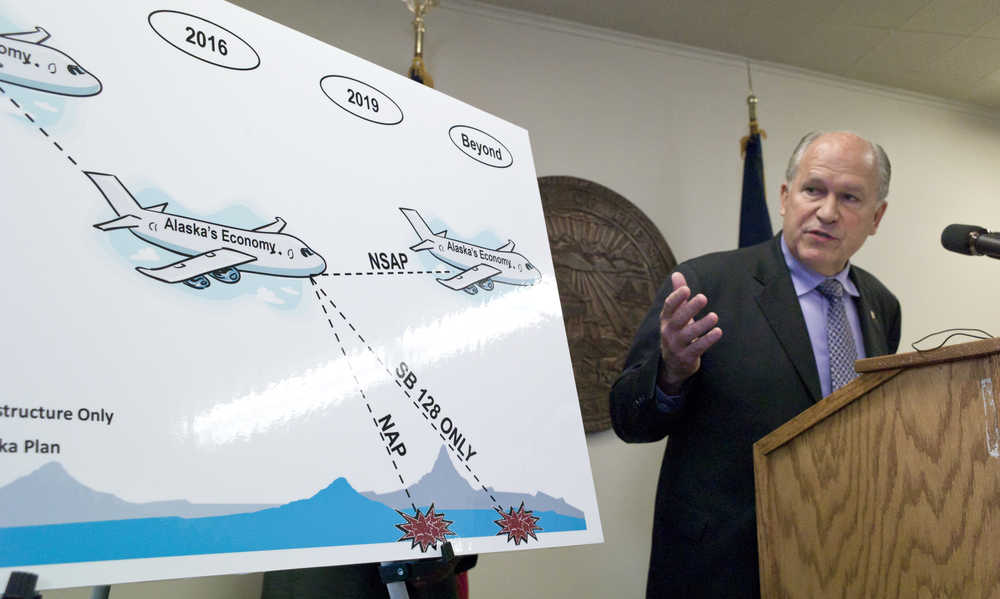
The Alaska Legislature is poised to adjourn its fifth special session without taking any action to address the 49th state’s multibillion-dollar deficit.
On Thursday, Alaska Senate President Kevin Meyer said by phone that the Senate will turn down an invitation from the House to consider overriding any of the budgetary vetoes signed by Gov. Bill Walker on June 29.
“It does appear there isn’t the support to accept the invitation to meet with the House for potential veto overrides,” he said.
The Senate’s decision leaves the deadlocked House with few options but to adjourn.
Speaker of the House Mike Chenault, R-Nikiski, said the House Majority will meet in closed caucus to decide its next action. The House is scheduled to meet at 1 p.m. Friday. The Senate will meet at 11 a.m. Friday.
Both floor sessions are in Juneau’s Terry Miller Building.
There is little appetite in the Senate to override any of Walker’s $1.3 billion in vetoes, an act that would increase the state’s deficit. On the opposite side, there is little appetite in the House to consider any revenue increases similar to those passed by the Senate. The House has failed to hold a hearing on any matter since the start of the 29th Legislature’s fifth special session on Monday.
Due to oil prices’ plunge, the state is expected to earn about $1.5 billion per year. To make ends meet, it needs $4.5 billion per year. The state is expected to exhaust its available savings by 2020 unless matters change.
Earlier this year, the Senate approved Senate Bill 128, a measure that would allow the state to spend almost $2 billion per year (at present values) on state services from the earnings of the Alaska Permanent Fund.
The House Finance Committee failed to pass SB 128 in the previous special session, an act that killed the best chance for significant new state revenue. Few minds have changed in the House since then.
The Alaska Constitution requires 45 votes from the 60-member Legislature to override a gubernatorial veto of a financial item.
“Forty-five is such a big number,” Meyer said. “Forty-five is three-quarters of the Legislature, and getting three-quarters of the Legislature to agree on anything is pretty hard.”
While most members of the House are in favor of overriding at least one veto, they don’t agree on which ones. Democrats have tended to favor the restoration of education and university spending. Republicans have tended to favor the restoration of the Permanent Fund Dividend, which was halved from $2,000 to $1,000 by Walker.
Furthermore, not all the members of the House are expected to be present on Friday, and an absent member is just as good as a “no” vote when it comes to the final tally.
“We can all do the math,” Meyer said, and even if all 38 of the House members expected to attend voted to override a veto, “that would still require at least seven from the Senate to support them. That’s pretty tough to do.”
“If you don’t think you’ve got the votes to pass it, then why pay the expense to do it when you know that you’re going to fail?” Meyer asked.
Some in the House have responded that it’s worth it to simply try, he added.
“I get that, but I also get that they’re also running for election,” he said.
In this year’s budgeting process, the Senate suggested significant cuts to the state budget. To gain the votes of the House majority, the Senate had to restore some funding. To get the votes of the House minority, senators had to reverse themselves still more.
As Meyer explained, Walker’s vetoes gave senators what they wanted — bigger cuts to government.
In a press conference Thursday morning, Walker said he’s done everything he can do to address the state’s fiscal crisis.
“Sixty Alaskans hold Alaska’s future in their hands,” he said. “It’s really in their hands at this point.”
• Contact reporter James Brooks at james.k.brooks@juneauempire.com.
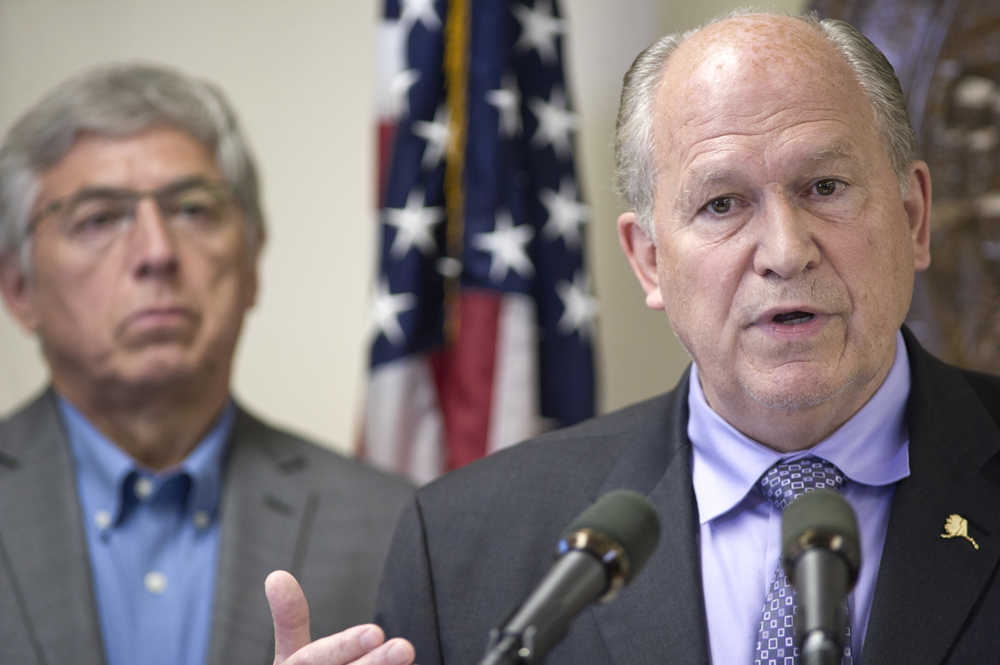
Lt. Gov. Byron Mallott, left, attends a press conference with Gov. Bill Walker in Juneau on Thursday.
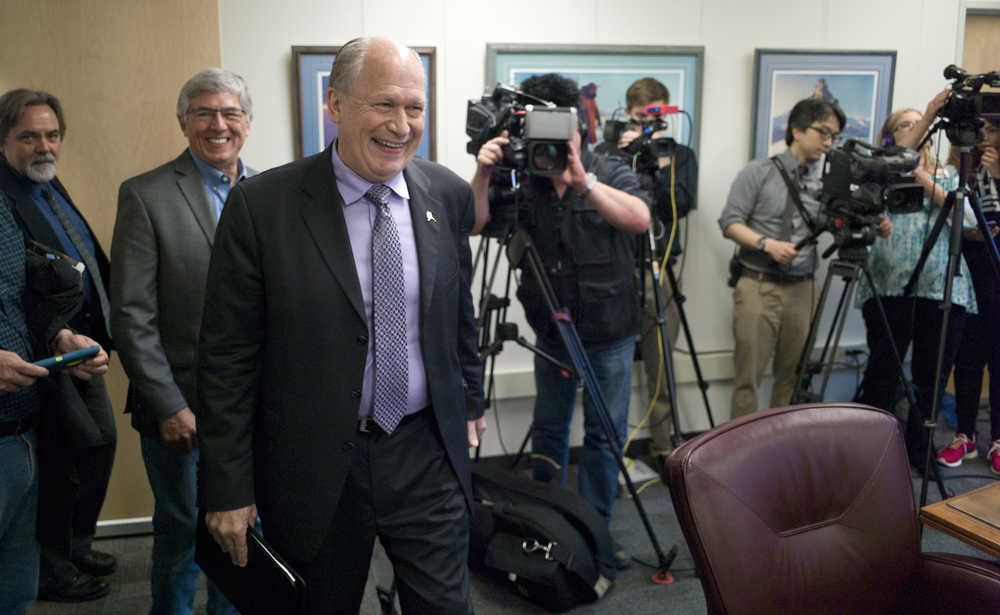
Gov. Bill Walker, center, walks into a Thursday press conference to show possible scenarios for Alaska economy if the Legislature fails to act during its special session. Following Walker are Lt. Gov. Byron Mallott and Revenue Department Commissioner Randy Hoffbeck.
