
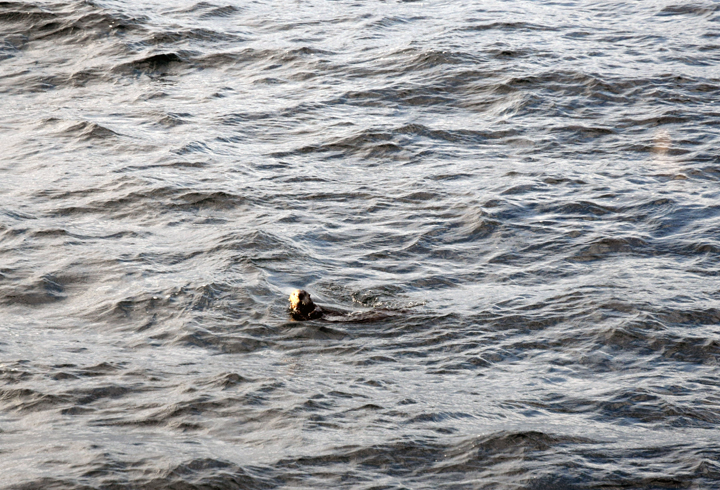
KENAI — The Alaska SeaLife Center got its start with funds from the Exxon Valdez oil spill settlement. More than 25 years later, the marine research facility is heading up the development of a national network for marine mammal oil spill response.
Through a grant from the Institute of Museum and Library Services, the Seward-based aquarium and research center will lead the development of a network that will train and connect animal care professionals around the country in association with the Maryland-based Association of Zoos and Aquariums. The two agencies will work to gather and maintain a database of veterinary professionals who are experts in response to marine mammal care during oil spills and other natural disasters.
One of the biggest components will be to provide training to animal care professionals, said Chip Arnold, who is coordinating the project at the SeaLife Center. To help animals during an oil spill, professionals have to be certified in Hazardous Waste Operations and Emergency Response protocols, or HAZWOPER. The trainings themselves have been available, but not everyone has gone through it, which can get in the way during an emergency situation like what happened at the Gulf of Mexico during the Deepwater Horizon oil spill in 2010.
Although some of the people who responded were qualified, they could not actually participate in the cleanup because they were not HAZWOPER certified, part of federal law in responding to oil spills.
The SeaLife Center got into the oiled wildlife business about six years ago, negotiating contracts with Alaska Clean Seas to respond to oiled pinnipeds on the North Slope and with Cook Inlet Spill Prevention and Response, Inc. in Cook Inlet to respond to oiled sea otters in Seldovia, Arnold said.
Arnold obtained the certification and became a HAZWOPER instructor himself. However, it became clear quickly that the program had been designed for general industry, not for wildlife response specifically, he said.
“It was my desire and basically the desire of several of us to make a program that was wildlife response centered,” he said.
The three-year, $455,119 grant will support the SeaLife Center developing wildlife-focused training for HAZWOPER, to travel to various centers to offer the classes and train-the-trainer classes, which are important to spread the program, Arnold said. Train-the-trainer programs will allow all the participating centers to offer the classes without having to fly someone down from Seward.
“If they had to fly us out of Alaska for every training class, that’s probably not sutainable,” he said.
Another part of the grant program will be to develop a database of professionals from AZA-certified facilities to make response easier. Right now, finding the best person to respond to a particular type of animal in an oil spill may take a string of phone calls and cost time, Arnold said.
“If they have a problem, we can help them too,” he said. “It just makes one big network over the entire country.”
In regard to ongoing costs, Arnold said he expected the database to be somewhat self-sustaining once it is developed, though the AZA will help with the maintenance over time. Training more HAZWOPER trainers at local aquariums and zoos will help bring down the cost as well, he said.
The severity of the Exxon Valdez Oil Spill in Prince William Sound in 1989 and the more recent Deepwater Horizon Oil Spill in the Gulf of Mexico in 2010 have spurred efforts to better coordinate response. For example, funds from the Exxon Valdez settlement have gone to support oil spill response and environmental protection efforts in many areas of Southcentral Alaska, and the obstacles in the response to the Deepwater Horizon has led to reevaluation of many tactics used to respond to offshore oil spills, according to an April 2015 Congressional Research Service report.
The SeaLife Center is working on its own capability to care for oiled wildlife. The center, which is well known for responding to stranded marine wildlife and maintains a stranding hotline, currently cannot take in oiled wildlife were there to be a spill in Alaska. The center is working on the capability to be able to generate a local response in case an oil spill ever happens again — it’s no good to start developing a response framework once oil is already in the water, Arnold said.
“I think people just assumed that we were prepared to respond to oiled wildlife, but the fact of the matter was that in the early days, we were just trying to respond to stranded wildlife (and) keep our aquarium. … So I think that this was just kind of returning to those roots and returning to those things we knew were going to be involved in if this ever happened again,” he said.
• Elizabeth Earl is a reporter for the Kenai Peninsula Clarion and can be reached at elizabeth.earl@peninsulaclarion.com.
