
George Floyd’s death while in the custody of now-former members of the Minneapolis Police Department touched off an international wave of protests, demonstrations and riots.
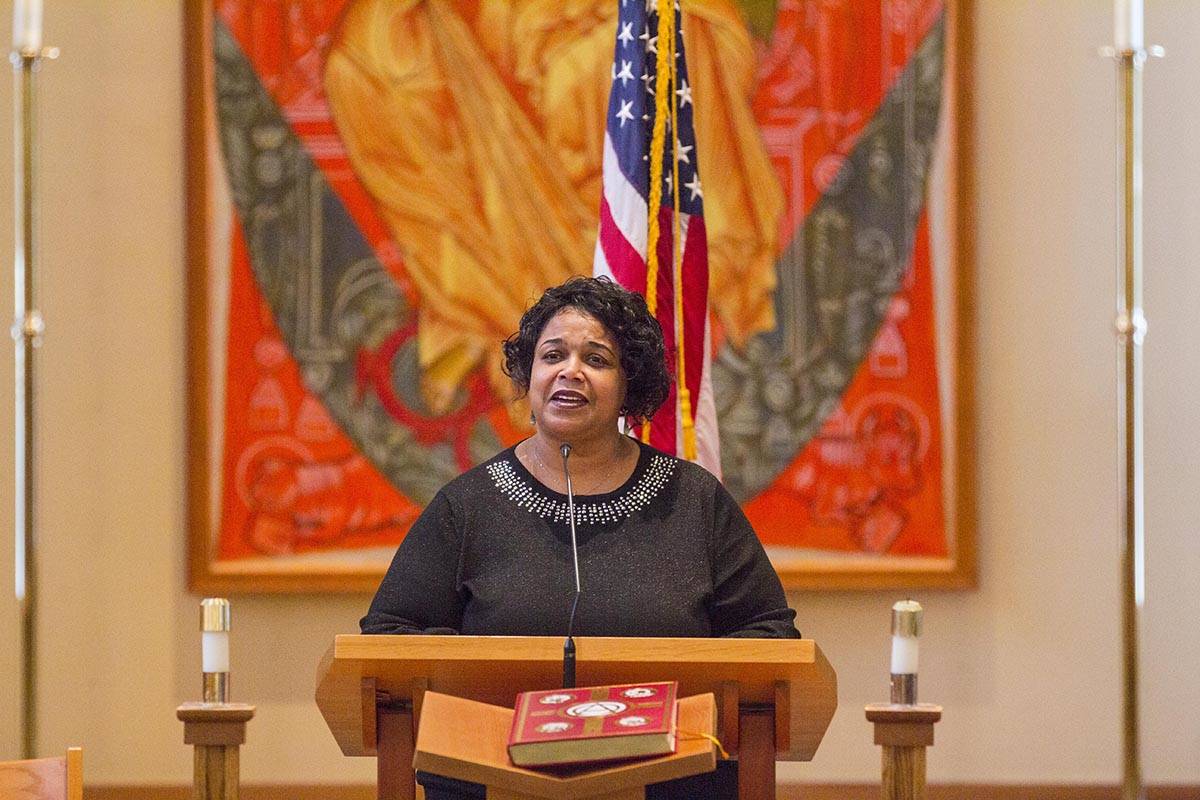
Here in Juneau, the response was quieter but no less heartfelt.
“I think a good place to start is that I am personally heartbroken,” said Sherry Patterson, president of Black Awareness Association, Juneau, a nonprofit dedicated to addressing the needs of black Americans in Juneau and Southeast, in a video interview. “Outraged. (I’m) just in disbelief of the events have transpired over the past week.”
While Juneau’s response has been peaceful and understated, the Lower 48 have seen a firestorm of outrage over the killing that has seen curfews, looting, vandalism, National Guard call-ups and more police brutality, killings and violence.
[Peaceful vigile held in Juneau]
“I didn’t watch the video. At this phase, it hurts too much to watch the video. I read the transcript, and I cried, because we’re here once again as a country,” said Sarita Knull, another member of the BAA Juneau. “We’re trying to do peace. We’re trying to love. We’re trying to forgive. We’re trying to heal. But scars don’t heal if the scabs keep getting picked.”
These scars aren’t new ones, said Central Council Tlingit and Haida Indian Tribes of Alaska President Richard Chalyee Éesh Peterson.
“This isn’t anything new. Systemic racism isn’t going away. I think the last four years have shown us that people who base their lives around hate feel emboldened to spew hate. It’s time to stand up against hate,” Peterson said in a phone interview. “Obviously, we don’t support violence and some of those things that are happening, but we absolutely see the root cause of this coming to a head for people.”
Learning to end a loathsome legacy
“Dr. (Martin Luther) King said rioting is the language of the unheard. No, we don’t advocate all this that’s going on, but I totally understand, I totally get it,” Patterson said. “We’re in a position now to sit and get a plan to move forward for some true action and some true results to get justice, not just for these two past incidents, but for so many that came before, and hopefully stop some from happening in the future.” The efforts to communicate, to educate, and to reach out can’t just be an occasional effort, said Kay Smith, a member of BAA Juneau.
“A lot of us have families in the Lower 48, and even in the community here, we have people coming and going all the time,” Smith said. “When we save the conversation once a year, that really doesn’t benefit the community. Silence is so injurious. Whether you’re silent for justice, or silent for injustice, silence is a powerful weapon.”
That education and communication, teaching the generations that follow us to do better and to divorce them from centuries-held prejudices, has to begin early and consistently, Patterson said.
“Racism is not born within us, it’s taught,” Patterson said. “We have to come to a place where in our homes, every last one of us, is teaching our children love and respect.”
Peterson echoed those sentiments.
“I think it’s about educating ourselves and being supportive. Instead of speaking against, try to understand,” Peterson said. “What is the root cause? It goes back centuries. It was bred into both sides. It’s been passed down from generation to generation. But we have it in us to change.”
MLK was assassinated more than half a century ago, but his dream lives on in the masses of people striving to bring his vision to fruition, Patterson said.
“I would say that everyone with white skin is not our enemy. I would say the white community, everyone who’s black is not a criminal,” Patterson said. “There’s hope for the future. I believe that, I really do. Dr. King revolutionized the world. He revolutionized the planet. The dream has not been realized. There’s still work to be done.”
Pushing back against the poison
“It’s paralyzing, when you read these things. It’s paralyzing, even here in Juneau, Alaska where we’re relatively safe,” Knull said. “I know that we’re scared, I know that we’re terrified, I know that feels like our hearts fell out of our bodies. Here’s something that I can do.”
Smith talked about expanding horizons, especially for children, in ways ranging from reading books, watching movies and listening to music outside one’s familiar fields.
“The thing is to stretch yourself. Make yourself bigger so you can contain more. Seeking opportunities to grow,” Smith said. “That’s how you improve our state, improve our lives, improve our communities.”
Patterson also talked about reaching out and communicating, especially with people in power. She did some research following Floyd’s death and did just that.
“I was pacing in my home just crying, saying oh my god. I needed to do something. Even here in Juneau, Alaska,” Patterson said. “I called the governor of Minnesota. I called the district attorney. I emailed the mayor and police chief of Minneapolis. It might not make sense to you but it makes sense to me to call and demand that this man be arrested. They might not have seen my emails or heard by voice, but it did me much good to reach out. I did something. And we must do something here in the capital city.”
Voting and the power of the purse are also ways of making your voice heard, Patterson said. July 7 is a day where a growing number of people are advocating for those supporting change and ending systemic racism to not spend their money, a Blackout Day. And beyond autumn’s presidential election, there are state and federal offices up for grabs.
Either way, Patterson said things need to change.
“Still today, you have young blacks males, they have to be someone. They have to make sure they’re not in a position where they could be harassed by someone in authority. Don’t give anyone a reason to suspect anything. That’s absolutely ridiculous that human beings who are free should have to go through those measures,” Patterson said. “I have a black son. I have a black grandson. I have black friends who are in danger of being profiled at any time in the United States of America. What happened to George Floyd could happen to them at any time. That’s frightful.”
• Contact reporter Michael S. Lockett at 757.621.1197 or mlockett@juneauempire.com.
