
JUNEAU — Alaska is facing multibillion-dollar deficits amid chronically low oil prices and relying on savings to help balance the budget.
That’s not sustainable, and is leaving first-term Gov. Bill Walker with some tough choices as he drafts the next budget.
One of those decisions could reduce the amount of the yearly check nearly every Alaskan receives just for living in the state.
The dividend, long seen as political dynamite to anyone who tries to tinker with it, could be affected as state leaders look for ways to close the gaping budget hole. Here’s a look at the dividend, and what’s being considered:
What is the Alaska Permanent Fund Dividend?
It was created in the early 1980s as a way to share the state’s oil wealth with Alaskans.
Dividends are paid annually from investment earnings from the Alaska Permanent Fund. They are calculated using a five-year rolling average of the fund’s performance.
Most Alaskans get a dividend, which is based on residency requirements.
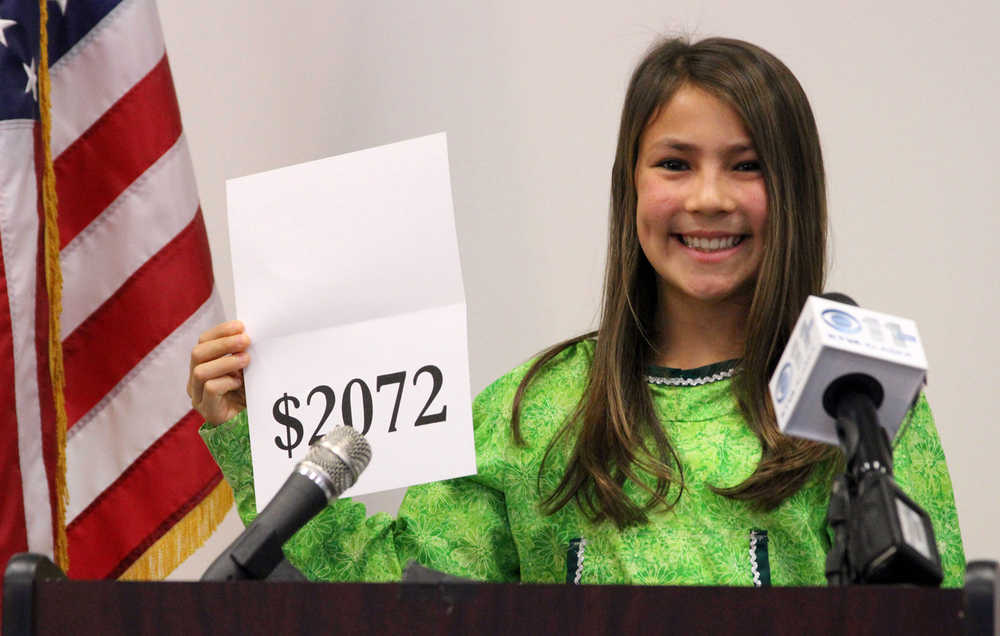
This year’s check was $2,072, paid to about 645,000 people, and was the largest ever. Over the past decade, which included the Great Recession, the check has been as low as $845.
The permanent fund itself is a nest egg of sorts, born of the state’s early oil wealth and grown through investments. It’s currently valued at about $52 billion. The principal cannot be spent, but its earnings — valued at about $7 billion — can be. Legislators have been loath to go there, though, for fear of being seen as “raiding” the fund.
Isn’t the dividend just a government handout?
Many who live outside Alaska probably think so, said Gunnar Knapp, director of the Institute of Social and Economic Research at the University of Alaska Anchorage.
Businesses time sales to the dividend payouts, advertising discounts on a range of items including new trucks and airfare.
But for lower-income Alaskans and those in rural areas with high costs of living and limited job opportunities, the dividend can be an important part of their income, economists say.
In 2013, when the dividend was $900, it accounted for as much as 3.6 percent of the per-capita income in western Alaska’s remote Kusilvak region. Statewide, it was about 1.8 percent. The federal government treats the payments as taxable income.
Rep. Bob Herron, a Democrat from the rural hub community of Bethel, said for the most part in his region, the dividend goes toward ordinary living expenses.
“Oil, electricity, tools like a snow machine, things for transportation. These are key to living in western Alaska,” he said.
Is Alaska broke?
No. The state has about $60 billion in assets, including the permanent fund and various accounts, for which the state has some flexibility in its use, state Attorney General Craig Richards said.
Barring a change in the economic environment, Alaska’s assets will generate “substantially more income than petroleum revenues do in the future,” Richards said. He was part of a working group asked to evaluate how Alaska’s financial assets could help stabilize the budget and how those assets could be better managed.
In recent years, oil provided about 90 percent of revenue available for spending. That figure was about 75 percent earlier this year because of lower prices for oil and reduced production.
What is being considered to address the deficit?
Walker is weighing using money generated from the permanent fund for the budget, and overhauling how the state budgets.
Instead of budgeting around how much Alaska gets in oil receipts, oil tax revenue would be put into the permanent fund, along with 50 percent of resource royalties.
Money generated from the earnings reserve account, bolstered by a transfer from savings, could potentially provide around $3.3 billion a year that could be used for the budget. The numbers are rough and the details preliminary, but those are the broad strokes recently released.
This wouldn’t erase the deficit but would help close the gap, Richards said.
How might the dividend be affected?
Under this concept, the dividend would be funded with the remaining royalties, and could be about $1,000 next year, Richards said.
A number of Republican legislators say the concept is worth exploring but also deem further budget cuts imperative. Some Democrats worry about the impact on lower-income Alaskans and would rather see changes to the state’s oil tax policy.
Based on the current outlook, the size of the dividend would decline, and that would mean less purchasing power in the economy provided by the dividend, said Scott Goldsmith, professor emeritus at the Institute of Social and Economic Research. But you have to look at the broader consequences of the package, he said.
The state is in a precarious financial position, and it’s impossible to maintain the dividend or to take it off the table and try to craft a solution, Goldsmith said.
Are there other options?
Yes, but there may be some Alaskans don’t want to hear.
Walker has hinted at other ways to generate revenue without providing specifics. Alaska has no personal state income tax or statewide sales tax.
The state has been warned its bond rating could be lowered if it doesn’t do more to address the deficit.
Knapp thinks the dividend would have to be capped or reduced to allow some use of the permanent fund earnings to help address the deficit.
“A very big debate will be how much, and when,” he said.
