
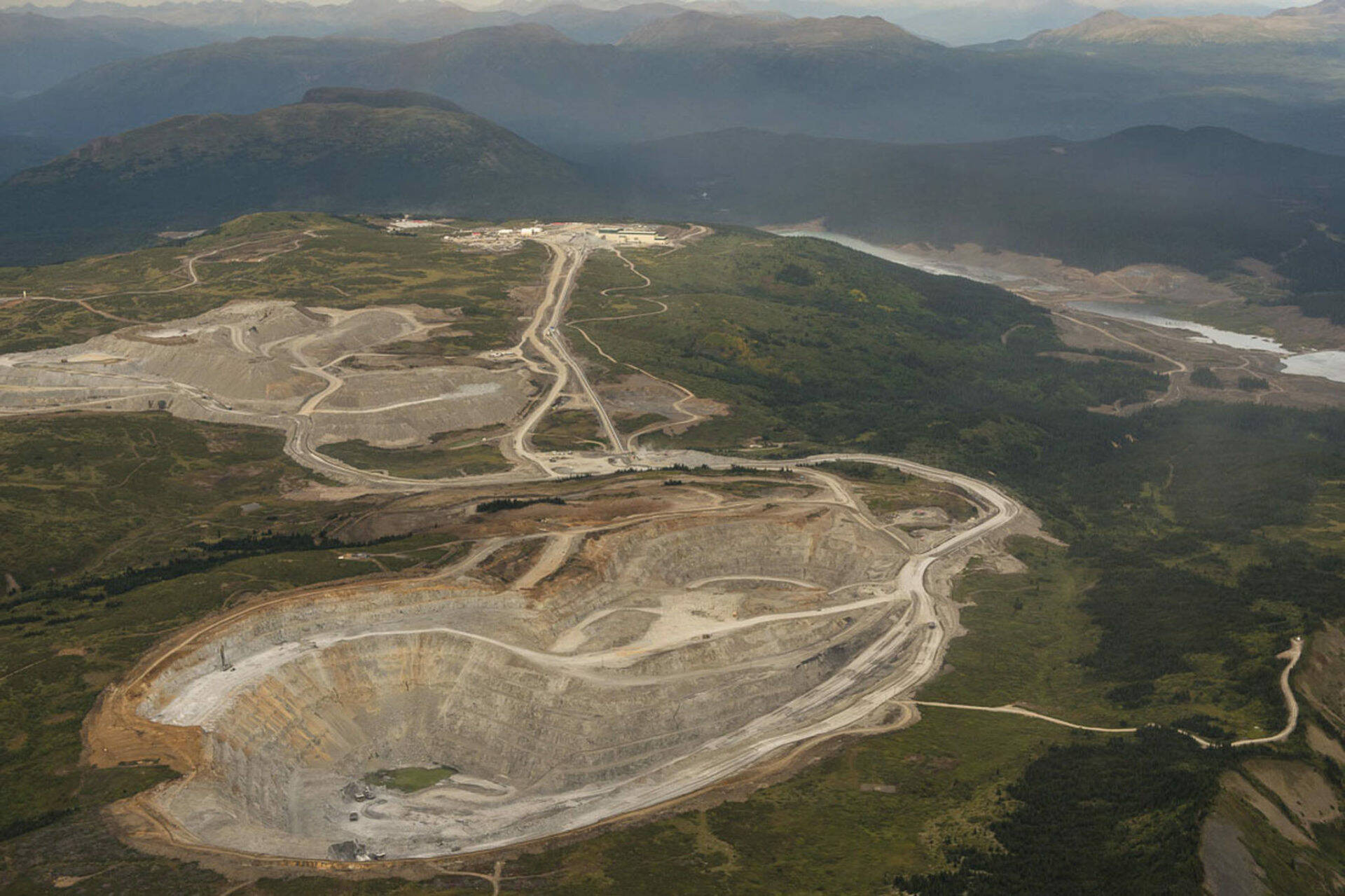
A Canadian environmental nonprofit group, long critical of the Red Chris Mine in the northern watershed of the Stikine River, has released a new report that cites increasing underground seepage of contaminants from the mine’s tailings pond.
The report comes as British Columbia regulators are considering the mine operator’s application to expand ore recovery by changing to underground tunneling instead of open-pit surface mining.
The gold and copper mine started operations in 2015 and sits about 50 miles east of the Stikine River community of Telegraph Creek, British Columbia. The site is about 130 miles northeast of Wrangell.
Newmont Mining, which operates Red Chris in partnership with minority stakeholder Imperial Metals, applied to the British Columbia Environmental Assessment Office last December for approval to move its work underground and increase ore recovery. The public comment period closes Thursday, April 10.
The SkeenaWild Conservation Trust, based in Terrace, British Columbia, on March 17 released a 108-page report criticizing the mining operations, particularly the risks associated with water and contaminants seepage from a tailings pond that stores waste rock from the mine.
“The most pervasive environmental issue at Red Chris Mine appears to be the release of contaminated seepage from mine infrastructure to surrounding groundwater,” the report said.
“Plumes of tailings seepage containing highly elevated and increasing concentrations of sulphate and chloride have been identified in all groundwater aquifers north and south of the tailings facility and an additional cadmium seepage plume has been identified in the South Valley shallow aquifer.”
The tailings containment system “has underperformed, and seepage rates far exceed what was initially predicted,” the report stated, adding that the seepage has increased in recent years.
“Because groundwater aquifers ultimately discharge to downstream surface water systems, these groundwater quality trends can impact surface water and aquatic life in receiving systems like Trail Creek, Kluea Lake and Quarry Creek.”
The environmental nonprofit said regulators should “address outstanding problems at Red Chris” before approving any expansion.
The underground seepage of heavy metals “is contaminating the groundwater, creeks and lakes in the upper reaches of the Iskut River, the largest tributary of the transboundary Shtax’héen Héeni (Stikine River),” according to a statement issued last week by the Central Council of the Tlingit & Haida Indian Tribes of Alaska.
Moving the mining operation underground for what is called “block-cave mining” would increase the volume of waste rock held in storage behind the dams.
Newmont Mining is based in Denver; Imperial Metals is headquartered in Vancouver, B.C. Newmont has forecast Red Chris production at 88 million pounds of copper and 86,000 ounces of gold this year.
The Southeast Alaska tribal council is critical of provincial regulators, pointing to the risk of environmental damage to the Stikine River, its salmon runs and Alaskans who depend on the river for food, recreation and their Native cultural heritage.
“This confirms what we’ve feared for years: The Red Chris Mine is contaminating the Stikine River,” Wrangell’s Esther Aaltséen Reese, president of the Southeast Alaska Indigenous Transboundary Commission, said of the SkeenaWild report in a prepared statement on April 3. “The mine threatens everything we depend on, and it is unacceptable that B.C. regulators are allowing it to continue.”
The commission, representing tribes from across Southeast, called on British Columbia to reject the permit to expand operations “unless it includes enforceable measures to stop contamination, improve dam safety and strengthen downstream monitoring.”
In its statement, Tlingit & Haida pointed to the 2014 failure of a similar tailings dam at the Mount Polley Mine in British Columbia, operated by Imperial Metals. The failure sent billions of gallons of water and toxic waste into the Fraser River, a major salmon producer.
Alaska-based Salmon Beyond Borders also issued a statement last week, quoting the SkeenaWild report and calling for more scrutiny of mining in the region. It said any failure of the Red Chris tailings dam would “significantly deteriorate or destroy fish and wildlife habitat downstream.”
“This is exactly why almost every Southeast Alaska municipality and several tribes have called for a ban on mine waste dams along the Taku, Stikine and Unuk transboundary salmon rivers,” the environmental nonprofit said in its statement.
“It’s mind-boggling that mining companies are allowed to build risky earthen mine waste dams in these pristine river valleys in the first place. … The clean, cold salmon river systems of this region are the true wealth, not specks of gold,” Heather Hardcastle, an adviser to Salmon Beyond Borders, said in the statement.
• This article originally appeared in the Wrangell Sentinel.
