
This story has been updated with additional information.
Though the process may take longer this year, Alaska’s elections are as safe and secure as they have ever been, Division of Elections Director Gail Fenumiai said.
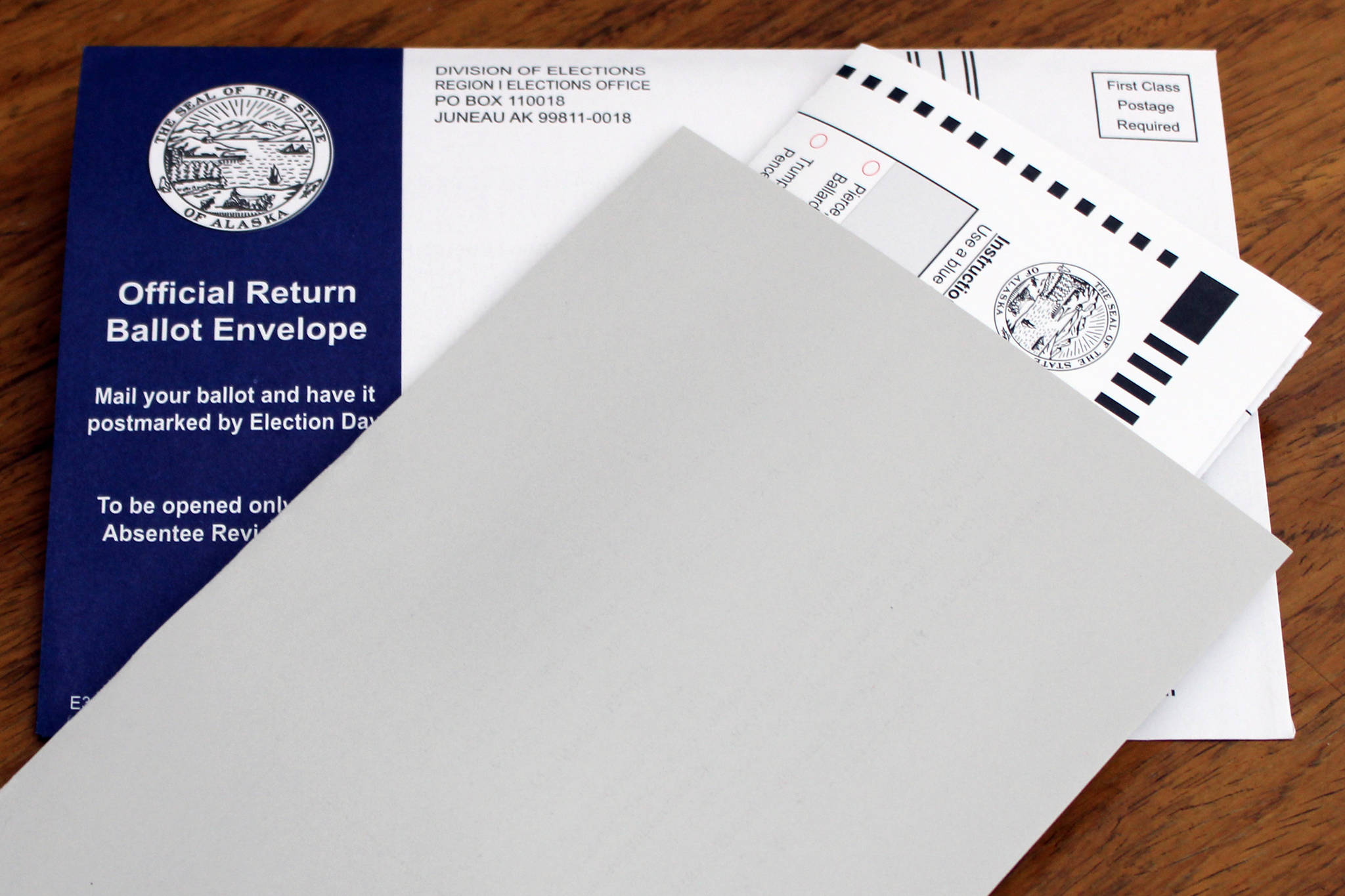
Despite the record number of by-mail ballots and other complications created by the COVID-19 pandemic, Division of Elections officials emphasized Monday that the upcoming general election on Nov. 3, is being run with integrity and all results are unofficial until certified by election officials.
In a press conference with reporters, Fenumiai said this election was being conducted in the same way as every other election in the state’s history.
“All results are unofficial, unofficial, unofficial until they are certified,” she said. “Having record numbers vote by mail is challenging. The more ballots the more time it takes to log, review and count.”
Fenumiai said the division is trying to make voters aware there may be a shift in results in the days following the election as more mail-in ballots are received and processed.
[Voter turnout for by-mail election highest since 2000]
Alaska starts counting absentee ballots seven days after Election Day, according to DOE’s website, and must be counted within 15 days. The results announced on Election Day would only include election day and early voting ballot counts, she said.
“We just keep wanting voters to know, numbers can change,” she said.
After the Alaska Supreme Court upheld a decision to waive the witness requirements on mail-in ballots earlier this month, the Division has done significant public outreach on voter education, Fenumiai said. The division is also trying to educate voters on other aspects of this years election, including alternative forms of voting.
Early in-person voting began Monday, and reporters on the call reported long lines in cities across the state. In Juneau, early voting is available at the State Office Building, Monday through Friday from 8 a.m. to 5 p.m. from Oct. 20 to Nov. 3. and the Mendenhall Mall, Monday through Friday, from 8 a.m. to 5 p.m., Saturdays from 10 a.m. to 4 p.m. and Sundays from noon to 4 p.m. The state sent out a record number of mail-in ballots, Fenumiai said, and had already received back more than 35,000.
Fenumiai said in an email,Monday afternoon that 3,259 voters had already voted early. That’s more than 40% of the total early ballots cast in the August primary elections.
“That compares to the entire 15-day voting period of the 2020 primary where 7,756 voted early,” she wrote, adding the total number of early voting ballots cast in the 2016 and 2018 general elections were 39,242 and 41,518 respectively.
Several reporters asked about voters being misinformed about the election process, to which Fenumiai said Alaskans should look first at what the Division of Elections says.
“We’re the main source (of information), really the only source they should turn to,” she said. “We’re letting people know, maybe they said this over here or over there but what does DOE say?”
The deadline to register to vote is passed, but voters can still submit applications for absentee mail-in ballots until Oct. 24, DOE’s website said. Additional information on polling places and mail-in ballot status can be found at the website as well.
• Contact reporter Peter Segall at psegall@juneauempire.com. Follow him on Twitter at @SegallJnuEmpire.
