
The average age of an Alaska fisherman today is more than 50 years old. That number is growing statewide, according to a November report, as permit and quota holders leave coastal communities, reducing opportunities for youth to enter fisheries.
The absence of youth in Alaska’s fisheries has become known as the “greying of the fleet” and it’s affecting rural and urban communities across the state. To help with the problem, the Alaska Marine Conservation Council has chosen five young leaders from the fishing industry to help steward projects aimed at increasing youth access to the fishing industry.
They announced the inaugural class of fellows Wednesday. Two of recipients — Ann Robertson and Clayton Hamilton — hail from Juneau.
Originally from the suburbs of Chicago, Robertson moved to Juneau as a high school student and attended Juneau-Douglas High School. She has always been fascinated by boats and being out on the water.
As a fisheries researcher for the National Oceanic and Atmospheric Association she “walked into” work on a gillnetter owned by a friend. The work gave her a taste of the production side of fisheries. She’s since earned a master’s of environmental management at the Yale School of Forestry and Environmental Studies, adding policy work to her well-rounded fisheries experience.
As part of her fellowship, Robertson has been working with the Bristol Bay Economic Development Council and the office of state Rep. Jonathan Kreiss-Tomkins, D-Sitka. One of the “tools in the box” for addressing the greying of the fleet, Robertson said, will be Kreiss-Tomkins’ brainchild, the Regional Fisheries Trusts.
The idea was introduced in the Alaska Legislature last year as House Bill 188. It remains in the House Fisheries committee and hasn’t yet received a vote. The idea is for nonprofit trusts to hold a small number of permits and allow young people to access them.
“Just as a way for them to kind of get a stepping stone in developing the capital and experience to actually jump to permit ownership,” Robertson said.
Part of the problem with Alaska’s aging fishing fleet are the high barriers for entry, Robertson said. Many limited-entry fishing permits cost upward of $100,000. Saving for a down payment for such a permit — and fishermen can expect to double that investment if they want to purchase a boat as well — can prove prohibitive to even the hardest working deckhands.
Robertson said she still doesn’t know just what her role will be in the industry.
“I’m still conflicted about, maybe I do want to go into fisheries full-time or maybe I want to work for a conservation organization or maybe I want to work for the government managing fisheries — I still don’t know. But I think it’s really important for young people who do want to get into fishing, it’s really important that those opportunities exist for them to get out on a boat to experience what it’s like to fish,” Robertson said.
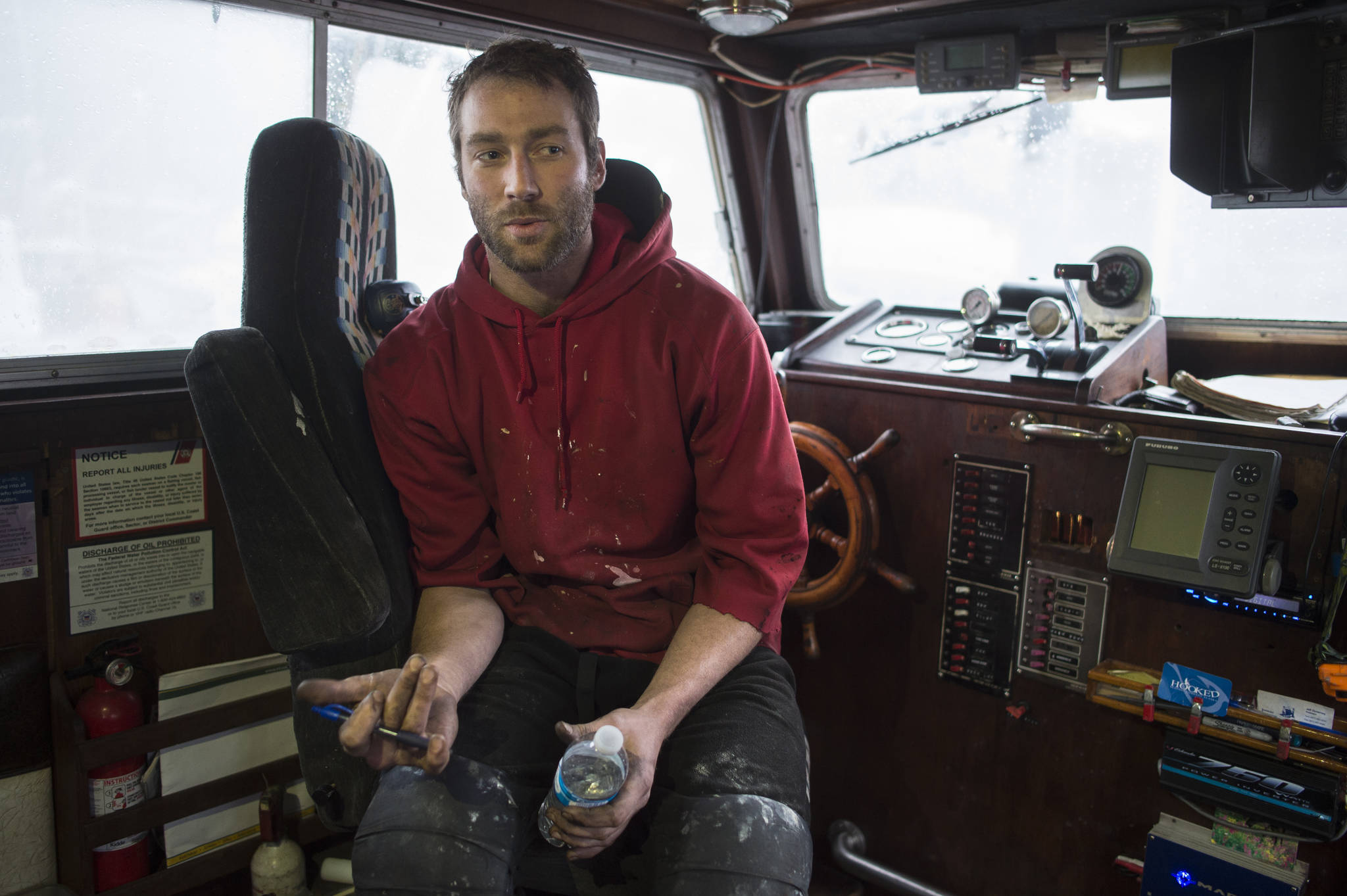
While Robertson spoke to the Empire by phone from the Alaska Young Fishermen’s Summit in Anchorage, Hamilton could be found working on a handwritten project list on his 35-foot boat at Mike Pusich Douglas Harbor.
Originally from Iowa, Hamilton has been commercial fishing for the past six years and recently purchased his first boat, an “old hunk” called the F/V Dial West that he says he’s in love with nonetheless. As part of his fellowship, Hamilton will work to maintain and expand the Alaska Ocean Acidification Network.
His work with AOAN includes interviewing researchers, fishermen and community members about their priorities for fisheries research. Ironically, the work takes him away from the docks and on Facebook often, he says. But though the work pulls him away from the outdoors, he says it’s important for fishermen to stay engaged and involved with research and policy. He hopes the AOAN can aid in researching ocean acidification, which has threatened key prey for salmon.
“I get to be the sounding board for the fishing community,” he said. “What we’re trying to do really seems valuable, because it’s such a question mark. What’s going to happen? I don’t know. There are no answers, but if you’re not talking about it, there’s not going to be.”
• Contact reporter Kevin Gullufsen at 523-2228 or kevin.gullufsen@juneauempire.com. Follow him on Twitter at @KevinGullufsen.

Ann Roberston, pictured, is one of two Juneau-based members of the Young Fishing Fellowship programs inaugural class, through which she’s working to address the ageing of Alaska’s fishing fleet. (Ann Robertson | Courtesy Photo)
