
The Alaska Legislature’s in-house legal chief has broken a logjam in the Senate Judiciary Committee, allowing proposed constitutional protections for the Permanent Fund Dividend to advance.
In a written opinion, Legislative Legal Services Director Doug Gardner said a Saturday hearing of the judiciary committee failed to meet the requirements of an arcane legislative rule. Because of that failure, the three measures under consideration in the hearing — one of them being the proposed protections — will advance to the Senate Finance Committee.
The movement was confirmed Monday by the leadership of the Senate Majority, which said it would not reschedule the Saturday hearing to fix the issue identified by Gardner.
The three measures were Senate Joint Resolution 1, which was a proposed constitutional amendment from Sen. Bill Wielechowski, D-Anchorage; Senate Bill 127, by Sen. Mia Costello, R-Anchorage; and House Bill 214 by Rep. Harriet Drummond, D-Anchorage.
SJR 1, if enacted (and approved by voters in the next general election) would enshrine the Permanent Fund Dividend in the state constitution. SB 127 would largely repeal the criminal justice reform bill known as SB 91. HB 214 renames a portion of the Alaska Safe Children’s Act after Bree Moore, a 20-year-old murdered in Anchorage in 2014.
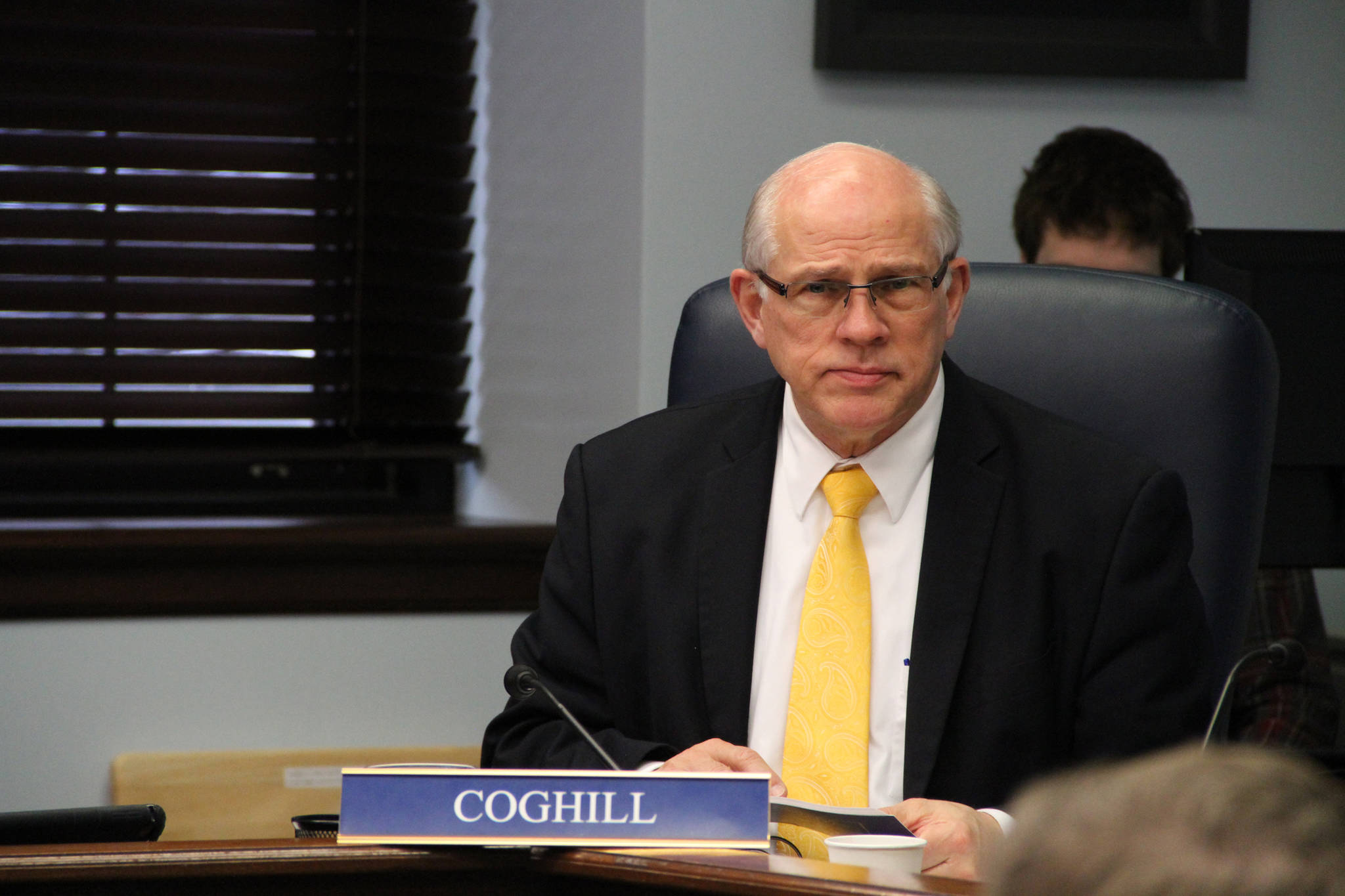
Monday’s movement is significant because the chairman of the judiciary committee, Sen. John Coghill, R-North Pole, was a staunch opponent of all three measures and had vowed to keep them in his committee.
“It’s not what I wanted to do, but they asked, so here we go,” he said Monday morning.
Committee chairmen normally have absolute power in setting the schedules of their committees. If a bill is not scheduled for a hearing, it cannot be subject to a vote that would advance it to the next stage of the legislative process. That authority thus gives chairmen a significant amount of leverage in the process.
Last week, three members of the judiciary committee launched the equivalent of a minor revolt as they signed a petition under Uniform Rule 48 of the Alaska Legislature. That little-used procedure forces a committee chairman to hold a hearing on a measure if the majority of the committee’s members formally petition for it.
[Minor revolt among Alaska senators fails to advance PFD amendment]
In this case, Costello, Wielechowski and Sen. Mike Shower, R-Wasilla, each filed an appropriate petition.
Coghill duly held a hearing on Saturday morning, but when Wielechowski learned Coghill would not hold public testimony on SJR 1, the Democrat asked for a vote on moving the proposal out of committee and onward in the process.
Rather than hold that vote, whose outcome was unsure, Coghill adjourned the meeting.
Gardner opined that Rule 48 requires a bill to be fully considered, and “based on the plain language of Uniform Rule 8(a), the past precedent, and the duties of a committee chair … the Senate Judiciary Committee did not comply with the ‘consideration’ component of Uniform Rule 48(a).”
Rule 48 allows three days from the time a petition is read onto the floor to the time the meeting takes place. Gardner said that meeting could have happened as late as Tuesday, but Coghill said end-of-session time pressure prevented the rescheduling.
“We’ve got so much other work that we’ve got to do, I don’t know that I could put it into this week, so the best thing to do is go ahead and move them on to the next committee,” Coghill said.
For SJR 1 and SB 127, that’s the finance committee. Wielechowski was pessimistic about his measure’s support there, saying the advancement just means the idea will die there instead of the judiciary committee.
Costello, meanwhile, said the bill’s advance means she’s merely “climbing to the next peak.”
“I am still going to fight to have this bill heard with public testimony so that the people I represent have an opportunity to share their stories,” she said.
House Bill 214 was bound for a floor vote in the Senate, but Senate President Pete Kelly, R-Fairbanks, on Monday sent it to the finance committee instead, even though it has no cost. Democrats and independent Republicans objected to the referral but were outvoted by members of the Senate Majority.
All three bills await scheduling in the finance committee.
• Contact reporter James Brooks at jbrooks@juneauempire.com or call 523-2258.

A legal memo by Legislative attorney Doug Gardner is seen in part on April 9, 2018. (James Brooks | Juneau Empire)
